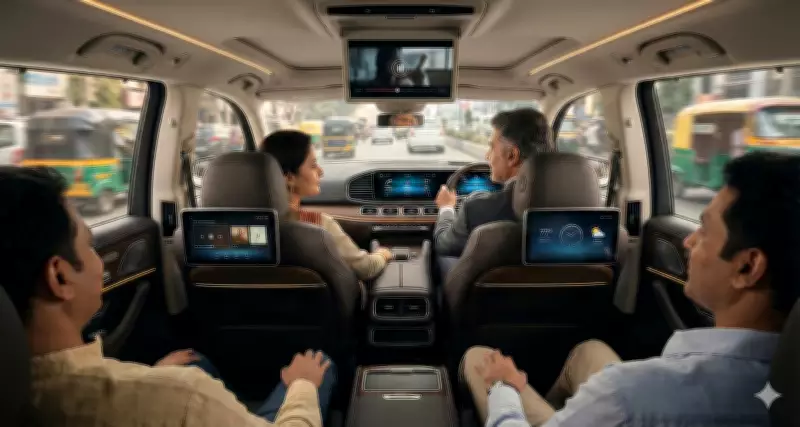
The Digital Transformation of Automobile Interiors
Contemporary automobiles are undergoing a profound metamorphosis, evolving into sophisticated digital ecosystems where traditional dashboards are being replaced by interconnected displays. These technological advancements promise unprecedented convenience, extensive customization options, and continuous connectivity. As screens proliferate in both size and quantity across vehicle cabins, the automotive industry is engaged in a crucial debate regarding the optimal extent of this trend and whether excessive digitalization might inadvertently complicate the fundamental driving experience.
The Proliferation of Multi-Screen Cabin Configurations
Automobile manufacturers emphasize that multiple screens effectively reduce the need for physical buttons while enabling software-driven features that can be updated remotely over time. Numerous new electric SUVs now showcase three seamlessly connected displays spanning the dashboard, integrating an instrument cluster, comprehensive infotainment system, and a dedicated passenger interface. A rapidly expanding segment of consumers actively seeks vehicles with larger displays, demonstrating a clear preference for cabins that appear modern, futuristic, and feature-rich. This escalating demand has compelled manufacturers to integrate additional screens across various vehicle segments, sometimes primarily to maintain competitive positioning within the market.
Screens, which were once exclusive differentiators for premium vehicle variants, have now become ubiquitous across the automotive landscape. While functional displays such as the instrument cluster and infotainment screen serve clearly defined purposes, the necessity of incorporating dedicated passenger screens in mass-market automobiles continues to generate significant discussion and differing viewpoints among industry experts.

Safety Considerations and Practical Implementation Challenges
The functionality and restrictions of screens vary considerably across different price brackets. In high-end luxury vehicles, front passenger displays are typically restricted to safe functions such as displaying driving data or controlling climate settings. Conversely, certain mass-market models permit video playback on these screens, which presents potential distraction hazards for drivers. Screens can also be misused in unsafe manners, including scenarios where children watch content in the front seat instead of being properly secured in rear seating positions with appropriate restraints.
Touchscreen interfaces contribute positively to safety when utilized for features like reversing cameras or driver assistance systems. However, in many mass-market vehicle models, the quality and responsiveness of these interfaces depend heavily on consistent software updates. Issues such as lag and unpredictable system responses remain legitimate concerns for consumers, even as overall technological reliability shows steady improvement across the industry.
Consumer Demand Driving Technological Adoption
Multi-screen cabin configurations continue to gain popularity, particularly among younger demographic segments. Screens provide automotive designers with greater creative freedom, supporting cleaner interior layouts and more future-ready cabin aesthetics. These digital interfaces also enable manufacturers to incorporate more features into vehicle cabins without creating visual or physical clutter, thereby contributing to the minimalist design aesthetic that many contemporary consumers prefer. Consumer expectations for technologically advanced cabins are rising at an accelerated pace, and manufacturers are responding with rapid adaptation and innovation cycles.
Practical Advantages for Modern Families
Multiple screens offer tangible practical benefits for family transportation. Passengers can independently adjust navigation settings, climate controls, or entertainment options, thereby reducing the cognitive burden on drivers during journeys. Rear-seat displays effectively keep children engaged and occupied during extended travel, while individual screens allow each vehicle occupant to customize their personal experience without affecting others within the cabin environment.

Market Trends and Regional Adoption Patterns
In the Indian automotive market, multi-screen configurations are becoming increasingly common in mid-range to premium segment vehicles, with particular prevalence in electric vehicles. Manufacturers consistently report heightened consumer interest in vehicle variants featuring larger or additional displays, driven primarily by younger buyer demographics and urban market preferences. Although India does not publish separate market-share data specifically for multi-screen vehicles, customer preference analysis consistently demonstrates a strong inclination toward automobiles with richer, more comprehensive digital interfaces and connectivity features.
Balancing Innovation with Practical Usability
As digitalization continues to fundamentally shape cabin design philosophy, the primary challenge for automakers involves ensuring that technological innovation genuinely enhances usability rather than overwhelming drivers with complexity. Screens remain invaluable for essential functions including navigation, media management, and safety features, but thoughtful placement, intuitive interface design, and responsible feature limitations are becoming increasingly critical considerations for responsible automotive engineering.
The Connected Tail Lamp Phenomenon
Connected tail lamps, characterized by the full-width light bars now prevalent on numerous new automobiles and electric vehicles, have emerged as one of the most discussed styling trends within the automotive industry. An experienced automotive professional with three decades of industry expertise notes that these designs primarily enhance aesthetic appeal and perceived vehicle width, while in certain applications even improving aerodynamic efficiency and visibility. This expert explains that a continuous light bar creates a unified visual graphic that makes vehicles appear wider and more premium, which explains why numerous brands have adopted this element as a signature design feature. However, the professional also acknowledges that such systems are definitively more expensive to manufacture and repair, given their reliance on increased numbers of LED components, fiber-optic guidance systems, and complex housing assemblies.
The debate surrounding connected tail lamps extends beyond industry experts to include regular vehicle owners and enthusiasts. Discussions among users reveal significant divergence in opinion regarding this design trend. Some consumers praise the modern aesthetic and note that light bars provide a softer, more uniform illumination that reduces eye strain during nighttime driving. Others argue that the design has become excessively commonplace, characterizing it as a repetitive and predictable styling shortcut for automobile manufacturers. A minority of consumers even express concern that the design leans too heavily into electric vehicle aesthetics regardless of the specific vehicle segment or powertrain configuration. As automotive styling continues to evolve, connected tail lamps remain a polarizing element, balancing contemporary visual appeal against legitimate questions regarding cost, brand identity, and practical functionality.
The Emergence of Screen-Equipped Key Fobs
Screen-equipped key fobs are emerging as the next digital accessory in modern vehicle ecosystems. Several luxury automotive brands now offer key fobs incorporating small touch displays that provide information regarding battery or fuel levels, lock status, cabin temperature, and vehicle location. Some electric vehicles even enable remote parking or vehicle summon functions directly through these advanced key fobs.
As this technology continues to evolve, manufacturers anticipate these miniature screens will assume expanded responsibilities, potentially functioning as complete digital keys, displaying service alerts, managing electric vehicle charging processes, enabling parking or toll payments, and even integrating with smart-home automation systems. As vehicle cabins incorporate increasing numbers of displays, the traditionally humble key fob is quietly transforming into a compact, multifunctional control center for the modern digital automobile.