Moving Beyond Traditional RO Water Purifier Rankings
For years, lists of the 'best RO water purifiers' have followed a predictable pattern, ranking established brands based on popularity, price categories, or market dominance, often assuming that one model fits all households. This conventional approach is now increasingly obsolete. The water purification sector is experiencing a subtle but significant transformation. A new generation of brands is bringing design-focused innovation, smarter filtration technology, enhanced service frameworks, and technology-driven dependability to the forefront.
The common error many consumers make today is comparing brand reputations rather than examining how purification systems actually function and what long-term ownership entails. This article shifts away from traditional brand hierarchies to address a more practical and essential question: Which purifier design aligns best with your household's specific requirements?
Our Evaluation Framework for RO Water Purifiers
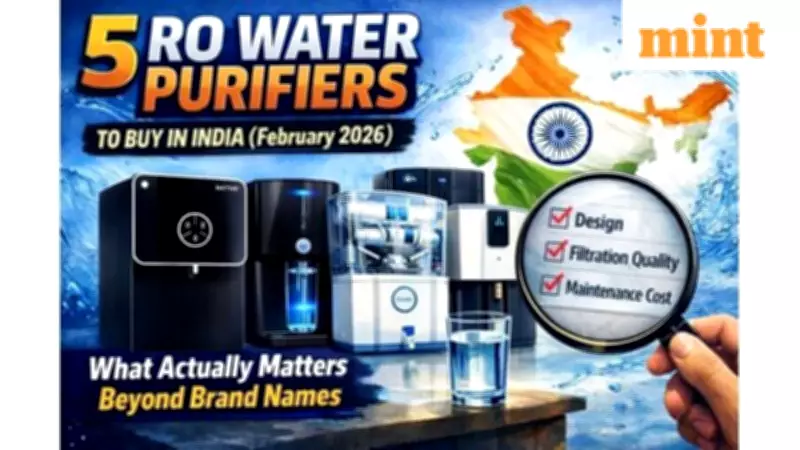
Before presenting our analysis, it is crucial to understand the criteria we used to assess these water purifiers. Our evaluation focuses on five key dimensions that impact real-world performance and user experience.

- Purification Method
Not all reverse osmosis systems treat water identically. We scrutinized whether a purifier employs full reverse osmosis, RO combined with UV sterilization, or MTDS and bypass-based techniques that reintroduce non-RO treated water into the output. Greater emphasis was placed on systems capable of safely managing uncertain or fluctuating Total Dissolved Solids levels, rather than those optimized solely for stable input conditions. We also analyzed how minerals are handled to ensure taste enhancement does not compromise purification integrity.
- Filter Life
Filter lifespan significantly influences maintenance frequency and long-term operational expenses. We assessed how long filtration components are engineered to last under typical household usage and whether replacement schedules are clearly defined or reliant on variable service triggers. Systems with longer and more predictable filter cycles were prioritized, as they diminish service dependency and enhance ownership clarity over time.
- Warranty and Service Transparency
Warranty terms often appear similar superficially but vary substantially in practice. We examined what is genuinely covered versus what is excluded, how clearly Annual Maintenance Contract costs are communicated after the initial year, and how easily users can access service without repeated follow-ups or escalations. Transparency and consistency were valued more than headline warranty duration.
- Cost of Ownership Over 5–8 Years
Instead of concentrating solely on upfront pricing, we evaluated the realistic expense of owning each purifier over a 5 to 8-year period. This encompassed the purchase price, filter replacements, routine servicing, and any hidden or commonly overlooked costs.
- Ease of Daily Use
Beyond purification, a water purifier must integrate seamlessly into daily household routines. We considered storage capacity, dispensing convenience, and whether the system can operate during power outages via gravity or power backup. Design aesthetics, interface simplicity, and usability for all family members were also factored into our assessment.
Detailed Comparison of Top RO Water Purifiers
Below is a comprehensive analysis of five leading RO water purifier models, evaluated against our established criteria to provide a clear perspective on their strengths and limitations.
Native M2 Pro
The Native M2 Pro emphasizes a predictable ownership experience, a relatively underserved aspect in the RO category. It provides a two-year filter life coupled with a two-year unconditional warranty, reducing both maintenance frequency and ambiguity regarding service exclusions. The warranty renews with each filter replacement, offering continued protection beyond the initial purchase period and resulting in low long-term ownership costs.

This purifier also incorporates smart tracking to monitor filter health and performance. Daily usability is enhanced through preset touch-based dispensing and a built-in battery backup that ensures uninterrupted water access during power cuts. Based on a 100% RO purification architecture, the M2 Pro is well-suited for households prioritizing deep filtration alongside long-term cost clarity and convenience.
Atomberg Intellon
The Atomberg Intellon focuses on intelligent monitoring, offering a two-year filter life along with a two-year warranty. The warranty renews on replaced filters, supporting long-term service continuity, though coverage typically remains limited to filtration components rather than the entire unit.
The purifier includes adaptive filtration or taste-tuning modes that can partially bypass RO purification to maintain TDS levels. While this approach can help preserve taste and reduce water wastage, it may not be ideal due to potential risks from dissolved chemicals in the water source.
Feature-wise, the Intellon excels with smart tracking capabilities and a vacation mode designed to maintain system hygiene during periods of non-use. This model is appropriate for households that prioritize smart features and reduced maintenance frequency, but buyers should carefully assess water source stability before relying on adaptive filtration modes.
Aquaguard Ritz Pro
The Aquaguard Ritz Pro combines RO and UV purification with copper infusion, positioning itself as a feature-oriented purifier. The model also includes smart tracking features and a 5-litre stainless steel storage tank, which promotes hygiene and durability compared to plastic storage designs. This makes it an excellent choice for small to medium-sized families.
Certain filtration components are rated for up to two years of use, although the purifier typically comes with a standard one-year conditional warranty. Despite the extended life of some filters, overall ownership costs can remain relatively high due to replacement cycles for multiple consumables and service dependencies.
Kent Supreme Plus
The Kent Supreme Plus employs a multi-stage purification approach combining RO, UV, UF, and MTDS technologies. While the layered filtration is designed to offer flexibility across varying water conditions, reliance on MTDS involves blending RO-purified water with non-RO-purified water, which can pose problems if the input water is unsafe for consumption.
The purifier typically provides a one-year filter life along with a standard one-year warranty, both subject to usage conditions and water quality. Long-term ownership costs can be higher, as the purifier generally requires yearly filter changes, membrane servicing, and AMC-led maintenance.
Aquaguard Blaze Insta Hot and Ambient
The Aquaguard Blaze Insta Hot & Ambient is engineered for convenience, integrating RO + UV purification with instant hot and ambient water dispensing. It is particularly suitable for households that frequently use kettles or require quick access to hot water for beverages and cooking.
The purifier typically offers a two-year filter life and a standard one-year warranty, both subject to usage conditions. Consequently, ownership costs can be relatively higher over time due to multiple consumable components and short replacement cycles. With a 5.6-litre storage tank, the model is better suited for small to mid-sized households, as larger families may find storage capacity limiting during peak usage periods.
Conclusion: Making an Informed Choice for Long-Term Value
Selecting an RO water purifier today is less about choosing the most familiar brand and more about comprehending how a system performs over years of ownership. Filter lifespan, service transparency, purification logic, and reliability during real-world usage often hold greater importance than feature lists or marketing assertions.
As newer entrants introduce longer filter cycles, smarter monitoring, and clearer warranty structures, the category is gradually shifting toward accountability and predictability. For consumers, this creates more meaningful options but also necessitates closer evaluation of how each purifier is engineered and maintained.
Ultimately, the ideal RO purifier is not the one with the most extensive specification sheet, but the one designed to consistently deliver safe water, manageable running costs, and dependable performance throughout its operational life.
Note to readers: This article is part of a consumer connect initiative. The publisher assumes no editorial involvement or responsibility for errors, omissions, or content accuracy.