The Consumer Electronics Show (CES) 2026 in Las Vegas has opened its doors, and a clear technological champion has emerged from the flurry of gadgets, AI-infused robots, and smart vehicles. This year, the spotlight is firmly on a new display innovation called Micro RGB, which is being showcased by major television manufacturers with remarkable confidence.
What Exactly is Micro RGB Technology?
Contrary to some assumptions, Micro RGB is not a variant of Micro LED. Industry giants like Samsung and LG are promoting it as a significant evolution in LCD backlighting. The technology sits between Mini-LED and Micro-LED displays. While it still uses a backlight, this backlight is fundamentally different.
Instead of a uniform white backlight, Micro RGB employs thousands of microscopic red, green, and blue LEDs. These individual coloured light sources work together to illuminate the screen. Samsung explains that its proprietary version uses an entirely new structure with these tiny RGB backlights, which are smaller than previous iterations. The light they produce passes through the LCD pixels, but the key advantage lies in colour reproduction.

The primary claim is that this RGB backlight system enables a TV to cover 100 percent of the expansive BT.2020 (Rec.2020) colour space, a wider gamut than the commonly referenced DCI-P3 standard. This translates to potentially unparalleled colour accuracy and vibrancy.
Hands-On with the Giants: Samsung, LG, and Hisense Dive In
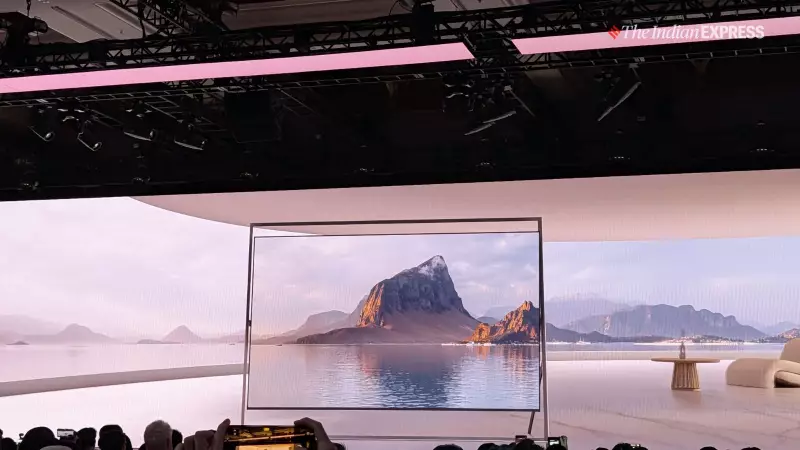
Samsung is leading the charge with a compelling showcase. After launching a prohibitively expensive 115-inch model for $30,000 in September 2025, the company has now expanded its Micro RGB lineup for 2026. Sizes now range from a more accessible 55 inches to a colossal 130 inches. A firsthand look at the massive 130-inch model at CES reveals a truly commanding presence. The TV delivers projector-sized imagery with vibrant colours, deep blacks, and impressive brightness, with greens and reds appearing especially vivid. Samsung boasts that the brightness may even surpass that of OLED panels.
LG is not far behind, announcing its first Micro RGB “Evo” TV series in 75-, 86-, and 100-inch models. LG promises the same 100% BT.2020 coverage and adds that its sets will feature over 1,000 local dimming zones for precise control. The company also claims full colour gamut coverage in SDR modes for both Adobe RGB and the challenging P3 standard.
Hisense has entered the fray with its own take, branding its technology “RGB Mini-LED.” Currently offering models from 55 to 100 inches, Hisense makes an even bolder claim: up to 110 percent BT.2020 coverage and advanced colour control.
Micro RGB vs. OLED: The Battle for Premium Viewing
The inevitable comparison is with the current darling of high-end displays, OLED (Organic Light-Emitting Diode). OLED technology, where each pixel emits its own light, is renowned for achieving perfect blacks and infinite contrast by turning off individual pixels completely. This eliminates “blooming” or halos around bright objects. However, OLEDs have traditionally faced limitations in peak brightness.
This is where Micro RGB aims to compete. While it cannot match OLED’s pixel-perfect blacks due to its use of dimming zones (which can cause minimal blooming), it significantly outperforms OLED in both peak and sustained brightness. This makes Micro RGB TVs potentially superior for bright living rooms, outdoor viewing areas, and for maximizing HDR content. Furthermore, Samsung claims its colour gamut coverage (100% BT.2020) exceeds the approximately 90% coverage typical of OLED models.
Another critical differentiator is lifespan. Micro RGB uses inorganic LEDs, which are immune to burn-in and image retention. OLED screens, which rely on organic materials, can suffer from degradation over time, making them susceptible to these issues despite technological improvements.

The trend at CES 2026 underscores a booming market for ultra-high-end, large-screen televisions. The shift towards screens over 55 inches, even up to 100 inches and beyond, is evident. Samsung’s 130-inch behemoth is a testament to this demand, with the market for super-large-screen TVs expected to grow substantially. However, the major question for consumers remains affordability. While Micro RGB displays immense potential, it enters the market as a premium, costly technology. Whether it can truly dethrone OLED and become a mainstream choice will depend on how quickly prices fall in the coming years.