6 Legendary Muscle Cars with Unforgettable Engine Sounds That Define Automotive Passion
In the world of automobiles, there are fast cars, there are beautiful cars, and then there are muscle cars that you can recognize even before they come into view. A deep, rumbling idle at a traffic signal, a thunderous downshift echoing through a deserted road, or the raw mechanical roar under hard acceleration—for true enthusiasts, the sound of a muscle car is far more than mere noise. It represents identity, heritage, and pure automotive passion. During the golden era of American performance, engineers were not focused on silencing engines; instead, they aimed to imbue them with character and soul.
Massive displacement V8 engines, aggressive camshaft profiles, and unapologetically loud exhaust systems created distinctive soundtracks that continue to define automotive enthusiasm to this day. Certain engines did not merely power vehicles; they forged legends that resonate across generations. Here are six iconic muscle cars whose engine notes remain utterly unforgettable, even decades after their introduction.
Ford Mustang Shelby GT500 (1967)
Few automobiles capture the essence of classic muscle cars as perfectly as the 1967 Shelby GT500. Beneath its elongated hood resided Ford's formidable 428 cubic-inch Cobra Jet V8, an engine that did not simply accelerate—it announced its presence with authority. The GT500's distinctive sound originated from its sheer displacement and traditional, old-school tuning techniques. At idle, it produced a heavy, uneven rumble that felt alive and almost impatient. Depress the throttle, and the auditory experience transformed into a metallic roar layered with mechanical aggression.

Unlike contemporary performance vehicles engineered for refinement and quietness, the Shelby emitted a raw and slightly untamed auditory signature, precisely what cemented its iconic status. Even in today's automotive landscape, the GT500's exhaust note remains one of the most frequently imitated and revered sounds within performance car culture worldwide.
Dodge Challenger SRT Hellcat
If classic muscle cars had a direct modern successor, it would undoubtedly be the Dodge Challenger SRT Hellcat. Its supercharged 6.2-liter HEMI V8 delivers not only staggering horsepower figures but also one of the most instantly recognizable engine sounds of the contemporary automotive era. What truly distinguishes the Hellcat is the unique combination of deep V8 thunder and the high-pitched, distinctive whine emanating from its supercharger.
At lower speeds, the vehicle growls menacingly, while under hard acceleration, the layered auditory experience—a mechanical scream overlaid on a bass-heavy exhaust note—feels almost theatrical in its presentation. This is a car that completely rejects subtlety. The Hellcat does not merely pass by; it dominates and commands the entire acoustic space surrounding it, leaving a lasting impression on all who hear it.
Chevrolet Camaro Z/28 (1969)
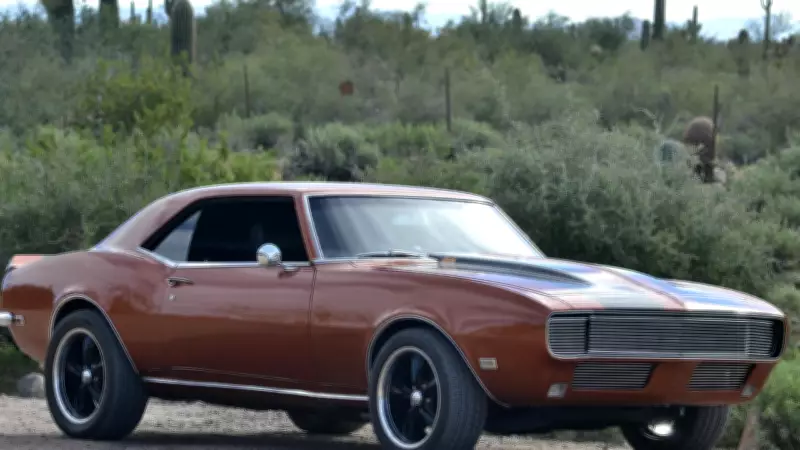
The 1969 Chevrolet Camaro Z/28 was engineered with racing competition firmly in mind, and its 302 cubic-inch V8 engine perfectly reflected that singular purpose. Unlike numerous muscle cars focused exclusively on straight-line acceleration power, this particular engine adored high revolutions, and it produced a spectacular sound while doing so. The Z/28's exhaust note was notably sharper and more urgent compared to the typical low-end rumble commonly associated with muscle cars.
As engine revolutions climbed, the auditory signature evolved into a crisp, race-bred snarl that echoed its Trans-Am racing heritage and roots. It remains one of the rare muscle cars whose sound feels equally appropriate and at home on a professional racetrack as it does on an expansive open highway, blending performance and auditory excitement seamlessly.
Plymouth Hemi 'Cuda (1970)
Whenever discussions turn to legendary engine sounds, the 1970 Plymouth Hemi 'Cuda inevitably enters the conversation. Powered by Chrysler's iconic 426 HEMI V8 engine, this automobile produced a sound that felt almost mythological in its presence. The HEMI's massive combustion chambers generated a thunderous exhaust pulse that was deep, slow, and immensely powerful.

At idle, the entire vehicle shook visibly, sending palpable vibrations through the ground beneath it. Under hard acceleration, the roar transformed into something primal—less refined than modern powerplants but infinitely more emotional and visceral. It was not merely loud; it felt commanding and authoritative, as if the car itself possessed a distinct personality and attitude that demanded respect.
Pontiac GTO Judge (1969)
Often credited with helping define and popularize the entire muscle car era, the Pontiac GTO Judge paired bold, aggressive styling with an equally bold and distinctive soundtrack. Its 400 cubic-inch Ram Air III V8 engine delivered a unique, burbling idle that enthusiasts can instantly recognize even today. What made the GTO particularly special was its exceptional tonal richness and auditory character.
The exhaust note carried a rhythmic cadence—a rolling, bass-heavy sound that intensified smoothly and progressively as speed increased. It felt less violently aggressive than some of its direct rivals but more soulful and almost musical in its delivery. For countless automotive enthusiasts, the GTO represents the perfect, harmonious balance between raw performance capability and distinctive personality.
Chevrolet Chevelle SS 454 (1970)
The Chevrolet Chevelle SS 454 is widely and fondly remembered for one primary characteristic: overwhelming torque output and the earth-shaking, monumental sound that accompanied it. Its LS6 454 cubic-inch big-block V8 engine produced one of the deepest, most resonant exhaust notes ever fitted to a production muscle car. At idle, the engine emitted a slow, thunder-like rumble that subtly hinted at the immense power waiting just beneath the surface.
Press the accelerator pedal, and the sound exploded into a booming, authoritative roar that felt larger than the vehicle itself. The Chevelle did not scream; it thundered with authority—a defining and unforgettable characteristic of big-block American muscle that continues to resonate with collectors and enthusiasts across the globe.