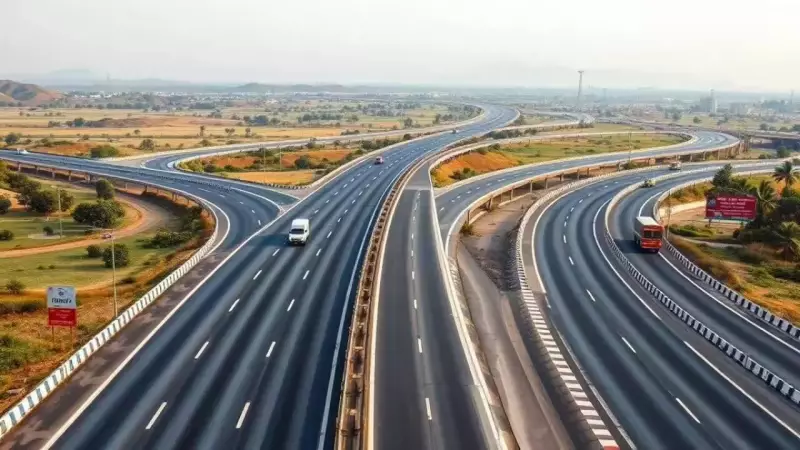
In a major push to enhance road safety across India's vast highway network, telecom giant Reliance Jio has joined forces with the National Highways Authority of India (NHAI). The collaboration aims to deliver real-time safety alerts directly to the phones of millions of travellers on national highways.
How the Telecom-Based Warning System Works
The initiative, formalized through a Memorandum of Understanding (MoU), will leverage Jio's extensive telecom infrastructure. The system is designed to send automated alerts to Jio's massive user base—which has crossed the 500 million subscriber mark—when they approach potentially hazardous zones. These include:
- Accident-prone areas
- Sections with heavy fog
- Cattle-crossing zones
- Sudden diversions or roadwork sites
To ensure maximum reach, especially in areas with unreliable internet, warnings will be disseminated through multiple channels: SMS, WhatsApp, and high-priority voice calls.

Phased Integration and Nationwide Scaling
A key advantage of this system is that it does not require the installation of new roadside hardware. Instead, it will utilize Jio's existing network of telecom towers, allowing for rapid and cost-effective scaling across the country. The alerts will be integrated with NHAI's digital platforms, including the Rajmargyatra application and the 1033 emergency helpline.
Officials from the Ministry of Road Transport & Highways confirmed that the rollout will be conducted in phases. Initially, a pilot program will commence under select NHAI regional offices. This pilot phase is crucial for fine-tuning alert thresholds and accurately identifying high-risk zones on highways.
Future Expansion and Broader Impact
With Jio's unparalleled subscriber base, this initiative is poised to significantly boost safety awareness for long-distance commuters. The ANI news agency reported that NHAI has also confirmed plans to explore similar collaborations with other telecom service providers in the future. This move is expected to create a unified, broader safety net covering users across different mobile networks, ultimately making India's highways safer for everyone.
The partnership marks a significant step in using existing digital infrastructure for public welfare, transforming everyday mobile phones into vital tools for preventive safety on the road.