India's first bullet train project, launched with great ambition in 2017, promised to transform travel between Mumbai and Ahmedabad. However, years of delays, land acquisition hurdles, and rising costs cast doubt on its future. Now, with viaducts, tunnels, and stations rapidly taking shape, the project has entered its most advanced phase yet.
Current Status of the Mumbai-Ahmedabad Bullet Train
The Mumbai-Ahmedabad High-Speed Rail (MAHSR) corridor, spanning approximately 508 kilometers, is being built with Japanese technology and financial assistance. As of 2026, significant progress has been made:
- Viaducts: Over 250 kilometers of viaduct construction is complete, with sections in Gujarat and Maharashtra visibly taking shape.
- Tunnels: The 21-kilometer tunnel between Bandra-Kurla Complex and Shilphata in Maharashtra is nearing completion, with boring work largely finished.
- Stations: Stations at Sabarmati, Surat, Vadodara, and Ahmedabad are in advanced stages of construction. The Mumbai station at BKC is also progressing.
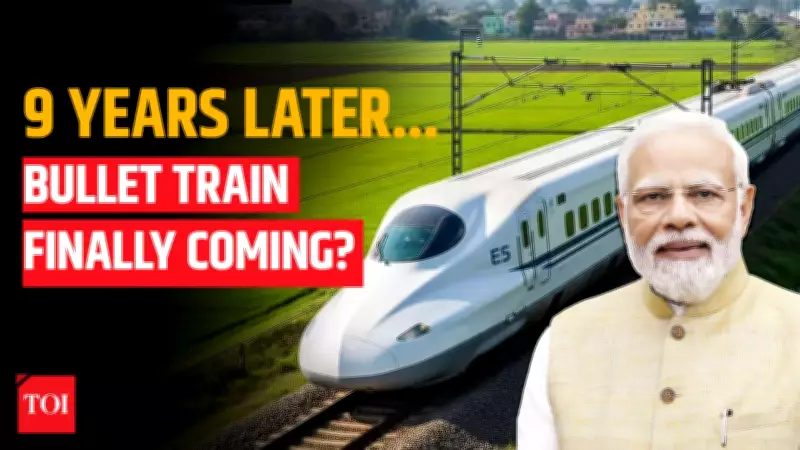
- Rolling Stock: The first set of train sets, based on Japan's Shinkansen E5 series, is expected to arrive for testing by late 2026.
Why It Took So Long
The project faced multiple challenges that caused delays:

- Land Acquisition: Acquiring land in densely populated Maharashtra and Gujarat proved contentious, with legal battles and farmer protests slowing progress.
- Cost Overruns: The initial cost estimate of Rs 1.08 lakh crore has risen due to inflation, design changes, and currency fluctuations. The revised cost is now around Rs 1.6 lakh crore.
- Pandemic Impact: COVID-19 disrupted construction timelines and supply chains, further pushing back deadlines.
- Technical Hurdles: Building seismic-resistant structures and navigating challenging terrain required additional engineering solutions.
When Will It Become Operational?
According to the National High Speed Rail Corporation Limited (NHSRCL), the target for partial operations between Sabarmati and Surat (around 237 km) is 2027. Full operations from Mumbai to Ahmedabad are expected by 2029-2030, though some experts caution that further delays are possible.
Significance for India's Transport Future
The bullet train is not just about speed; it represents a paradigm shift in Indian rail travel. Key benefits include:
- Travel Time: Reducing the Mumbai-Ahmedabad journey from 7-8 hours to under 3 hours.
- Economic Impact: Boosting economic corridors, creating jobs, and encouraging investment in real estate and tourism.
- Technology Transfer: Bringing advanced Japanese rail technology to India, potentially paving the way for more high-speed corridors.
- Environmental Benefits: Shifting passengers from air and road to rail, reducing carbon emissions.
Despite skepticism, the project's tangible progress suggests that India's bullet train dream is inching closer to reality. If completed, it will be a landmark achievement for Indian infrastructure.