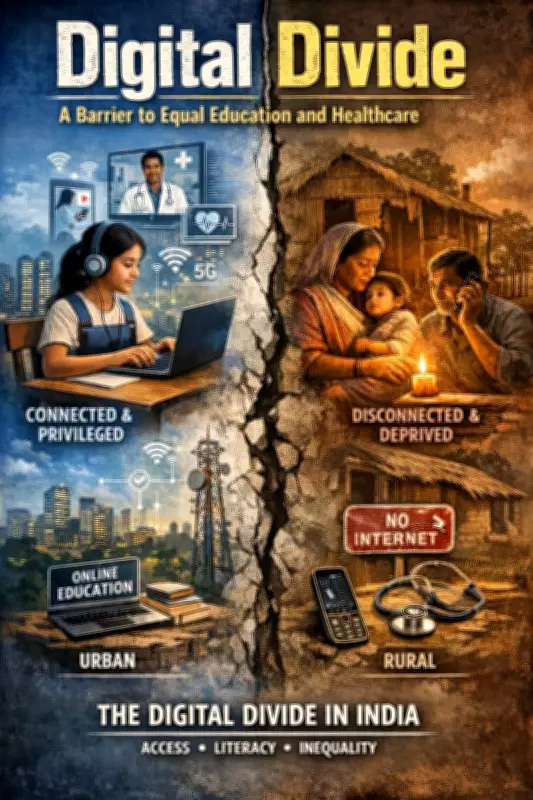
Digital Divide in India: A Deepening Barrier to Essential Services
The digital revolution sweeping across India is fundamentally transforming how citizens access education and healthcare services. However, this technological advancement is creating a significant and growing digital divide that threatens to exclude millions from these essential services. What began as a simple gap in access to smartphones and internet connectivity has evolved into a complex web of structural inequalities that reinforce existing socio-economic disparities.
Beyond Basic Access: The Multi-Dimensional Nature of India's Digital Divide
While the term "digital divide" traditionally refers to the gap between those with and without access to digital technologies, India's situation reveals a much more nuanced reality. This divide is not merely about device ownership or internet connectivity but reflects deeper systemic issues that permeate Indian society. The inequality manifests across multiple dimensions including income levels, geographical location, gender disparities, caste hierarchies, and educational attainment.
As India accelerates its digital transformation through initiatives like Digital India, the consequences of this divide become increasingly severe. The rapid adoption of online education platforms and telemedicine services, while beneficial for those with adequate access, risks leaving behind substantial portions of the population who lack the necessary resources, skills, or infrastructure to participate in this digital ecosystem.

Education Sector: Digital Exclusion Amplifying Learning Gaps
The education sector has witnessed a dramatic shift toward digital platforms, particularly accelerated by recent global events. However, this transition has exposed and amplified existing educational inequalities. Students from low-income households, rural areas, and marginalized communities face significant barriers including:
- Inadequate infrastructure: Lack of reliable internet connectivity and appropriate devices
- Digital literacy gaps: Insufficient skills to effectively use online learning platforms
- Resource constraints: Inability to afford data plans or maintain necessary equipment
- Geographical disadvantages: Poor connectivity in remote and rural regions
These challenges create a vicious cycle where those already disadvantaged by socio-economic factors fall further behind in educational attainment, limiting their future opportunities and perpetuating intergenerational poverty.
Healthcare Access: Telemedicine's Promise and Exclusionary Reality
Similarly, the healthcare sector's digital transformation through telemedicine and online health services presents both opportunities and challenges. While digital healthcare platforms offer unprecedented convenience and access for urban and affluent populations, they simultaneously exclude those who lack:
- Basic digital literacy to navigate healthcare portals
- Reliable internet connectivity for virtual consultations
- Access to smartphones or computers for health monitoring
- Understanding of digital health records and prescription systems
This digital exclusion in healthcare has particularly severe consequences for vulnerable populations including the elderly, people with disabilities, and those in remote areas who may have the greatest need for accessible healthcare services but the least ability to access digital alternatives.
Structural Roots and Compounding Factors
The digital divide in India is not an isolated phenomenon but rather a reflection of deeper structural inequalities. Income disparities directly translate to unequal access to technology, with lower-income households spending a disproportionate percentage of their earnings on basic connectivity. Geographical factors create stark contrasts between urban centers with robust digital infrastructure and rural areas with limited or unreliable connectivity.

Gender disparities further compound the issue, with women and girls often having less access to digital devices and internet services due to cultural norms and economic constraints. Caste-based discrimination continues to influence access to education and resources, including digital technologies. Educational attainment levels create a self-reinforcing cycle where those with limited education struggle to develop digital literacy, while those with digital skills gain educational advantages.
The Path Forward: Addressing Digital Inequality
Addressing India's digital divide requires a multi-faceted approach that goes beyond simply increasing device penetration or internet connectivity. Comprehensive strategies must include:
- Infrastructure development: Expanding reliable internet access to underserved areas
- Digital literacy programs: Building essential skills across all demographic groups
- Affordable access initiatives: Making devices and data plans accessible to low-income populations
- Inclusive design: Creating digital platforms that accommodate diverse users with varying levels of digital proficiency
- Policy integration: Ensuring digital initiatives consider and address existing socio-economic disparities
As India continues its digital transformation journey, bridging this divide is not merely a technological challenge but a fundamental requirement for achieving equitable development and ensuring that the benefits of digital progress reach all citizens, regardless of their socio-economic background.