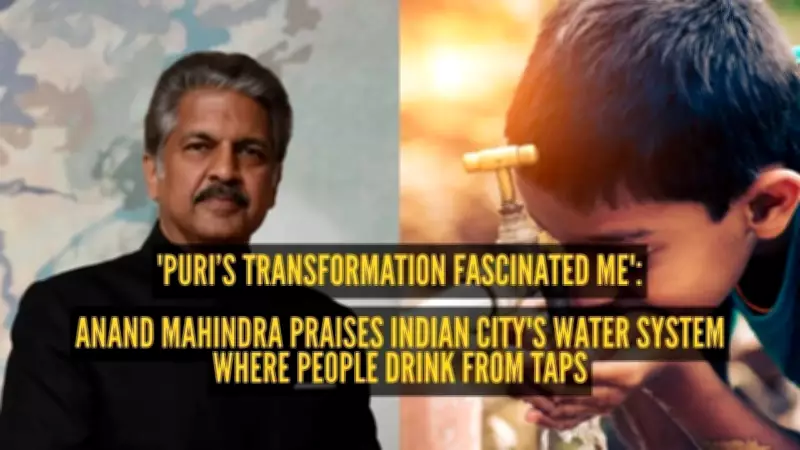
Indian industrialist Anand Mahindra often uses his social media platform to highlight and promote noteworthy initiatives from across the country. From aiding a child in distress to urging authorities to take corrective measures, he acts as a welcomed vigilante, with his followers often joining the cause. Recently, the business magnate took to X (formerly Twitter) to applaud Puri, a coastal city in Odisha, for achieving a feat that seems almost unattainable for the rest of India: a public water system so reliable that residents can drink water directly from the tap.
A Rare Trust in Tap Water
Mahindra pointed out the irony that in a nation where rivers are revered, people "rarely trust" the water that flows into their homes. "Which is why Puri’s transformation fascinated me. An entire city where people can apparently drink straight from the tap," he wrote. He described Puri's transformation as a shining example of what can happen when political leadership, administrative execution, and community participation work in tandem. He also credited local women, known as 'Jal Sathis', for becoming the guardians of the city's water quality and helping to build public trust in the system. "My #MondayMotivation this week comes from leaders & participative citizens who proved that governance can genuinely improve the quality of everyday life," he added.
How Puri Achieved This Milestone
According to a video shared by Mahindra, Puri is one of the few Indian cities where residents can reportedly drink tap water without boiling, filtering, or purchasing bottled water. The video reveals that about a decade ago, Puri faced challenges similar to those of many urban centers across the country. Only half of the households had access to piped water, while others relied on water tankers or bottled water. Nearly 47% of water was lost due to leakages from damaged pipelines, while contamination and irregular supply remained persistent concerns.

To address these issues, the Odisha government launched a major upgrade of the city's water systems. The project included the development of a 24-hour smart water distribution network. The system uses technology-driven monitoring, with sensors tracking water flow, pressure, and chlorine levels at regular intervals. Water from the Bhargavi river is treated, filtered, and monitored before reaching homes.
Role of Jal Sathis
A key part of the initiative is the involvement of local women called 'Jal Sathis'. They played an important role in conducting community outreach, spreading awareness, and building confidence among residents about the safety of tap water. Today, nearly 2.5 lakh residents receive BIS-certified drinking water directly through their taps, while the city’s approximately 20 million annual tourists also benefit from the improved water infrastructure. Moreover, water loss through leakages has dropped from 47% to around 15%, and plastic waste has reportedly decreased by nearly 400 metric tonnes annually.