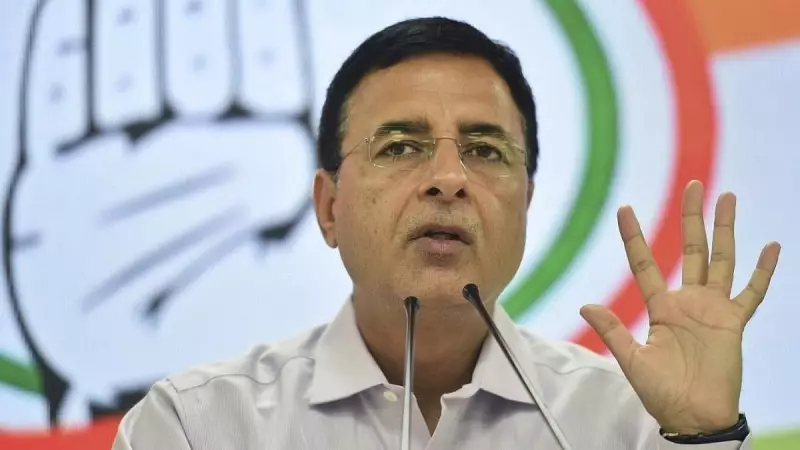
Congress Member of Parliament Randeep Singh Surjewala has raised significant alarms regarding potential privacy infringements posed by the government's Sanchar Saathi application. The senior politician argues that the platform's framework could severely compromise the personal security of every Indian mobile user.
Core Concerns: A Gateway for Data Vulnerability?
In a strong critique, Surjewala stated that the application's architecture potentially makes all sensitive information stored on a user's smartphone susceptible to access. This includes critical personal data such as passwords, bank account details, and other private information. He emphasized that this vulnerability does not discriminate between potential threat actors.
The data, he warned, could be exposed either to government agencies or to malicious hackers, or in a worst-case scenario, to both entities. This statement, made on December 3, 2025, directly challenges the application's stated purpose of enhancing telecom security for citizens.
The Fundamental Right to Privacy Under Question
The MP's central argument hinges on the fundamental right to privacy, which was affirmed as a constitutional right by the Supreme Court of India. Surjewala contends that the operational model of the Sanchar Saathi app "completely negates the right of privacy" for the individual. His concern reflects a growing global and national debate on where to draw the line between state security initiatives and personal digital liberty.
By centralizing access to deep device information, the app, according to this perspective, creates a single point of failure that could be exploited. The fear is that without ironclad safeguards and transparent oversight, such tools can be misused for surveillance beyond their intended scope.
Implications and the Ongoing Security Dialogue
This criticism from a prominent opposition leader is likely to fuel further parliamentary and public discussion on India's digital governance policies. It places the spotlight on the government's responsibility to ensure that cybersecurity tools designed for public safety do not themselves become vectors for insecurity and privacy violations.
The development underscores the critical need for robust data protection laws and independent audits of government-facing digital platforms. As of December 3, 2025, the government has yet to issue a formal public response to these specific allegations made by Surjewala. The outcome of this discourse could set important precedents for how India balances technological oversight with civil liberties in the digital age.