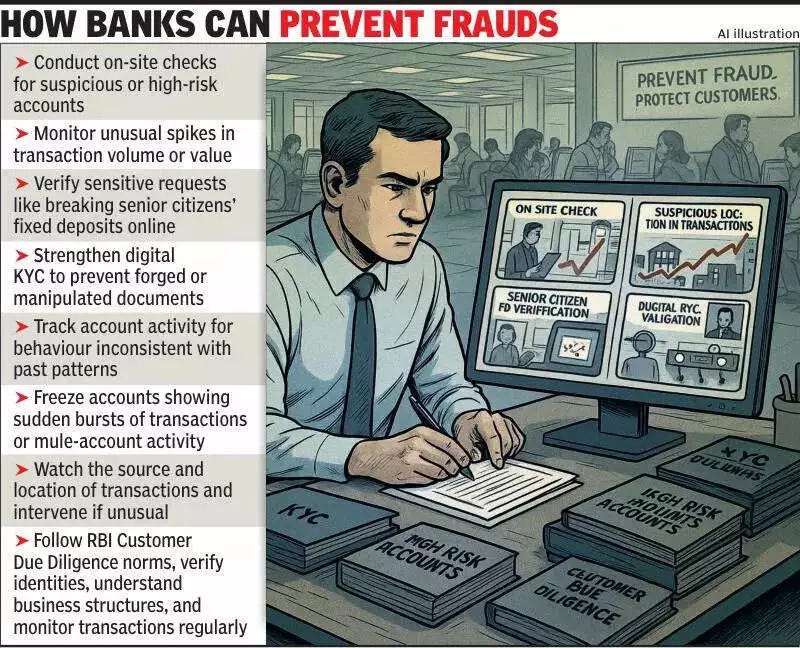
In a significant move, Haryana's Director General of Police (DGP) OP Singh has declared that banks could be held financially accountable for losses suffered by victims of online scams if investigations reveal a lapse in "due diligence" on the part of the financial institutions. The top cop made these remarks during a surprise inspection at the Cyber East police station in Gurgaon on Monday, emphasizing the need for a proactive institutional shield against digital crimes.
Bank Liability and the Path to Compensation
DGP Singh clarified that the existing Information Technology Act has clear provisions holding banks responsible for compensating customers in instances of negligence. "If a bank fails to take appropriate measures to prevent fraud or overlooks suspicious transactions, resulting in losses, it must compensate the customer," he stated. He explained that police investigations would specifically scrutinize whether the bank followed all mandated processes in handling the transactions related to the fraud.
The DGP also outlined that a bank's liability extends to situations where it does not act swiftly after being informed about a fraudulent transaction. To alleviate public hardship, he laid out measures to expedite the release of smaller sums of money that get frozen during cybercrime probes. Singh pointed out that victims often spend disproportionately high fees to recover modest amounts, which adds to their distress.

Streamlining Justice: Lok Adalats and Awareness Drives
Citing a directive from the high court, Singh revealed a mechanism for faster resolution. Police can now take certain cyber fraud cases directly to Lok Adalats without the mandatory registration of a First Information Report (FIR). This is expected to facilitate quicker refunds. "If a victim's Rs 4,000 is frozen, they shouldn't have to struggle for months. Such cases can be presented before Lok Adalat for immediate relief," the DGP added.
On the prevention front, Singh announced an expanded cyber awareness campaign. This initiative will leverage social media and community programmes. In a novel step, head boys and head girls in schools and colleges will be appointed as 'cyber awareness ambassadors' to educate their peers about online safety and emerging fraud trends. A dedicated network will also be established in collaboration with SPIC MACAY to use these enthusiastic students to spread awareness about cybercrime and drugs through various events.
A Surprise Visit and Call for Professionalism
During his unannounced visit, DGP Singh also focused on improving police station facilities and officer discipline. He instructed officials to ensure the waiting room for complainants was clean and comfortable. In a social media post, he shared an anecdote about arriving incognito to file a case about 'digital arrest,' where the gate sentry did not recognize him and directed him to the duty officer.
He stressed the importance of maintaining a smart and professional appearance, even correcting an inspector's tilted cap. Upon learning of the DGP's presence, Police Commissioner Vikas Arora, along with the DCP (East) and the district attorney, rushed to the Cyber East police station. Singh remained there for over two hours, discussing operational improvements.
Before leaving, the DGP said he had instructed the Police Commissioner to address delays in challan records reaching Lok Adalats. He also advised the Inspector General (Cyber) to visit at least one cyber police station weekly to identify and resolve three key problems faced by victims.
Concluding with a public warning, Singh cautioned that most cybercrimes prey on human emotions like greed and fear. "Anyone offering unrealistic returns or pressuring you to share information is likely a fraudster. Vigilance is the strongest protection," he advised.