Zoho Founder Challenges Traditional Talent Assessment Methods
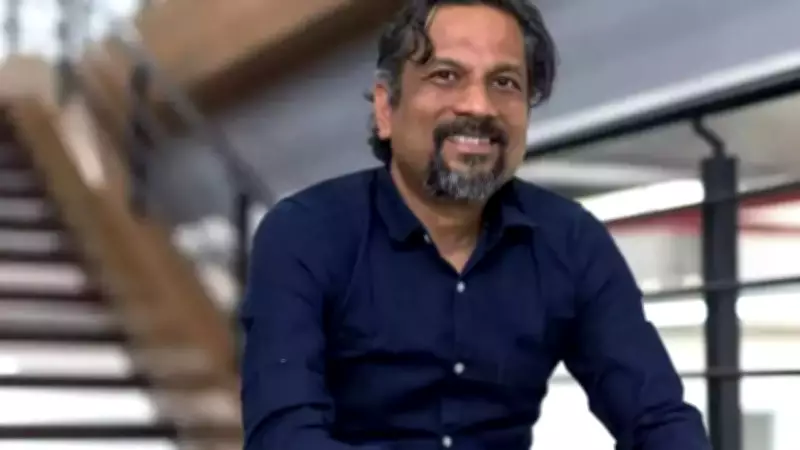
In a thought-provoking social media post, Zoho founder Sridhar Vembu has raised significant questions about the effectiveness of conventional evaluation methods in identifying exceptional talent. The tech entrepreneur argued that standardized exams and structured interviews often fail to measure the qualities that lead to outstanding real-world performance.
The Core Criticism: Testing Skills Versus Real Ability
Vembu articulated his position clearly, stating that these traditional assessment methods primarily evaluate specific, narrow skills rather than broader capabilities. "Tests measure test-taking skills. Interviews measure interviewing skills," Vembu wrote in his post on platform X. He emphasized that beyond establishing a basic threshold of competence, these evaluation techniques show weak correlation with exceptional performance in actual professional environments.
The Zoho founder elaborated that once fundamental competency is verified, additional scores and interview performance metrics become poor predictors of the traits necessary for groundbreaking work. This perspective challenges decades of conventional hiring and educational assessment practices that have relied heavily on these metrics.

Support from AI Pioneer Yann LeCun
In his argument, Vembu referenced insights from AI pioneer Yann LeCun, Meta's former chief AI scientist, who provided a compelling example from the field of mathematics. LeCun highlighted the case of French mathematician Hugo Duminil-Copin, who received the prestigious Fields Medal in 2022 despite not participating in mathematical competitions and reportedly not excelling in them.
According to LeCun, innovative mathematical research requires a different set of qualities than those rewarded in competitions. "Innovative mathematics requires creativity, intuition, intense concentration, and long reflections, sometimes spread over several years," LeCun explained. He contrasted this with the fast problem-solving abilities typically tested in competitions like the International Mathematical Olympiad (IMO), noting that artificial intelligence systems can now perform well in such speed-based challenges.
The Research Perspective: Asking Versus Answering
LeCun further distinguished between different cognitive approaches, suggesting that research excellence involves more than quick solutions. "One of the big activities of a researcher, in mathematics and elsewhere, is not to answer questions but to ask the right questions," he stated. This distinction highlights how traditional assessments might overlook the questioning and creative thinking abilities that drive true innovation.
The discussion originated from a user inquiry about why France produces numerous Fields Medal winners despite weaker performances in IMO competitions, while some Eastern European countries excel at IMO but have fewer Fields Medal recipients. This geographical contrast underscores the broader debate about how different evaluation methods identify and nurture distinct types of talent.
Implications for Talent Identification Systems
The exchange between Vembu and LeCun touches on several critical implications:
- Traditional assessment methods may systematically overlook creative thinkers who don't excel in timed testing environments
- The qualities needed for breakthrough innovation differ significantly from those rewarded in competitive examinations
- As AI advances in solving standardized problems, human strengths in creativity and sustained inquiry become increasingly valuable
- Educational and hiring systems might need to develop more nuanced approaches to talent identification
This conversation contributes to an ongoing global discussion about how societies identify, evaluate, and cultivate exceptional talent across various fields. As technology continues to evolve, the debate about what constitutes meaningful assessment and how to recognize potential for extraordinary achievement becomes increasingly relevant for educational institutions, corporations, and research organizations worldwide.