Months before B.K.S. Iyengar died in Pune on 20 August 2014 at age ninety-five, a visit revealed his unwavering dedication. He was more than a celebrated guru; he was an exacting practitioner who made yoga intelligible, disciplined, and accessible to millions. Violinist Yehudi Menuhin helped introduce him to Europe, and his 1966 book Light on Yoga became a classic doorway into the discipline. Even China honored him with commemorative stamps.
Iyengar's Compassionate Method
Iyengar's genius lay not only in formidable virtuosity but in compassion expressed as method. He opened yoga to the elderly, injured, disabled, stiff, frightened, and medically fragile using blocks, belts, blankets, and chairs as instruments of entry, not dilution. His work continued through Geeta Iyengar, Prashant Iyengar, Abhijata Iyengar, and a global community of teachers shaped by his precision.
When asked why he still subjected himself to such rigour, he replied, “There are still parts of my body that my consciousness has not reached.” This sentence encapsulates yoga's deepest aspiration: building bridges between body and mind, sensation and awareness, matter and consciousness. Yoga, at its most authentic, is intelligence entering every neglected corner of our being.

International Yoga Day: Celebration or Spectacle?
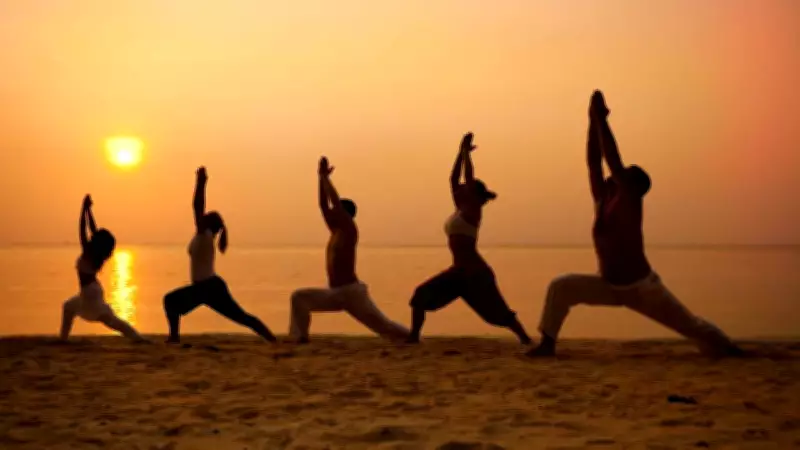
On International Yoga Day, we may need self-examination alongside celebration. Yoga is rightly honored as one of India's great gifts to the world, yet rituals can obscure its essence. Choreographed gatherings, corporate wellness sessions, school competitions rewarding contortion, and mats unfurled in Times Square risk turning yoga into spectacle, competition, or branding. A posture held for applause is not the same as an asana entered with awareness. A child who out-bends another acquires flexibility but not necessarily humility. Yoga is not performance or gymnastics wrapped in Sanskrit; it is the yoking of our scattered being into attention, so body, breath, mind, and conduct become clearer, steadier, and freer.
Precision matters because casual imitation from a screen can be unwise. Forceful breathing practices may harm those with high blood pressure or hernia. Precision is compassion; it trains us to respect limits and listen deeply. Progress in yoga is measured not by how far the body is pushed but by how honestly consciousness inhabits it.
Yoga's Evolutionary Genius
Indian civilization's genius has been its capacity to absorb, adapt, and integrate without losing its centre. Yoga evolved through conversation with Buddhist contemplative traditions, Jain ethics, Sufi interiority, Tantric maps of subtle energy, and India's philosophical life. This was disciplined testing: retaining what transformed the practitioner and allowing forms to change when life required it.
This diversity matters especially now, when public life faces fragmentation and chauvinism. Yoga's history offers another possibility: serious teachers responding to contemporary predicaments without losing the core. One temperament needs rigour, another tenderness; one body alignment, another breath; one mind silence, another service. Diversity is disciplined plurality held together by the aspiration to reduce suffering and awaken intelligence.
Patanjali's Philosophical Matrix
Patanjali's Yoga Sutras remain a luminous example. He did not prescribe a fixed physical system but offered a philosophical matrix. His formulation of asana as steady and comfortable left space for centuries of development, allowing hundreds of postures to emerge. The original teaching was not a cage but a crucible: preserving principles while allowing forms to evolve.

Modern Renewals: Iyengar, Desikachar, Gitananda, and Others
The last century witnessed creative renewals. Iyengar democratised access through therapeutic precision. T.K.V. Desikachar carried forward Viniyoga, adapting practice to the person—a pregnant woman, child, athlete, executive, labourer, elder, or fragile individual—making inclusivity a method, not a slogan. Yogamaharishi Swami Gitananda Giri established at Ananda Ashram in Pondicherry a rigorous, scientifically grounded lineage, continued by his son Yogacharya Ananda Balayogi Bhavanani, emphasising the wholeness of yogic life: breath, discipline, ethics, concentration, subtle awareness, and service. The Bihar School of Yoga under Swami Satyananda bridged scientific rationalism and spiritual seeking; Yoga Nidra addressed stress, insomnia, and exhaustion, while systematic pratyahara offered a remedy for sensory overload. Its integration of discipline, research, and seva showed yoga as a way of re-entering the world with steadier attention and a more generous heart. The Sivananda tradition offered a simple framework—exercise, breath, relaxation, diet, positive thinking—making practice accessible without demanding religious conversion. The Krishnamacharya lineage gave rise to many valid forms, from Ashtanga's rigour to therapeutic branches, evidencing vitality.
Yoga's Deeper Purpose
Yoga's purpose is not to help endure the intolerable without question. Its deeper function is to reveal patterns that generate suffering: restlessness, fear, compulsive desire, aggression, isolation, greed, and the illusion of separateness. Relaxation techniques and lifestyle changes are valuable only when connected to this larger inquiry; otherwise, yoga becomes another commodity in the marketplace of self-improvement.
Civilisational pride, if brittle and defensive, harms the inheritance it seeks to protect. Yoga does not need triumphalism; it needs humility. Its motivation was transcendence, not self-exaltation; interdependence, not separateness. Its highest expression is compassion in action, recognising that individual and collective well-being are inseparable.
As yoga spreads worldwide, it offers a rare model: ancient wisdom remaining alive without demanding belief, a tradition universal without becoming rootless, a practice belonging to everyone without exclusive ownership. This is India's true gift: not proprietary wisdom, but a living path of transformation. Yoga asks no one to abandon who they are, yet invites each of us to become more than we have been.