

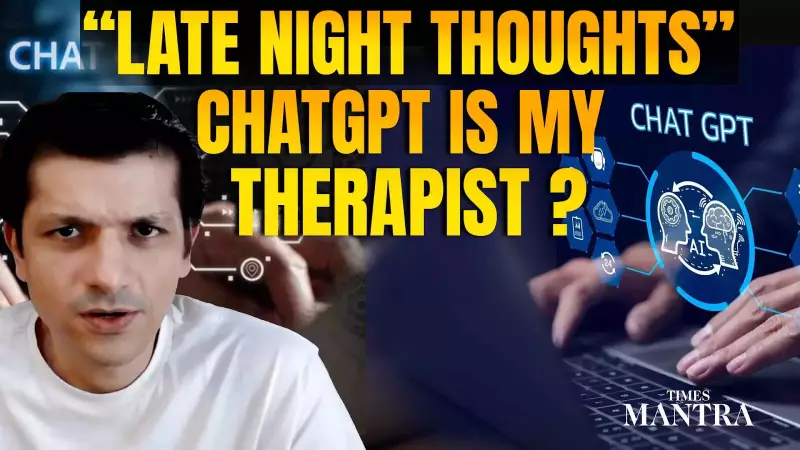
Why People Share Feelings With ChatGPT: Alok Taunk Explains AI's Emotional Role
In today's digital world, a fascinating trend is emerging. More and more individuals are turning to ChatGPT to share their feelings and emotions. They often choose this AI assistant over friends or family members. This shift represents more than just a technological advancement. It points to a deeper human need for connection and understanding.
The Rise of AI as a Confidant
Alok Taunk, an expert in this field, provides clear insights into this phenomenon. He explains how artificial intelligence has created unique spaces for emotional expression. These digital environments feel safe and welcoming to many users. People find comfort in knowing that ChatGPT will listen without passing judgment.
This availability is a key factor. Unlike human confidants who have schedules and limitations, AI assistants remain accessible around the clock. Whether someone experiences happiness, anxiety, confusion, or pain, ChatGPT stands ready to engage. This constant presence meets a fundamental emotional need in our fast-paced society.

Evolving Conversations in the Digital Age
The nature of emotional conversations is undergoing significant transformation. Traditional human-to-human interactions now share space with human-to-AI dialogues. Alok Taunk highlights how these exchanges are taking new forms. They reflect changing attitudes toward technology and emotional well-being.
People discover that speaking with ChatGPT feels surprisingly natural. The AI's responses, while generated by algorithms, often provide the validation users seek. This experience encourages further sharing and exploration of personal feelings. The digital age thus fosters novel approaches to emotional expression.
Psychological and Social Implications
According to Alok Taunk, this growing trend reveals important psychological shifts. Individuals increasingly seek connection through digital means. They value the non-judgmental nature of AI interactions. This preference indicates changing social dynamics around emotional support.
The way people pursue understanding is evolving. While human relationships remain vital, AI offers complementary pathways. These digital conversations can reduce feelings of isolation. They provide immediate responses when human support might be unavailable.
This phenomenon also raises questions about future social structures. As AI becomes more integrated into daily life, its role in emotional health will likely expand. Understanding these changes helps us navigate the intersection of technology and human emotion.
Alok Taunk's analysis reminds us that technology serves human needs in profound ways. The choice to share feelings with ChatGPT reflects both innovation and timeless emotional desires. It shows how artificial intelligence can address fundamental aspects of the human experience.






