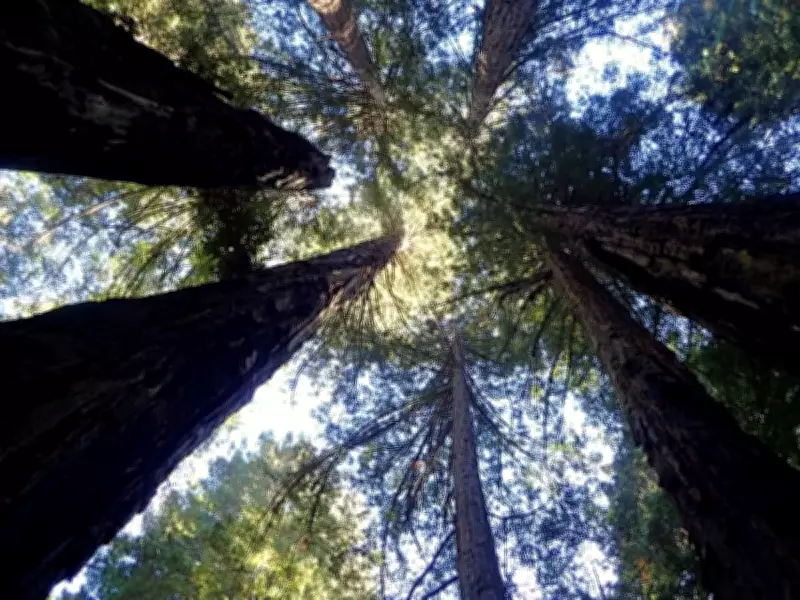
The world's tallest tree stands without any signs or tourist maps indicating its location. Park officials have deliberately concealed the tree's position from the public to protect its fragile forest habitat. The tree, named Hyperion, is a coast redwood growing somewhere within the Redwood National and State Parks in California. According to the National Park Service, visitors searching for Hyperion have already damaged the surrounding vegetation.
Why Hyperion's Location Is a Secret
Keeping Hyperion's location secret is not meant to be mysterious but rather to protect a living organism and its habitat. Hyperion is the tallest known tree on Earth, with an approximate height of 379 feet. Coast redwoods are already known for their impressive stature, but Hyperion exceeds all of them. Despite its massive size, the tree is quite fragile. Many believe such massive trees have deep roots, but redwoods like Hyperion have shallow root systems that extend horizontally, not vertically. The surrounding soil is vital for the tree's health and longevity, and continuous human activity can ruin the delicate soil system quickly.
The Impact of Tourism
According to the National Park Service, visitors interested in finding the tree often stray off designated paths, causing soil erosion, plant damage, and soil compaction around the tree's base. Tourism became such a pressing issue that authorities now actively discourage people from seeking it out. Getting to Hyperion requires traveling off-trail through habitats not meant for many hikers. Forest ecologist Nalini Nadkarni notes that disturbances to old-growth forests can have significant long-term consequences. Old-growth forests form slowly over hundreds of years, and any disturbance may result in permanent ecosystem alterations.

Redwood Forests: Unique Ecosystems
Hyperion exists in one of the last remaining old-growth redwood ecosystems. Coast redwood forests were once widespread along California's northern coast, but extensive logging and land development have reduced them. Today, redwood parks serve as protected reserves conserving old-growth forests. Redwood trees depend on a moist climate, undisturbed ground, and appropriate soil composition. Any disturbance can degrade the conditions required for their survival. Park rangers treat the tree as an endangered object.
Why Scientists Kept the Location Secret
While it may seem unusual, concealing Hyperion's location is a standard conservation approach for delicate environments. The National Park Service often prohibits visits to environmentally sensitive spots when excessive tourism causes damage. Officials report that some harm has already been done by visitors who tried to find the tree after its discovery was made public. This illustrates how natural attractions gain widespread popularity on social media, leading to massive tourist influxes that fragile ecosystems cannot withstand. Restoration is much slower than deterioration.
What Makes Hyperion So Attractive
Human interest drives people to witness record-holding places or items. Hyperion symbolizes that the biggest organism on the planet is also very fragile, despite living for hundreds of years and reaching hundreds of feet. Protecting its location does not prevent admiration; many other equally large redwoods in California's parks are accessible. However, concealing Hyperion's precise location preserves it from those who might get too close.
A Hidden Location to Save Living History
This is not just about the world's tallest tree but about its preservation. Park management minimizes ecological risks from constant visits. Sometimes the best way to preserve nature is to keep some places inaccessible to humans.