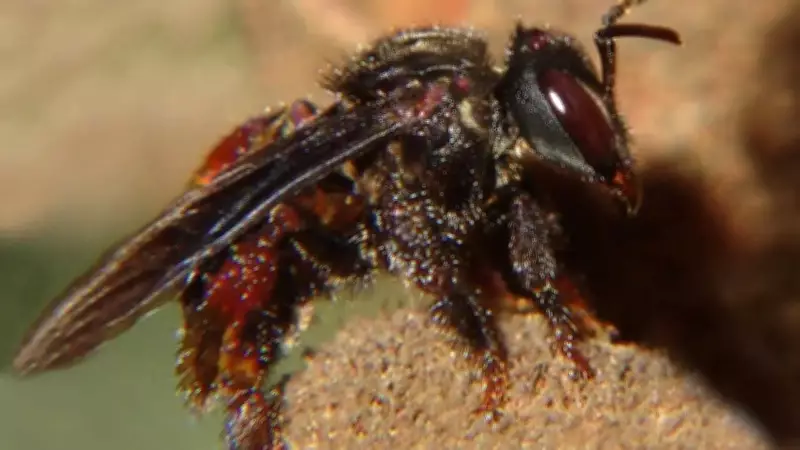
Bees are typically known as pollinators that gather nectar and pollen, but a rare group of bees called vulture bees has evolved a strikingly different survival strategy. Instead of visiting flowers, these insects feed on decaying animal carcasses. Found primarily in the tropical forests of Central and South America, vulture bees are an exceptional example of dietary adaptation in the insect world.
Vulture Bees: A Unique Dietary Shift
Vulture bees are the only known bees that do not use pollen to feed their colonies. They locate dead animals, tear apart the flesh with their powerful mandibles, and transport pieces of meat back to their nests. This behavior challenges the conventional view of bees as plant-dependent insects and highlights how species can exploit new ecological niches when resources are scarce.
How Vulture Bees Adapted to a Meat-Based Diet
Vulture bees belong to a small group within the Trigona genus, comprising very few species that have specialized mouthparts for extracting flesh from carcasses. Unlike typical bees, they lack adaptations for collecting pollen. Instead, they use their mandibles to chew and break open dead animal tissue. Once collected, the meat is brought to the hive and converted into a protein-rich substance that replaces pollen as a food source. This material is stored in special chambers and fed to developing larvae, allowing the colony to thrive without floral resources.

Unique Gut Bacteria Enable Carrion Digestion
The ability of vulture bees to digest decomposed meat is made possible by significant physiological adaptations. A study titled "Why Did the Bee Eat the Chicken? Symbiont Gain, Loss, and Retention in the Vulture Bee Microbiome" revealed that these bees possess a distinct gut microbial community unlike that of other bees. Their guts contain acid-producing bacteria that create a highly acidic environment, helping to break down decaying animal tissue and protect against pathogens found in carcasses. The research also shows that vulture bees have lost some key microorganisms common in flower-feeding bees while gaining new bacteria better suited to their scavenging diet. This alteration in gut microbiota is a critical adaptation that enables them to derive energy from a potentially toxic food source.
Feeding Behavior Differences
To locate animal remains, vulture bees rely heavily on their exceptional sense of smell. When they detect the odor of carrion, they often enter through soft openings such as eye sockets. Worker bees then consume the meat, partially digest it, and store it for further processing. Unlike honeybees, vulture bees produce a protein-rich substance from meat rather than true honey, though some may collect sugars from trees or plants. Regardless of the source, protein is primarily obtained from dead animals.
Significance for Evolution and Ecology
The existence of vulture bees demonstrates how species can adapt to radically different diets due to environmental pressures like competition. By abandoning nectar and pollen, vulture bees have assumed the role of scavengers, filling a new ecological niche. This transformation provides valuable insights into how changing food sources drive evolutionary processes and how gut microbiomes enable organisms to exploit entirely new types of food.