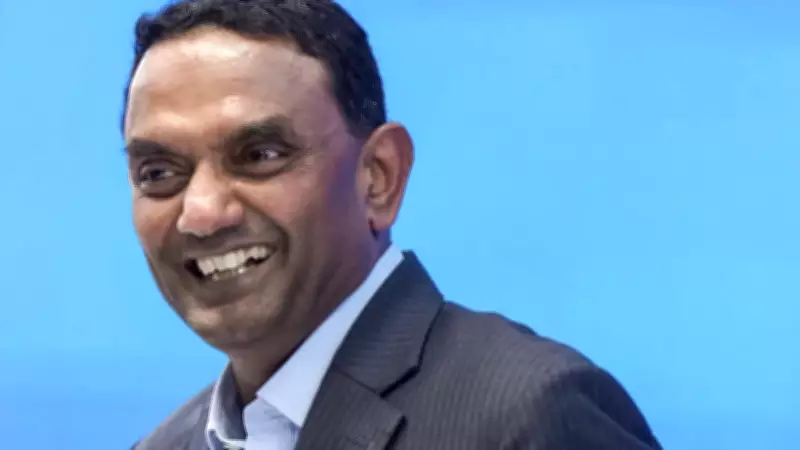
TCS CEO Champions AI Adoption, Urges Employees to Embrace Technology Even at Revenue Cost
In a bold strategic move, Tata Consultancy Services (TCS) is actively encouraging its vast workforce to adopt artificial intelligence technologies, even when such adoption might impact the company's traditional revenue streams. Chief Executive Officer K Krithivasan made this significant announcement during his address at the annual NTLF event held in Mumbai, positioning AI as a transformative force that demands full organizational commitment.
A Civilizational Shift in Technology
Krithivasan described the rise of artificial intelligence as nothing less than a "civilizational shift," emphasizing its potential to democratize knowledge and address complex problems that have remained unsolved for decades. This framing elevates AI beyond mere technological advancement to a fundamental change in how knowledge is created, distributed, and applied across industries and societies.
"We encourage our associates to go out to the customers and use AI, even if it means cannibalizing our revenues," Krithivasan stated unequivocally. This approach represents a forward-thinking strategy that prioritizes long-term technological relevance over short-term financial considerations, acknowledging that AI will inevitably reshape business models across the IT services sector.

Building an AI-Fluent Workforce
The IT giant is undertaking a comprehensive initiative to ensure that each of its more than 600,000 employees becomes "AI fluent." This ambitious program goes beyond basic awareness to develop practical, hands-on skills that employees can apply directly to client projects and internal processes. Krithivasan emphasized that the company is not "afraid" of artificial intelligence impacting jobs, suggesting instead that AI represents an opportunity for workforce enhancement rather than replacement.
Interestingly, Krithivasan noted that younger staff members are generally faster to adopt and utilize AI technologies compared to their senior colleagues. He observed that while senior employees often consume substantial amounts of information, they may not always translate that knowledge into practical outcomes. This insight has informed TCS's approach to AI training, which emphasizes active, hands-on learning rather than passive consumption of information.
Beyond Simple Prompts: Practical AI Implementation
The CEO stressed that true AI adoption extends far beyond merely issuing prompts on generative AI platforms like OpenAI's ChatGPT. "It is not about just giving a few prompts," he explained, adding that employees need to "get their hands dirty" by actively building solutions using AI tools. This practical orientation reflects TCS's commitment to developing substantive AI capabilities rather than superficial familiarity with popular platforms.
Krithivasan reported that employees are showing strong interest in acquiring AI skills, noting that there has been no need to introduce special incentives to drive adoption. This organic enthusiasm suggests that TCS's workforce recognizes the importance of AI skills for their professional development and the company's competitive positioning in the global IT services market.
AI as a Board-Level Priority with Customer Focus
The TCS CEO observed that artificial intelligence has increasingly become a board-level priority across industries, with chief information officers being specifically tasked to identify and deploy relevant AI solutions. While AI is expected to drive significant productivity gains, Krithivasan emphasized that TCS remains equally focused on delivering tangible benefits to customers through the technology.
This customer-centric approach ensures that AI implementation serves practical business needs rather than becoming an exercise in technological novelty. By aligning AI initiatives with customer value creation, TCS aims to build sustainable competitive advantages that extend beyond operational efficiency to include enhanced service offerings and innovative solutions.

Addressing AI Governance Challenges
Recognizing the complex governance challenges associated with artificial intelligence, Krithivasan revealed that TCS is exploring frameworks where AI systems can help regulate and monitor other AI applications through the use of multiple agents. This self-regulatory approach represents an innovative solution to the oversight challenges posed by increasingly sophisticated AI systems, potentially establishing new paradigms for responsible AI deployment.
The company's comprehensive strategy encompasses not only technological adoption but also ethical considerations and governance frameworks, positioning TCS as a thoughtful leader in the responsible implementation of artificial intelligence technologies across global business environments.