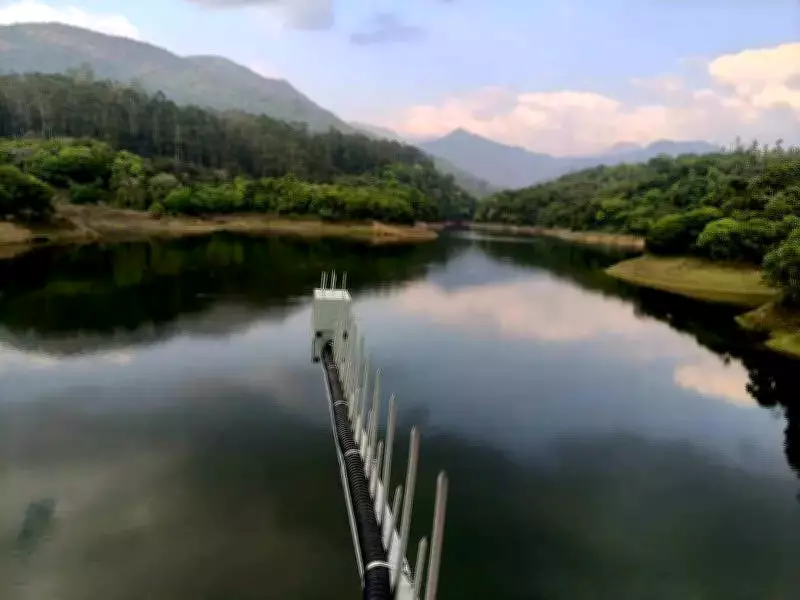
Coimbatore: Gone are the days when Tamil Nadu solely depended on manual readings to record water levels in its reservoirs for flood management, irrigation release, and long-term water conservation strategies. The state has now strengthened its reservoir monitoring and dam safety infrastructure with the deployment of Artificial Intelligence of Things (AIoT)-based Automated Water Level Recorder (AWLR) systems at 44 dams, reservoirs, and regulator sites.
Project Implementation and Technology
The project, implemented in phases across 18 critical locations in the Pollachi and Thanjavur divisions, was executed by Coimbatore-based startup Enthu Technology Solutions India Pvt Ltd. According to startup officials, AWLR systems use embedded radar-based water level sensors integrated with AI-powered software and solar-powered telemetry units to collect and transmit reservoir data wirelessly to authorities.
K S Rathinasamy, cofounder and director of the startup, says the system is designed to deliver highly accurate water level readings even in challenging dam environments. "The successful completion of its deployment marks an important milestone in Tamil Nadu's water infrastructure modernization journey. By digitizing water level observations across critical sites, we are enabling faster, more informed and data-backed decisions for smarter reservoir governance."

Radar Technology and Precision
The device uses frequency-modulated continuous-wave millimetre-wave radar technology and can detect even minor fluctuations in water levels with high precision. The narrow beam angle minimizes interference from surrounding structures like monkeys, making the system suitable for reservoirs and dam sites in complex terrains.
Mobile Application and Real-Time Monitoring
An integrated mobile application named 'thingZmate' provides officials with centralized access to real-time data, historical trends, and analytical dashboards. Through the app, officials can monitor water levels, assess inflow and outflow, and review past rainfall and reservoir storage patterns.
An official from the Water Resources Department, Pollachi division, says the automated system provides updated reservoir data every 20 minutes, significantly reducing dependence on manual monitoring and analysis. "The technology has improved operational efficiency by nearly 30% to 35%."
Predictive Analytics and Data Storage
The system also features predictive analytics to support irrigation release planning, flood management, and long-term water conservation strategies. To ensure uninterrupted operation in remote locations, the device stores data locally during network outages and automatically synchronizes once connectivity is restored. It supports multiple communication options, including cellular, ethernet, Wi-Fi, and LoRaWAN networks, enabling deployment across varied geographical conditions.
Power and Durability
Powered by solar panels with battery backup, the device is designed to function continuously even during prolonged monsoon periods and cloudy weather. A built-in local display enables field engineers to verify readings during inspection and maintenance activities.
Broader Modernization Efforts
Officials say the project is part of broader efforts to modernize Tamil Nadu's ageing water infrastructure and strengthen climate resilience through automated and data-driven systems. As climate variability and extreme weather events continue to increase, experts believe AIoT-enabled monitoring systems will play a crucial role in reservoir management, disaster preparedness, and protection of water resources across the state.