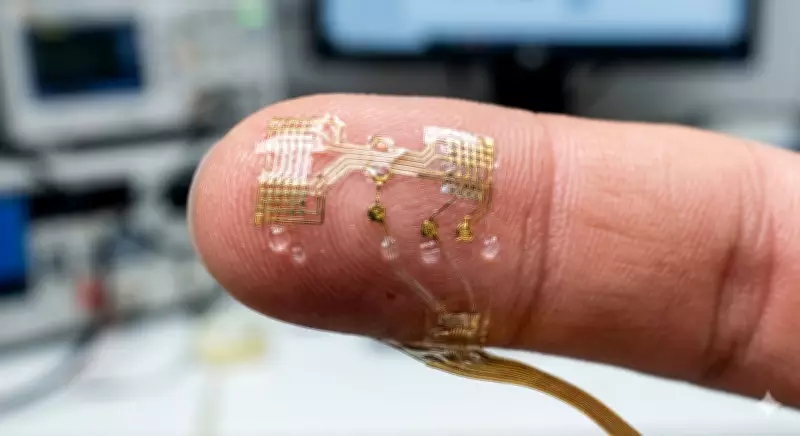
Japanese Scientists Develop Sweat-Powered Wearable Sensors for Battery-Free Electronics
In a groundbreaking scientific achievement, a team of Japanese researchers has developed a wearable device that harnesses electricity from human sweat to function. This innovation promises to transform the future of wearable technology, making it more sustainable, efficient, and seamlessly integrated into daily life. By leveraging a natural bodily function, scientists are edging closer to a world where charging cables and batteries become obsolete.
Sweat-Powered Sensors: A Breakthrough in Wearable Technology
At the heart of this advancement is a biofuel cell, a technology that converts biochemical energy into electricity. Specifically, scientists from institutions like the Tokyo University of Science have engineered sensors that utilize compounds found in sweat, such as lactate, to generate power. Lactate, produced during physical exertion, serves as a fuel source. When it interacts with specialized enzymes on the sensors, a chemical reaction occurs, producing electricity. Research indicates these sensors "generate electric power from the lactate in the wearer's sweat," ensuring a continuous energy supply. Essentially, activities like walking, exercising, or even sweating can now generate electricity, paving the way for self-sustaining devices.
How Sweat Generates Electricity
Scientists are refining the performance of sweat-powered sensors through various methods, with a key focus on manufacturing improvements. They have devised a single-step process using enzyme-infused ink that can be printed on diverse substrates, including paper and fabric. This innovation allows for large-scale production, enabling the sensors to power devices such as activity monitors and Bluetooth gadgets efficiently.

Applications: From Health Monitoring to Smart Wearables
The implications of sweat-powered sensors extend far beyond mere convenience, particularly in health monitoring. Sweat contains vital biomarkers like electrolytes, glucose, and lactate, which reflect physiological conditions. Studies suggest these wearable sensors provide "continuous, real-time physiological information," as noted by researchers. For instance, the University of Chinese Academy of Sciences has developed a sensing-power device for self-powered health monitors. These could track fitness levels, hydration, stress, or detect early illness signs without requiring recharging.
Potential future applications include:
- Fitness trackers or smartwatches
- Medical patches for patients
- Military or extreme environment equipment
- Smart textiles or clothing
The Future of Battery-Free Electronics
While still in development, sweat-powered sensors represent a significant leap in battery-free electronics. A major challenge in wearable technology has been power supply, as traditional batteries are bulky, require recharging, and harm the environment. Research from the Department of Health and Physical Education at Jianghan University highlights that such systems are "self-powered" and offer a "sustainable solution." It emphasizes that these technologies enable interaction with electronic devices in fundamentally new ways by functioning continuously without external power. Further improvements are needed to enhance power output and durability, but rapid progress in materials science and bioengineering suggests a bright future. In the coming years, your body could become a silent power source, driving devices that keep you connected, informed, and healthy.