A quiet but profound revolution is reshaping how Silicon Valley hires its tech talent. The era where a university degree was the golden ticket to a software engineering job is fading fast. In its place, a new set of criteria focused on practical ability, adaptability, and fluency with artificial intelligence tools is taking centre stage.
The New Hiring Signal: Skills Over Diplomas
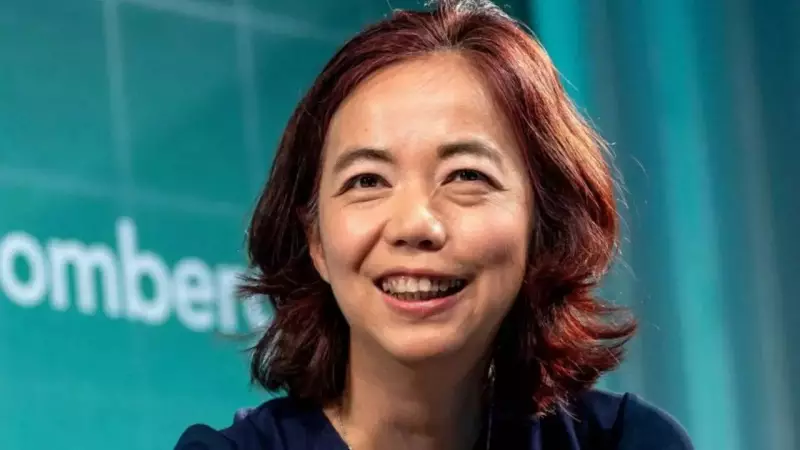
This shift is powerfully articulated by Fei-Fei Li, the renowned Stanford professor and co-founder of the AI startup World Labs. In a recent interview on The Tim Ferriss Show, Li explained that formal qualifications now play a limited role in her hiring decisions for software engineers.
"When we interview a software engineer, I personally feel the degree they have matters less to us now," Li stated. For her and her team at World Labs, what truly matters is the candidate's demonstrated learning, the tools they are proficient with, and, crucially, their capacity to rapidly improve their own capabilities using AI systems.

The Non-Negotiable AI Threshold
Li was unequivocal about one non-negotiable requirement for any software engineer hoping to join World Labs in 2025. "I would not hire any software engineer who does not embrace AI collaborative software tools," she declared. She framed this not as a preference but as a critical indicator of a candidate's potential. Resistance to AI is now seen as a sign of a limited capacity to grow alongside fast-evolving technology.
"If you’re able to use these tools, you’re able to learn. You can superpower yourself better," Li emphasised, highlighting that the goal is to identify lifelong learners, not to replace humans with automation.
A Broader Industry Recalibration
This perspective is not isolated to World Labs. A broader recalibration is underway across the global technology sector. Founders and executives are increasingly questioning if traditional education accurately reflects workplace value.
Alex Karp, CEO of Palantir, has publicly criticised the notion that a college degree reliably indicates capability, urging young people to focus on practical problem-solving. Similarly, Ryan Roslansky, CEO of LinkedIn, has argued that adaptability and AI fluency now carry more weight than elite academic credentials.
For organisations that work with early-career professionals, this change is already visible. Dan Rhoton, CEO of Hopeworks, a US non-profit that trains young people for tech roles, told Business Insider that AI has weakened the traditional link between years of education and employable skills.
"We’re seeing more and more employers coming to us, saying, ‘We used to require a bachelor’s degree in this, but we don’t understand why,’" Rhoton reported. Instead, companies now seek a clear value proposition. Candidates are often asked to demonstrate how they would solve specific business problems, sometimes using AI-generated outputs as proof of their approach.
"This is the age of: I’m someone who’s going to deliver business value," Rhoton said. "Not: I have the right degree."
What This Means for Students and Professionals
The collective message from these industry leaders points to a labour market moving decisively away from using credentials as a simple proxy for ability. The new focus is on visible learning capacity and tool engagement.
While degrees have not vanished and still open doors for many roles, they are no longer the primary filter. Employers are now closely observing how candidates engage with new tools, how quickly they adapt, and whether they view AI as a collaborator or a threat.
As with most structural shifts, the full impact will unfold gradually. It will manifest in job descriptions that omit degree requirements, in interviews centred on practical demonstrations rather than academic transcripts, and in career paths that originate outside traditional institutions. For students and workers in India and globally, the critical question is evolving: it's no longer just about where you studied, but how well you can continue to learn once formal education ends.