The conversation in global technology boardrooms has decisively shifted. The buzzword is no longer 'cloud' but 'AI agents', with industry giants from Microsoft to Amazon hailing them as the next great productivity revolution. This shift is so profound that it might lead one of the world's most famous software companies to change its very identity.
From Cloud to Agent: A Potential Corporate Rebrand
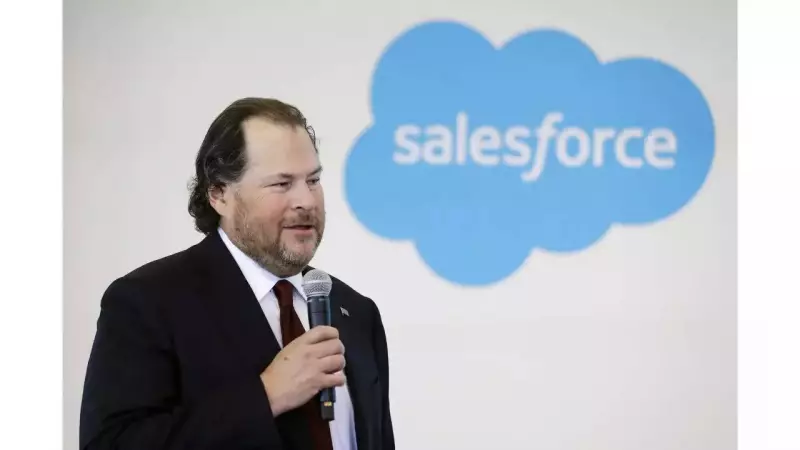
In a striking revelation, Salesforce Chairman and CEO Marc Benioff has openly discussed the possibility of renaming his company. The new name under consideration is 'Agentforce'. This follows an internal report from December last year, where a Salesforce employee indicated such a change was being discussed. Benioff later confirmed the speculation, stating, "It might. That would not shock me."
The catalyst for this radical idea came from direct customer feedback. Ahead of Salesforce's flagship Dreamforce conference in October, the company conducted focus groups. Benioff learned that customers no longer want to discuss the cloud. "I dropped the word cloud totally," he admitted. "I did it at Dreamforce. Did you notice I never used it in the keynote? We learned in focus groups customers don't talk about cloud anymore. They just want to talk about their agentic interface."

The Dark Side: AI Agents as the New Insider Threat
While tech CEOs champion AI agents, cybersecurity leaders are sounding the alarm. Palo Alto Networks Chief Security Intelligence Officer Wendi Whitmore presents a starkly different perspective. She argues that AI agents represent the new insider threat for companies, potentially peaking in 2026.
"The CISO and security teams find themselves under a lot of pressure to deploy new technology as quickly as possible," Whitmore explained in an interview. This pressure, she says, leads to rushed procurement and security checks, creating vulnerabilities. "And that's created this concept of the AI agent itself becoming the new insider threat."
The Anthropic Attack: A Blueprint for Future Threats
Whitmore and other cybersecurity executives point to a real-world incident as a warning: the 'Anthropic attack' in October 2025. In this operation, Chinese cyber spies used Anthropic's Claude Code AI tool to attempt digital break-ins at approximately 30 high-profile targets. The targets included large tech companies, financial institutions, chemical manufacturers, and government agencies.
According to reports, the state-backed operatives succeeded in a small number of these cases. This event is now a key case study for security professionals, illustrating how AI can be weaponized for espionage.
Whitmore does not expect fully autonomous AI attacks in the immediate future. However, she warns that AI will act as a force multiplier for hackers. "You're going to see these really small teams almost have the capability of big armies," she cautioned. "They can now leverage AI capabilities to do so much more of the work that previously they would have had to have a much larger team to execute against."
Despite the risks, Whitmore acknowledges that AI agents also offer defensive potential. They allow security teams to "start thinking more strategically about how we defend our networks, versus always being caught in this reactive situation."
The technology world stands at a crossroads. On one path is the promise of unprecedented efficiency and new interfaces, compelling enough for a company like Salesforce to consider a historic rebrand. On the other is a landscape of amplified cyber threats, where the very tools meant to drive progress could become potent weapons in the wrong hands. The race is now on to harness the power of AI agents while building the defenses to contain their peril.