Sundar Pichai Draws Parallels Between India's AI Revolution and Digital India Movement
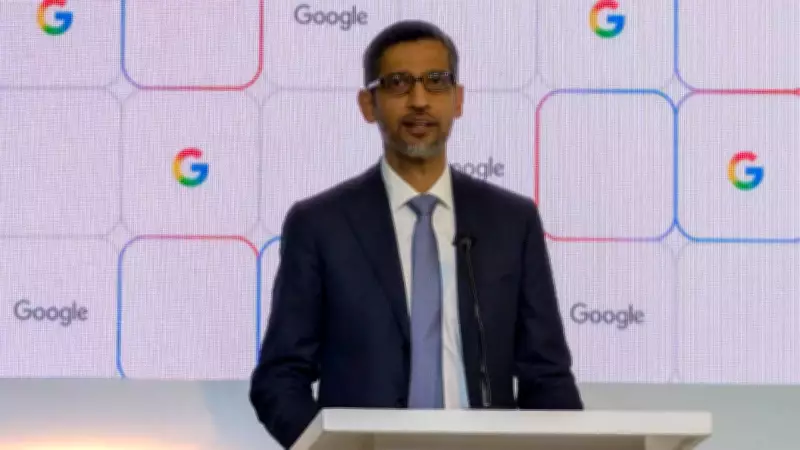
Google CEO Sundar Pichai has drawn compelling parallels between India's ongoing artificial intelligence revolution and the transformative Digital India initiative launched a decade ago. Speaking at an exclusive media reception on Wednesday, February 18, just two days before his keynote address at the India AI Impact Summit 2026, Pichai characterized this moment as "transformational" with potential to reshape the nation's trajectory for years to come.
A Decade of Progress and a New Beginning
"It's a transformational moment. I'm a bit nostalgic, reflecting on maybe a decade ago. Coming to India and seeing the Digital India transition and the similar excitement. And it's been phenomenal to actually see a decade of progress. In some ways, this feels like the beginning of a decade-long shift to AI," Pichai remarked at the gathering. His comments underscore how the current AI momentum echoes the foundational changes initiated during the Digital India campaign, suggesting another period of significant technological evolution.
India Positioned to Lead on All AI Fronts
When questioned about whether India's AI success would stem primarily from being a massive user base, a builder of cutting-edge technology, or a shaper of global AI governance rules, Pichai's response was unequivocal. He firmly believes India possesses the unique capacity to excel in all three domains simultaneously.

"I travel to many countries around the world, and I do think India is uniquely positioned in this moment. There's a chance to play a big role in all three. I think of Google as a full-stack company, and India is going to be a full-stack player in AI," he declared. This vision positions India not merely as a consumer but as a comprehensive contributor across the entire AI value chain.
The Need for a Comprehensive Approach
Pichai emphasized that achieving true success in artificial intelligence requires a holistic and multi-dimensional strategy, not a narrow focus on any single aspect. "What's important is to be in a position to do that, and that's what this AI Summit is about. You have to make sure you're investing in all the foundational things you need — in the research, in knowledge, and in the institutions you have here," he explained. This approach underscores the necessity of building robust intellectual and institutional frameworks to sustain long-term AI advancement.
Ensuring AI Reaches Every Indian
For Pichai, while infrastructure and research are critical components, they represent only part of the equation. The ultimate measure of success will be whether AI technologies genuinely permeate the daily lives of ordinary citizens across the country.
"The government has a role in diffusing AI across the country and making sure it's reaching people. That means you're adopting it in all the centers and in a way that the progress is touching the average person on a day-to-day basis — be it a farmer, be it a student, be it a doctor in the healthcare sector," he stated. Pichai pointed to existing infrastructure developments and strategic investments as evidence that India is laying the correct groundwork and is "in a good position to get there."
A Clear Vision for the Future
As the India AI Impact Summit 2026 commences, Pichai's central message remains clear and resonant: just as Google operates as a full-stack technology entity, "India is going to be a full-stack player in AI." This assertion not only highlights the country's potential but also sets a ambitious benchmark for its role in the global artificial intelligence landscape, building upon the legacy of the Digital India movement to forge a new era of innovation and inclusion.