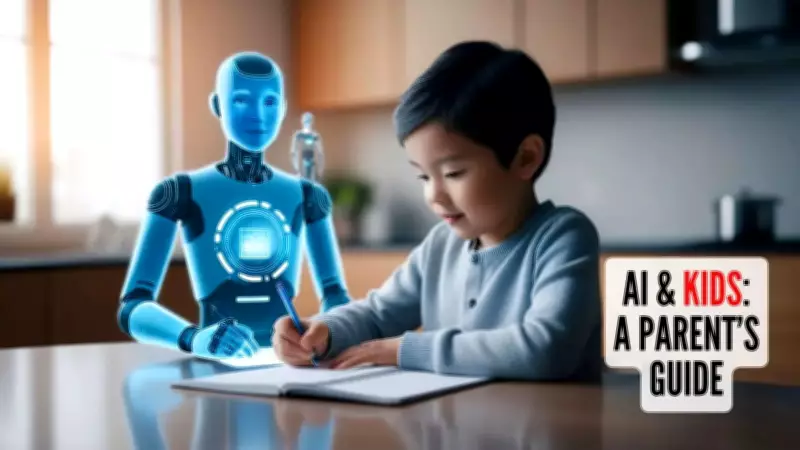
Artificial Intelligence in Childhood: A Parent's Guide to Navigating the New Normal
Artificial intelligence has seamlessly integrated into our daily lives, moving from abstract concept to tangible reality. It resides in our homes as smart speakers, autonomously cleans our floors through robot vacuums, and provides instant academic assistance for homework queries. Today's children are encountering AI technologies at younger ages than previous generations ever experienced, creating both opportunities and uncertainties for families.
Starting with Curiosity Rather Than Caution
Children frequently notice AI applications before adults initiate conversations about them. Whether it's a smart assistant answering questions, a video platform suggesting content, or a chatbot providing immediate responses, these interactions spark natural curiosity. According to UNICEF, discussions about artificial intelligence can begin surprisingly early in childhood development.
Ying Xu, Assistant Professor of AI in Learning and Education at Harvard University, emphasizes that even preschool-aged children can grasp fundamental concepts about what artificial intelligence can and cannot accomplish. When a child asks, "How did it know that?" parents have a perfect opportunity to explain that AI follows patterns and programmed instructions rather than thinking like humans do. This simple clarification demystifies technology and reduces the fear that often accompanies the unknown.

Explaining AI Through Tangible Examples
Young learners comprehend complex ideas best through concrete, observable examples. A robot vacuum navigating a room, facial recognition unlocking a device, or music streaming services recommending songs all demonstrate artificial intelligence in action. Research conducted by Ying Xu confirms that children understand AI concepts more effectively when connected to their everyday experiences.
Joint exploration proves particularly valuable. When a child interacts with a chatbot, parents can examine responses together, asking questions like: Does this answer make logical sense? What information might be missing? Could there be inaccuracies? This approach teaches critical judgment alongside technological literacy, helping children recognize that AI predicts based on data rather than possessing genuine knowledge.
Utilizing AI to Enhance Learning Without Replacing Effort
Artificial intelligence offers significant educational benefits, capable of explaining mathematical procedures, summarizing reading materials, and providing language practice. Educational research demonstrates that well-designed AI tutoring systems can effectively support skill development in specific academic areas.
However, boundaries remain essential. Studies published in academic journals reveal that students sometimes delegate their cognitive work to AI systems, avoiding the productive struggle necessary for genuine learning. Some teenagers acknowledge that excessive reliance on AI assistance undermines their confidence in independent problem-solving. Parents can frame artificial intelligence as a practice partner rather than a shortcut by encouraging children to attempt problems first, use AI to verify solutions, and compare approaches. This methodology builds academic independence rather than technological dependence.
Teaching Digital Privacy as an Essential Life Skill
AI applications routinely collect user information, ranging from basic demographic data to deeply personal details about emotions, relationships, and health concerns. Children often struggle to distinguish between appropriate and sensitive information sharing. While home addresses clearly represent private data, conversations about anxiety or family conflicts with chatbots can also reveal significant personal information.
UNICEF advocates for minimal and purpose-specific data collection to protect children's digital privacy. Families can implement similar principles by reviewing privacy settings together, discussing what information should remain confidential, and encouraging thoughtful consideration before sharing personal details online. These conversations should emphasize preparation rather than fear, helping children develop digital boundaries that will serve them throughout their lives.

Monitoring Emotional Substitution and Social Development
Some children find artificial intelligence interactions more comfortable than human conversations, appreciating the immediate responses, lack of arguments, and consistent agreement that AI systems provide. While this can offer temporary comfort, genuine human relationships involve disagreement, compromise, and emotional complexity that technology cannot replicate.
Warning signs of problematic AI engagement include extended conversational sessions with AI systems, irritation when asked to discontinue interactions, and diminished interest in friendships or hobbies. Rather than punitive responses, parents should initiate open conversations about what children find helpful in these interactions, which often reveals underlying needs related to loneliness, academic stress, or social pressures.
Embracing AI as a Collaborative Learning Opportunity
Many adults feel overwhelmed by the rapid evolution of artificial intelligence technologies, with new tools and applications emerging constantly. Ying Xu suggests moving away from the expectation that parents must become AI experts, recognizing that adults and children are frequently learning about these technologies simultaneously.
Joint exploration transforms the parent-child dynamic from control-based to collaborative. External resources provide valuable guidance, with organizations like Common Sense Media offering ratings for AI tools and schools publishing approved educational applications. When children observe adults approaching technology with calm curiosity, they internalize that balanced perspective, creating family environments where confidence develops organically.
Artificial intelligence represents a powerful technological advancement, but it should not dominate childhood development. Human relationships, consistent routines, physical activity, and face-to-face interactions fundamentally shape growth more profoundly than any algorithm. AI becomes beneficial or detrimental based on the context surrounding its use. The objective isn't eliminating artificial intelligence from children's lives, but rather integrating it proportionally. Technology should serve children's development, not the reverse.