OpenAI Launches ChatGPT Translate with AI-Powered Style Customization
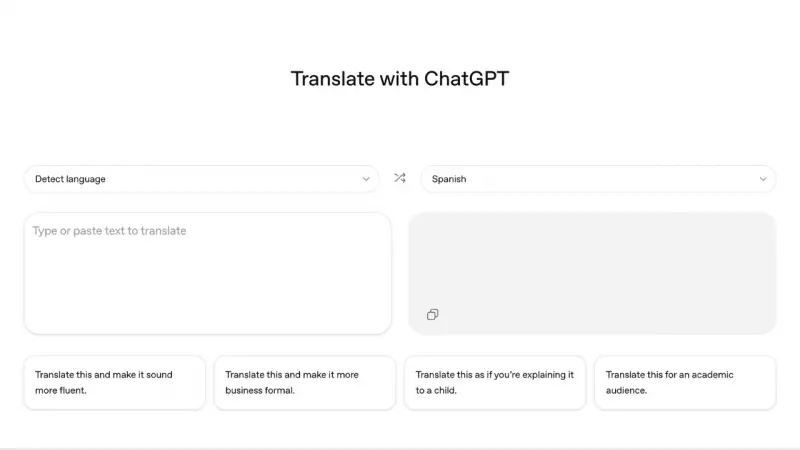
OpenAI has introduced a new standalone web tool called ChatGPT Translate. This innovative service brings artificial intelligence-powered style customization to language translation. It supports more than fifty languages. The interface looks familiar, resembling Google Translate's dual-box design. However, ChatGPT Translate sets itself apart with a unique feature. It allows users to reshape translations for specific contexts and audiences.
Customizing Tone and Style for Different Audiences
Users can now tailor translations to fit various needs. The tool offers options for business-formal tone, child-friendly language, and academic writing. This represents OpenAI's first dedicated translation product. While ChatGPT has provided translation capabilities for years, this marks a focused entry into the translation market.
Currently, ChatGPT Translate operates only through web browsers. Unlike Google Translate, it does not have a dedicated mobile app. OpenAI has not officially announced the launch. The company also hasn't revealed which AI model powers this new service.

Comparing Features with Google Translate
The gap between promise and delivery is noticeable. ChatGPT Translate's homepage advertises support for text, image, and voice translation. However, image translation functionality is not yet available. Desktop users are limited to text input only. Mobile browsers add microphone access for voice translation.
Several features remain absent. There's no support for documents, handwriting, websites, or real-time conversations. Google Translate excels in all these areas. Google's recent Gemini-powered upgrades have sharpened its edge. It now handles nuanced phrases, idioms, and local slang more effectively.
Google is also testing live speech-to-speech translation through headphones. This expands beyond ChatGPT Translate's current capabilities. The competition in translation technology is heating up.
The Future of AI Translation Technology
OpenAI's approach hints at translation's next evolution. Rather than just converting languages accurately, ChatGPT Translate emphasizes adaptability. It helps users consider who they're communicating with and how their message should land. This focus on context and audience represents a significant shift.
If OpenAI delivers on its multimodal features and expands language coverage, this quiet product launch could become genuine competition. Google has long dominated translation technology. ChatGPT Translate might challenge that dominance by offering more personalized, context-aware translations.
The translation landscape is changing rapidly. Both companies are pushing boundaries with artificial intelligence. Users now have more choices for how they translate content across languages. The emphasis on style customization could redefine what we expect from translation tools.