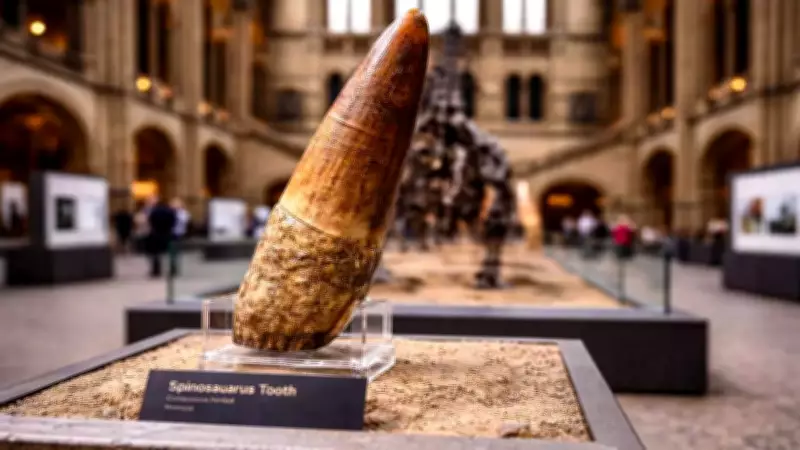
From Museum Exhibits to Online Marketplaces: The Digital Fossil Rush
Owning a piece of dinosaur history traditionally required a visit to a museum or participation in a professional fossil dig. Today, however, the landscape has dramatically shifted. Fossil collecting is no longer confined to scientists and academic institutions; it has exploded into the global online marketplace. Dinosaur fossils, teeth, and various fossilized remains are now readily available for purchase through numerous websites and social media platforms, making these prehistoric artifacts accessible to private collectors worldwide.
A Journalist's Journey into the Fossil Trade
For journalist Jacopo Prisco, his personal foray into fossil collecting began unexpectedly with an online advertisement. He encountered an offer for a Spinosaurus tooth fossil priced at $100 on a digital marketplace. The item arrived securely packaged in a glass display dome, accompanied by a certificate of authenticity. Initially, it appeared to be a genuine artifact from one of Earth's largest prehistoric predators. Driven by curiosity, Prisco embarked on a deeper investigation into the fossil's origins, uncovering the complex realities of the modern fossil business.
The Rise of Spinosaurus Teeth in Online Commerce
In recent years, the accessibility of fossils has surged due to the proliferation of online stores and social media. Dinosaur teeth, bones, and other remnants are no longer exclusive to physical museums or specialty shops. Platforms like Instagram utilize algorithms that promote fossil advertisements to users who have shown interests in history, science, or collectibles. Once a user engages with such an ad, their feed often becomes flooded with similar offers from global sellers.

Among the most prevalent items are dinosaur teeth, particularly those from the Spinosaurus. These teeth have become favorites among collectors due to their distinctive and easily identifiable features. Their conical shape and ridged structure allow experts to recognize them even when discovered individually. This uniqueness has cemented their status as a staple in the online fossil trade.
Understanding the Spinosaurus: A Prehistoric Giant
The Spinosaurus roamed the Earth approximately 95 million years ago during the Cretaceous period. It is regarded as one of the largest carnivorous dinosaurs to have ever existed, with estimates suggesting it reached lengths of 50 to 60 feet. Unlike other meat-eating dinosaurs, the Spinosaurus possessed a long, crocodile-like snout and narrow, conical teeth. Evidence indicates it spent much of its life in aquatic environments, likely preying on fish. The constant replacement of its teeth throughout its lifetime has resulted in a plentiful supply of fossilized specimens available today.
Morocco's Kem Kem Beds: A Fossil Treasure Trove
The primary source of Spinosaurus fossils is Morocco, specifically the Kem Kem beds. This geological formation, once a network of rivers and wetlands, is rich with deposits from millions of years ago. It was inhabited by numerous large reptiles and fish, leading to an abundance of fossil discoveries. Spinosaurus teeth are especially common here because these dinosaurs frequently shed teeth, which then fossilized over millennia. This natural process has made the teeth a frequent find for collectors and researchers alike.
Verification and Surprising Revelations
To confirm the authenticity of his purchase, Prisco took the Spinosaurus tooth to the Natural History Museum in London. Palaeontologist Susannah Maidment examined the specimen and verified it as a genuine fossil, most likely from a Spinosaurus. However, the assessment revealed a surprising detail: while authentic, the tooth was not particularly rare. Due to the Spinosaurus's habit of regularly losing teeth, such fossils are relatively common in Morocco and other fossil-rich regions.

The Expanding Market for Dinosaur Fossils
Public interest in fossils has multiplied in recent years, fueled by high-profile auctions of complete specimens. For instance, a Stegosaurus skeleton named "Apex" sold for $44.6 million in 2024, setting a record for the most expensive fossil auction to date. Previously, in 2020, a Tyrannosaurus rex fossil known as "Stan" was auctioned for $31.8 million. These events have transformed fossils into luxury items for affluent collectors. Simultaneously, smaller fossils like teeth and bones are available online at more affordable prices, broadening the market's reach.
Legal and Ethical Dilemmas in the Fossil Trade
The rapid growth of the fossil trade has raised significant legal and ethical concerns. Regulations governing fossil collection and export vary widely between countries. In Morocco, fossils can be legally sold if proper permits are obtained, but unauthorized exports may be illicit. Other nations, including Brazil, Argentina, Mongolia, and China, classify fossils as national heritage and prohibit their export entirely. A major issue with online sales is the frequent lack of detailed documentation, making it difficult for buyers to ascertain whether fossils have been legally sourced.
The Human Effort Behind Fossil Discoveries
Behind every fossil available for sale lies the arduous labor of workers who excavate these ancient remains. In remote desert areas of Morocco, individuals dig through rocks in search of fossils, often working in hazardous conditions. They may operate in tunnels carved into hillsides, risking collapses and extreme temperatures. For many in these regions, the sale of fossils provides a crucial source of income, highlighting the economic dependencies intertwined with the trade.
What began as a simple online purchase of a dinosaur tooth unveiled the intricate world of fossil collecting. A single fossil represents millions of years of natural history, yet it also embodies narratives of science, commerce, and the human endeavors required to unearth these ancient treasures.