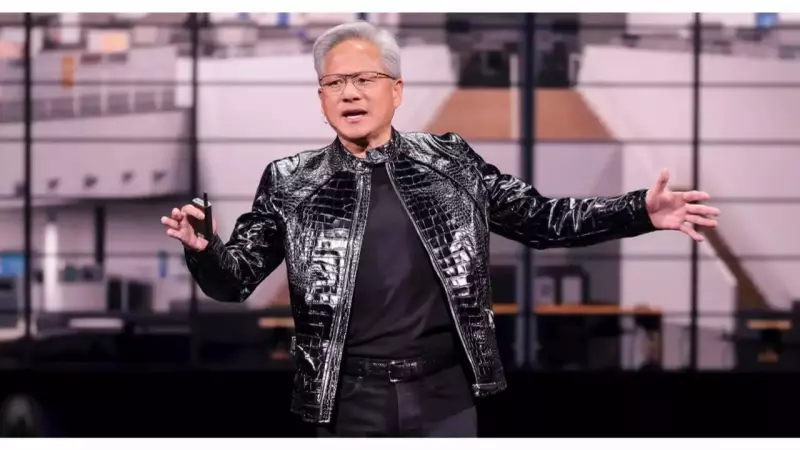
In a major announcement from the Consumer Electronics Show (CES) 2026 in Las Vegas, Nvidia has taken the wraps off its next-generation artificial intelligence computing platform, named Vera Rubin. The chipmaking giant's founder and CEO, Jensen Huang, revealed that the new architecture is now in full production, marking a significant leap forward in high-performance AI infrastructure.
What Makes The Vera Rubin Platform A Game-Changer?
The Vera Rubin platform represents Nvidia's first foray into a six-chip AI system, developed through what the company calls an "extreme codesign" methodology. This approach involves designing multiple core components in tandem to optimise overall performance and eliminate bottlenecks commonly found in large-scale AI operations.
The platform integrates several cutting-edge components designed to work seamlessly together:

- Rubin GPUs delivering up to 50 petaflops of inference performance using NVFP4 precision.
- Vera CPUs specifically engineered to manage complex data movement and AI agent processing tasks.
- Advanced networking hardware, including NVLink 6 and ConnectX-9 networking cards.
- Spectrum-X Ethernet Photonics for high-speed data transfer.
- BlueField-4 Data Processing Units (DPUs) for efficient data centre operations.
This holistic design is targeted squarely at data centres, cloud service providers, and large enterprises that are building and deploying advanced AI systems. The Rubin architecture officially succeeds Nvidia's previous Blackwell platform, continuing the company's aggressive roadmap to expand AI capabilities across every industry.
Driving Down Costs And Speeding Up AI Deployment
Perhaps the most compelling claim from Nvidia is the platform's potential to drastically reduce the expense of running AI models. According to the company, the Vera Rubin platform can slash the cost of generating AI tokens to approximately one-tenth of what was possible on earlier platforms. This represents a potential 90% reduction in a key operational cost for AI developers and businesses.
To further enhance efficiency, Nvidia also introduced a specialised storage system dubbed Inference Context Memory Storage. This AI-focused solution is designed to significantly improve the processing of AI models that require long-context memory, boosting both their speed and operational efficiency.
The company stated that the Rubin platform will be integrated with its suite of open AI models and software tools. This ecosystem is intended to power breakthrough applications in critical fields such as autonomous driving, robotics, healthcare diagnostics, and climate research.
Industry Reaction And The Road To Real-World Implementation
The announcement quickly garnered attention on social media platform X, where user Sawyer Merritt shared details and a video of the next-generation Rubin chips. The post elicited a notable response from tech billionaire Elon Musk, who injected a note of practical caution amidst the excitement.
Musk commented, "It will take another 9 months or so before the hardware is operational at scale and the software works well." His remark underscores the complex reality of deploying such advanced hardware, highlighting that raw performance specs are just one part of the equation for successful large-scale implementation.
Nvidia's unveiling at CES 2026 solidifies its ambition to remain at the forefront of the AI hardware race. By promising not just more power but substantially lower costs, the Vera Rubin platform could accelerate the adoption of sophisticated AI, making it more accessible to a broader range of companies and research institutions worldwide. The coming months will be crucial as partners and clients begin testing and integrating this new technology into their operational workflows.