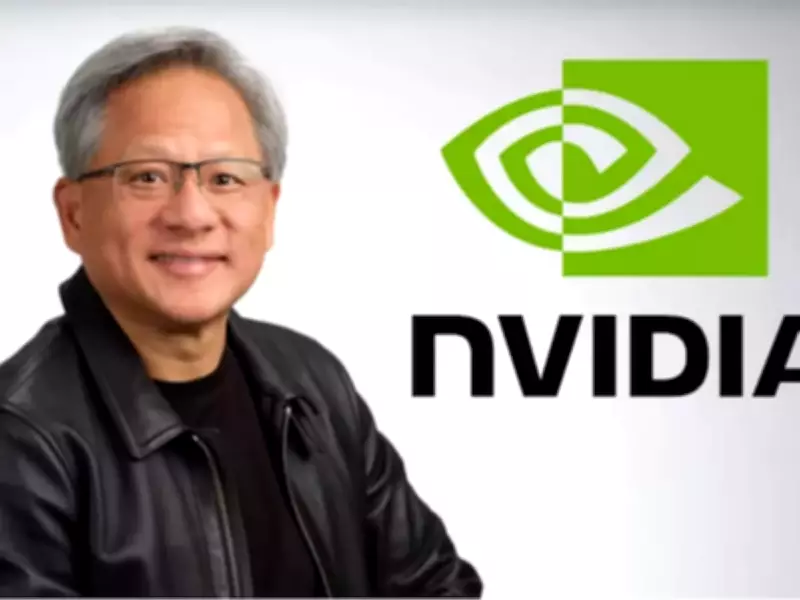
Nvidia CEO Jensen Huang Offers Reassurance on AI-Driven Job Anxiety
In a climate of growing anxiety among white-collar workers about potential layoffs driven by artificial intelligence, Nvidia CEO Jensen Huang has stepped forward with a message of reassurance. Speaking on the Lex Fridman Podcast, Huang addressed widespread concerns but stressed that AI should be viewed as an enabler rather than a replacement for human workers.
Jobs Are Defined by Purpose, Not Tools
Jensen Huang articulated a crucial distinction that many overlook in the AI debate. "I just want to remind them that the purpose of your job, and the tasks and tools that you use to do your job, are related, not the same," he stated. This perspective challenges the notion that automation inherently leads to job loss, suggesting instead that roles evolve alongside technological advancements.
Huang, who has led Nvidia for 34 years, drew from his own experience to illustrate this point. He noted that while his position as CEO has remained constant, the tools and methods he employs have transformed dramatically over decades. This evolution demonstrates how professional roles adapt to incorporate new technologies rather than disappearing entirely.

The Radiology Example: AI as an Expander, Not a Replacer
One of Huang's most compelling arguments came through his examination of the radiology field. Computer scientists once predicted that radiologists would be among the first professions automated by AI. Contrary to these forecasts, the number of radiologists has actually increased despite AI now powering nearly every radiology platform.
AI tools enable doctors to diagnose faster and see more patients, Huang explained. This efficiency doesn't reduce demand for professionals but rather expands it by allowing radiologists to handle more complex cases and improve patient outcomes. Huang warned that alarmist predictions had discouraged some from entering the field, potentially creating shortages that could have been avoided with a more nuanced understanding of AI's role.
Embrace AI or Risk Being Outpaced
Huang delivered a clear message to workers: adaptation is essential. "You're not going to lose your job to an AI, but you're going to lose your job to someone who uses AI," he declared during last year's Milken Institute Global Conference. This statement underscores his belief that technological proficiency will become a critical differentiator in the workforce.
The Nvidia CEO believes workers who actively embrace AI will thrive in the evolving landscape, while those who resist technological integration risk being outpaced by more adaptable colleagues. This perspective aligns with broader industry trends where AI literacy is increasingly valued across sectors.
Industry Leaders Echo Huang's Perspective
Other prominent executives share Huang's outlook on AI's transformative potential. Airbnb CEO Brian Chesky has called AI "the best thing that ever happened" to his company, highlighting how the technology enhances operations and customer experiences. Similarly, JPMorgan CEO Jamie Dimon has acknowledged that AI will eliminate some positions but emphasizes the importance of worker adaptation and retraining.
These perspectives collectively suggest that while AI will undoubtedly change job functions, complete replacement remains unlikely for roles requiring human judgment, creativity, and complex decision-making.
Looking Beyond Routine Tasks
Huang's analysis extends to understanding what constitutes meaningful work in the AI era. He pointed out that radiology involves more than just analyzing images—it encompasses critical decision-making, patient communication, and ethical considerations that AI cannot replicate. This human element remains indispensable in many professions.
The Nvidia CEO's message ultimately centers on transformation rather than elimination. AI is more likely to change how people work, enhancing capabilities and creating new opportunities, rather than completely replacing most jobs. This evolution requires workers to develop new skills and approaches while maintaining the core purposes that define their professions.