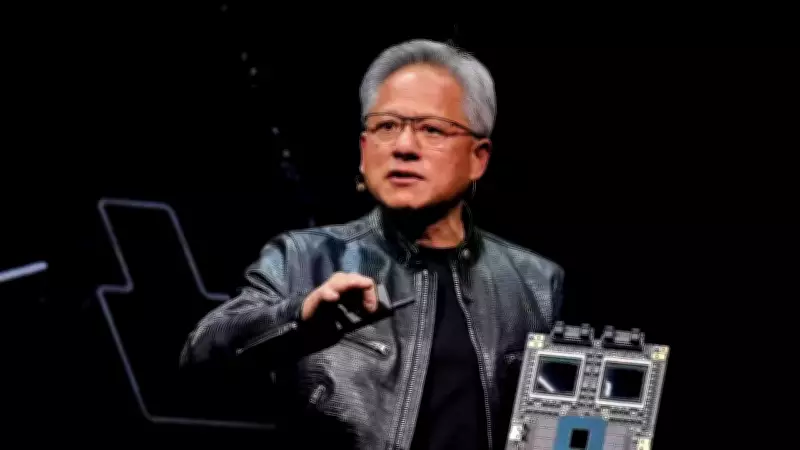
Nvidia CEO Envisions AI Data Centers Driving Massive Job Creation in India
Days following the announcements made in the recent Union Budget, Nvidia CEO Jensen Huang has expressed strong optimism about the transformative potential of data centers in India. He believes that artificial intelligence infrastructure will replicate the remarkable success story of the internet in generating substantial employment opportunities across the nation.
Building Domestic Capacity for Global Impact
"We maintain a significant investment footprint in India and have forged numerous partnerships here," Huang stated. "My vision extends beyond merely welcoming international data center companies to India. I strongly advocate for Indian companies to actively build and operate these critical facilities within the country."
He elaborated on the extensive employment chain, noting, "The direct construction of a data center itself can employ thousands – electricians, plumbers, construction workers. However, the true magnitude lies in the upstream and downstream economic implications. Establishing and enabling this technology infrastructure creates an incredible ripple effect throughout the economy."

Drawing a powerful parallel, Huang highlighted, "Consider the impact of the internet in India. The sheer volume of jobs it has spawned, both directly and indirectly, is incredible. Artificial intelligence, powered by these data centers, is poised to do exactly the same thing on a massive scale."
Budgetary Push for a Competitive Data Center Ecosystem
The Union Budget for 2024-25, presented by Finance Minister Nirmala Sitharaman, introduced a pivotal proposal to bolster India's position as a global data hub. A key measure is a tax holiday extending until 2047 for foreign companies that provide cloud services to international customers utilizing data center services located within India.
However, this incentive comes with a strategic condition designed to foster local participation. To avail the benefit, these global entities must serve Indian customers through an Indian reseller company. Officials clarified that profits derived from domestic economic activities will remain subject to standard taxation, just like any other domestic company. This taxable income includes the fees charged by the resident data center to the global entity and the revenue from reselling cloud services to Indian customers by the local reseller.
To provide further business certainty, especially in scenarios where the Indian data center is a related entity of the foreign company (functioning as a cost-plus center), the budget outlines a safe harbour margin of 15%.
Creating a Tax-Certain, Market-Driven Environment
Explaining the policy's intent, Revenue Secretary Arvind Shrivastava emphasized its design to remove fiscal barriers. "The entire framework has been structured so that Indian data centers can offer their services to global companies. This allows international firms to leverage Indian infrastructure without facing uncertainties or complexities related to Indian taxation," he remarked during a post-budget conference.
"This clarity enables them to evaluate our data centers purely from a commercial, financial, and technological standpoint. The decision should be driven by pure market competitiveness. Taxation should not act as a deterrent in this crucial process of building India's digital future," Shrivastava added, underscoring the government's focus on creating an attractive and predictable investment climate for the data center and cloud computing sector.