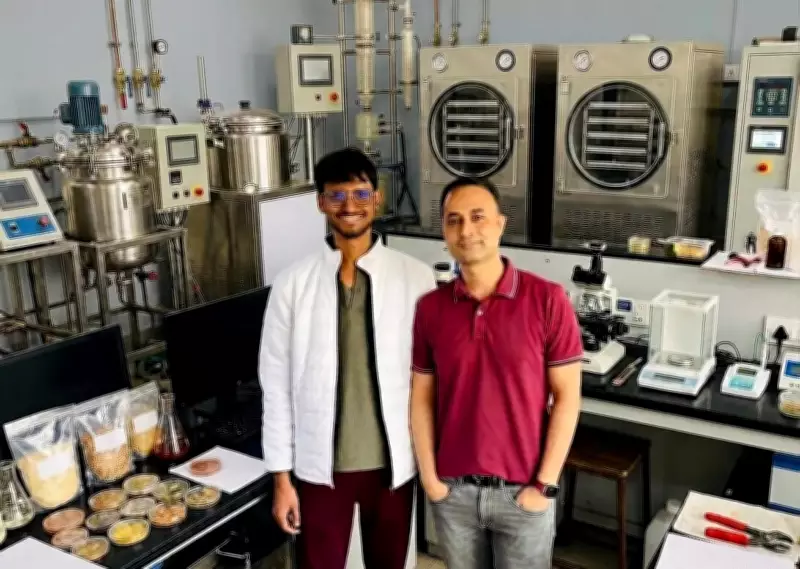
Researchers at the National Institute of Technology (NIT), Rourkela, have been granted a patent for an innovative system that can rapidly detect and measure adulteration in spices and other food products. This technology addresses a critical global food safety challenge by combining Fourier Transform Infrared (FTIR) spectroscopy with advanced machine learning models to deliver accurate results.
How the technology works
According to a press release issued on April 27, NIT-R stated, "Traditional food adulteration detection methods such as chromatography or molecular techniques are resource-intensive and require longer time to deliver results, making them less suitable for rapid and routine testing. The system developed by NIT researchers provides a rapid, non-destructive and cost-effective alternative suitable for real-time deployment in quality control laboratories and industrial processing units."
FTIR spectroscopy is a technique used to identify organic and some inorganic materials by measuring how they absorb infrared light. During food checks, the developed system collects these absorption patterns and processes them using machine learning models. Unlike conventional methods that only indicate whether a food product is adulterated or not, this technology measures the level of adulteration within seconds. This capability is essential for food processing industries and regulatory bodies that require precise measurements to ensure compliance and maintain product quality.

Future plans
As the next step, the research team aims to collaborate with industry partners for conducting pilot-scale studies and validating the system under real-world conditions. Additionally, they plan to conduct experiments under different conditions to extend its detection capability beyond spices.