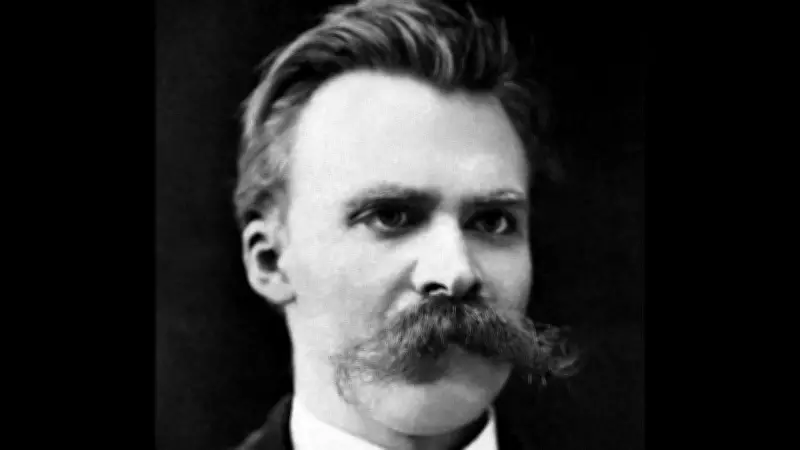
Few philosophers in history have dared to challenge human thinking as boldly as Friedrich Nietzsche. More than a century after his death, his words continue to spark debate because they challenge authority, morality, religion, truth, and the way society shapes human behavior. One of his most quoted remarks remains: "I cannot believe in a God who wants to be praised all the time." The quote is short and to the point, but it reflects Nietzsche’s larger philosophical struggle with organized religion, blind obedience, and the idea of unquestioned authority.
The Meaning Behind Nietzsche’s Famous Quote
At first glance, the quote appears to be a direct criticism of religion. However, Nietzsche's philosophy was generally more layered than just a rejection of faith. He wondered about power and why societies often encouraged blind loyalty. Nietzsche argued that an authority perpetually in need of praise was in danger of stultifying independent thought. He believed that human behavior was shaped by fear, guilt, and obedience. His criticism was not just of religion but of systems where individualism was repressed.
Nietzsche believed true human development arises from self-discovery, courage, and the will to face hard truths. He did not think people should accept beliefs handed down for generations as truth. The quote touches on his broader concern about dependence on outside approval and authority. Nietzsche thought humans should seek authenticity, not endless approval from institutions or social expectations.

Why Nietzsche’s Philosophy Still Feels Relevant Today
Though penned in the 19th century, many of his ideas continue to be highly relevant in today’s society. Questions of identity, freedom, morality, and conformity remain central to human life. Modern culture often pressures people to conform to expectations, whether social, political, religious, or professional. Nietzsche warned about what he called "herd mentality," where people stop thinking for themselves and simply follow the crowd. His ideas feel even more relatable in the digital world of today. Social media platforms reward validation, approval, praise, and popularity. Many people constantly seek acceptance from others, often at the expense of their own authenticity.
Nietzsche believed that individuals should be strong enough to think for themselves and not merely follow societal dictates. This idea still resonates with readers who feel constrained by social pressure or expectations.
The Philosopher Who Challenged Traditional Morality
Nietzsche became famous in part for his attack on traditional ideas of morality. He questioned whether moral systems were truly universal or merely constructs societies created to maintain order and control. One of his most misunderstood ideas was the phrase "God is dead." Nietzsche did not mean this literally. Rather, he thought that modern society was gradually moving away from traditional religious certainty through science, rational thought, and social change.
But he also feared what would replace those old systems of meaning. He worried that without purpose and values, people would descend into nihilism—the belief that life has no meaning at all. His response was not one of despair. For Nietzsche, human beings could create meaning through creativity, courage, discipline, and personal responsibility. He urged people to be self-aware and to grow into their best selves.
How Nietzsche’s Life Shaped His Thinking
Nietzsche’s philosophy was heavily influenced by his personal life. Born in 1844 in Prussia, he grew up in a religious household after losing his father at a young age. He was early instructed in the classics, theology, and philosophy. He initially studied theology but later distanced himself from organized religion. He became a professor of classical philology at an early age, but was plagued by health problems throughout his life.
Chronic illness, isolation, and loneliness formed the backdrop to much of his worldview. Many historians believe these personal challenges influenced his intense focus on suffering, resilience, and human strength. After giving up his academic career, Nietzsche wrote much of his later life in solitude. His work was little read during his lifetime, but after his death in 1900, his ideas became hugely influential in philosophy, psychology, literature, and political theory.

Nietzsche’s Influence on Psychology and Modern Thought
Nietzsche’s influence extended well beyond philosophy. His work inspired many later thinkers, including psychologists, writers, and social theorists. His investigation into the unconscious, hidden motives, and internal conflict had an impact on later psychological theories. Scholars often cite parallels between Nietzsche’s ideas and later developments in psychoanalysis.
He also inspired writers and artists due to his deep interest in human emotion, suffering, ambition, fear, and self-discovery. His writings have encouraged people to face uncomfortable truths rather than avoid them. Nietzsche has also been interpreted in various ways by political thinkers of different ideologies, although some interpretations remain controversial. Experts often warn against oversimplifying his philosophy, as his writings are frequently symbolic, complex, and open to multiple readings.
The Idea of Individuality in Nietzsche’s Philosophy
The theme of individuality is one of the most powerful in Nietzsche’s work. He believed that many people live out expectations imposed by others rather than discovering their own identity. He urged people to overcome fear and achieve what he called self-mastery. This meant taking responsibility for one’s life, choices, and values, rather than relying entirely on external systems.
Nietzsche appreciated creativity, courage, and independence of thought. He noted that growth is often painful because it requires dealing with ambiguity and old assumptions. His philosophy still resonates with those who feel estranged from rigid social conventions or seek a deeper sense of individual purpose.
Why Nietzsche Remains Controversial
Nietzsche’s influence today remains controversial. Some critics say his writing can be harsh, elitist, or difficult to follow. Some even believe his ideas have been misinterpreted or co-opted by later political movements. Historians have frequently noted that Nietzsche has been misunderstood and his philosophy misinterpreted. His writing was complex, poetic, and often deliberately provocative, making it easy to misunderstand if taken out of context.
Meanwhile, many intellectuals still view Nietzsche as a philosopher who championed intellectual honesty and critical thought rather than blind obedience. His philosophy is intriguing because of both his work and the controversy surrounding it. His ideas compel readers to ask difficult questions about morality, identity, truth, and freedom.
What Nietzsche’s Quote Means in Today’s World
Nietzsche’s quote on praise and authority still gives pause in today’s society because it deals with universal human experiences. Many people feel the pull of institutions, work, communities, and even online culture. Sometimes, the need for approval and validation can outweigh the need for authenticity. Nietzsche’s philosophy prompts us to question whether we are living our own values or merely fulfilling others’ expectations.
His words do not offer easy answers. Instead, they challenge readers to think for themselves and reflect on what they truly believe. This may be one reason why Nietzsche’s work has endured. His philosophy does not provide comforting certainty; it encourages introspection.
Other Famous Quotes by Friedrich Nietzsche
- "Without music, life would be a mistake."
- "It is not a lack of love, but a lack of friendship that makes unhappy marriages."
- "There is always some madness in love. But there is also always some reason in madness."
- "The advantage of a bad memory is that one enjoys several times the same good things for the first time."
Nietzsche’s Legacy Continues to Shape Intellectual History
Nietzsche remains one of the most influential philosophers ever studied, even a century after his death. His questions about truth, morality, individuality, and power are still highly relevant. His writings are still studied in universities around the world. His work has impacted philosophy, literature, psychology, political theory, and even pop culture. Many readers find appeal in the fact that Nietzsche does not provide easy answers to the problems of human existence.
His ideas remain controversial, and people either love or hate them. Philosophy’s lasting impact is evidence of its power to challenge assumptions and make society think differently. Nietzsche believed it was necessary to confront life directly, even when the truth was unpleasant. His famous dictum about praise and authority is in the same spirit. It challenges blind obedience and encourages people to think beyond inherited beliefs. These questions, even today in a world still dominated by institutions, ideologies, and social pressure, are as potent as they were in Nietzsche’s time.
About the Author
TOI World Desk
At TOI World Desk, our dedicated team of seasoned journalists and passionate writers tirelessly sifts through the vast tapestry of global events to bring you the latest news and diverse perspectives round the clock. With an unwavering commitment to accuracy, depth, and timeliness, we strive to keep you informed about the ever-evolving world, delivering a nuanced understanding of international affairs to our readers. Join us on a journey across continents as we unravel the stories that shape our interconnected world.