Netflix Co-CEO Ted Sarandos: AI Cannot Replace Human Talent in Performance-Driven Roles
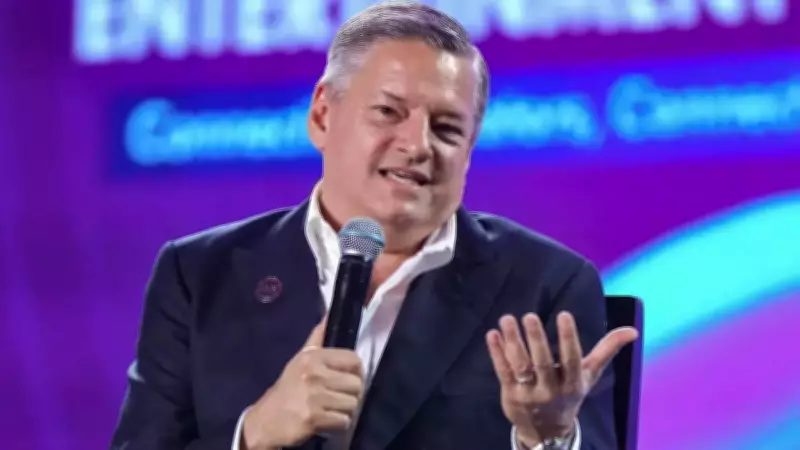
In a recent interview with POLITICO, Netflix co-CEO Ted Sarandos articulated a nuanced perspective on artificial intelligence's role in the entertainment industry. While acknowledging AI's potential as a supportive tool, Sarandos firmly believes that AI cannot replace human talent in all aspects, particularly in performance-driven areas like voice acting and dubbing.
AI's Limitations in Replicating Human Performance
Sarandos identified specific domains where AI falls short due to its inability to replicate authentic human performance. "The one thing that we find to be the most important part of dubbing is the performance. So good voice actors really matter," he explained. He emphasized that while using AI for voice work might be cheaper, it often compromises quality because the performance element is inherently human. "Yeah, it's a lot cheaper to use AI, but without the performance, which is very human, it actually runs down the quality of the production," Sarandos added, highlighting the critical role of emotional depth and nuance that human actors bring.
AI as a Creative Tool for Filmmaking Enhancement
Despite these limitations, Sarandos views AI as a valuable creative aid that can improve filmmaking processes rather than merely cutting costs or accelerating output. "I don't think faster and cheaper matters if it's not better. This is the most competitive time in media history. So you've got to be better every time out of the gate," he stated. He envisions AI assisting in practical workflows, such as enabling post-production adjustments without requiring actors to return for reshoots. "I think what will happen is you'll be able to do things like pick up lines that you do months and months after the production. You'll be able to recreate some of those lines in the film without having to call everybody back and redo everything, which will help make a better film," Sarandos elaborated.

Netflix's Strategic Investments in AI Technology
Netflix has already begun integrating AI into its operations through strategic acquisitions. The company recently purchased InterPositive, an AI startup founded by Ben Affleck that develops editing tools for filmmakers. This move reflects a broader industry trend where AI startups are offering solutions for:
- Visual effects enhancement
- Editing automation
- Content generation support
Sarandos described AI as "a rapid, important evolution of these tools," comparing it to historical advancements in production technology. However, he reiterated that core creative roles remain irreplaceable. "My focus is that AI should be a creator too. The same way production tools have evolved over time, AI is just a rapid, important evolution of these tools," he said, while noting that quality content "still requires writers and actors and lighting techs."
The Broader Context of AI Adoption in Entertainment
Sarandos' comments arrive as AI adoption accelerates across the entertainment sector. Studios and creators are increasingly experimenting with AI tools to streamline:
- Editing processes
- Visual effects creation
- Production workflows
Yet, there remains a consensus that human talent is essential for performance-driven storytelling elements. This balanced approach underscores the industry's recognition of AI's potential while safeguarding the artistic integrity that human creativity provides.
As Netflix continues to explore AI applications, Sarandos' insights highlight a future where technology complements rather than replaces the human touch in entertainment, ensuring that quality and performance remain paramount in an increasingly competitive media landscape.