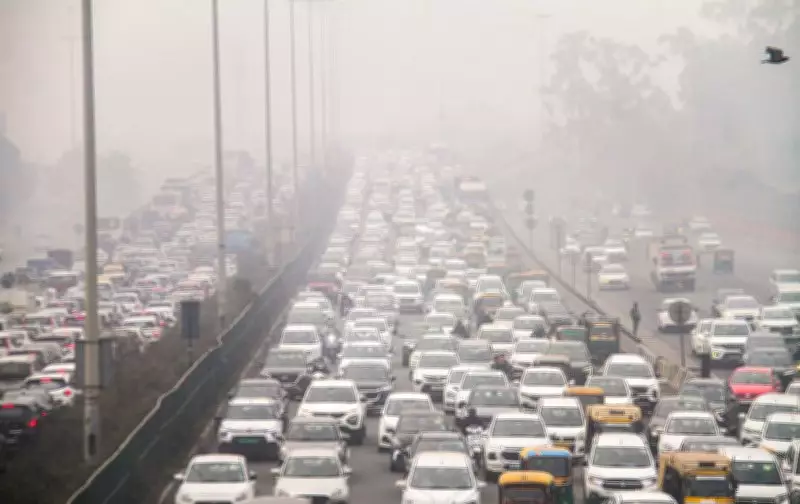
The NCR Planning Board has unveiled a Draft Regional Plan-2041 that reads like a science fiction script, proposing helitaxis, bullet trains, and inland waterways to transform mobility in the National Capital Region. While daily commuters struggle with potholed roads and hours-long traffic jams, the plan envisions a future where every major city in the region is reachable from Delhi within 30 minutes.
30-Minute NCR: The Core Vision
The plan explicitly commits to a "30-minute NCR," stating that superfast trains should connect Delhi with major NCR cities within half an hour. It also proposes a 30-minute Mass Transit Rail System from the nearest NCR boundaries to Delhi, aiming to reduce travel time for commuters from Gurugram, Faridabad, Noida, and Ghaziabad, who currently lose two to three hours daily to traffic.
Regional Rapid Transit System (RRTS)
The primary vehicle for this vision is the RRTS, already operational as Namo Bharat on the Delhi-Meerut corridor. Eight RRTS corridors are planned, covering all directions out of Delhi, including Delhi-Gurugram-Alwar, Delhi-Faridabad-Ballabgarh-Palwal, Delhi-Bahadurgarh-Rohtak, and Delhi-Ghaziabad-Hapur. The Delhi-Panipat-Karnal corridor, spanning 136.30 km, will cut travel time between Delhi and Karnal from 3.5-4 hours to just 90 minutes.

Sci-Fi Mobility Solutions
The plan goes beyond rail, treating urban air mobility as a near-term solution. Helitaxis are proposed for short-hop helicopter services between NCR cities, relieving pressure on road corridors. Additionally, 24-hour air ambulance services are planned as part of a Swachh and Smart NCR framework. The Yamuna River, currently polluted and encroached, is identified as a potential inland waterway transport corridor, reinforced by Faridabad's Master Plan 2041 envisioning a 20-km riverfront project.
Addressing Current Failures
The NCRPB acknowledges the stark contrast between current reality and future ambitions. The plan candidly identifies the lack of adequate regional public transport, poor frequency, absence of system integration, and multiple interchanges as defining failures of NCR mobility today. The 2041 plan serves as a direct indictment of shortcomings since the last regional plan in 2005.
Additional Infrastructure
Bullet trains, smart roads, and electric mobility infrastructure round out the vision. The plan also includes smart roads and electric vehicle charging networks to support sustainable transport. The NCRPB board meeting on June 16 will decide the fate of this ambitious draft.