NASA's Perseverance Rover Employs AI for Autonomous Mars Navigation
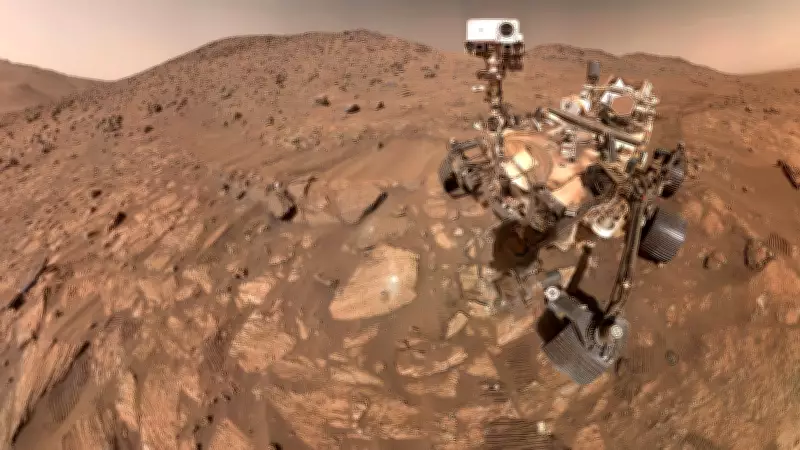
In a groundbreaking demonstration, NASA has advanced the autonomy of its Mars rovers by utilizing artificial intelligence to plan and execute routes on the red planet. The Perseverance rover recently completed drives guided by AI-generated waypoints, covering a total distance of 456 meters (approximately 1,496 feet) without direct human control. This test, conducted in December, marks a significant leap in space exploration technology, enabling more efficient operations as missions venture farther from Earth.
Overcoming Communication Delays with Autonomous Systems
The necessity for autonomy on Mars stems from the substantial communication delays between Earth and the planet. A round-trip signal takes about 25 minutes, making real-time control impractical. Traditionally, engineers on Earth analyze images and terrain data sent by the rover to map out routes with waypoints spaced no more than 100 meters apart. These instructions are transmitted via NASA's Deep Space Network to orbiters around Mars, which relay them to Perseverance. However, in this latest trial, AI assumed part of the planning workload, streamlining the process and reducing reliance on human intervention.
NASA Administrator Jared Isaacman emphasized the importance of this development, stating, "This demonstration shows how far our capabilities have advanced and broadens how we will explore other worlds." He added that autonomous systems can enhance mission efficiency, particularly as spacecraft travel to more distant locations.

How the AI System Planned the Route
The AI system leveraged high-resolution images from the Mars Reconnaissance Orbiter's HiRISE camera and digital elevation models to identify potential hazards. It analyzed data to detect dangers such as sand traps, large boulders, rocky outcrops, and uneven terrain. Built using technology related to Anthropic's Claude AI, the system then generated a safe route marked by waypoints that avoided these obstacles.
Before implementation on Mars, the route was rigorously tested on Earth using a "twin" rover called the Vehicle System Test Bed at NASA's Jet Propulsion Laboratory. This engineering model allows teams to simulate challenges safely, ensuring commands sent to the real rover are reliable. Once approved, the route was transmitted to Perseverance, where its auto-navigation system executed the plan. The rover's ability to interpret images while in motion, a capability not present in some earlier models, further supports its independent operation.
Future Prospects for AI in Space Exploration
NASA has been developing autonomous navigation for years, driven by the need to overcome communication delays. However, current systems have limitations, particularly in the rover's awareness of its position, which is corrected from Earth in a time-consuming process. Researchers are now exploring ways to use AI for relocalization operations, potentially enabling longer and more ambitious drives without waiting for human input.
Looking ahead, AI is poised to play an increasingly vital role in space missions, from future Mars rovers to the upcoming Dragonfly mission to Saturn's moon Titan. NASA officials suggest that intelligent systems may become essential for establishing a sustained human presence beyond Earth. With each test, the space agency moves closer to creating robots capable of independent thought and exploration, paving the way for more ambitious interstellar endeavors.