Elon Musk Charts Ambitious Lunar AI Vision Following xAI Leadership Shakeup
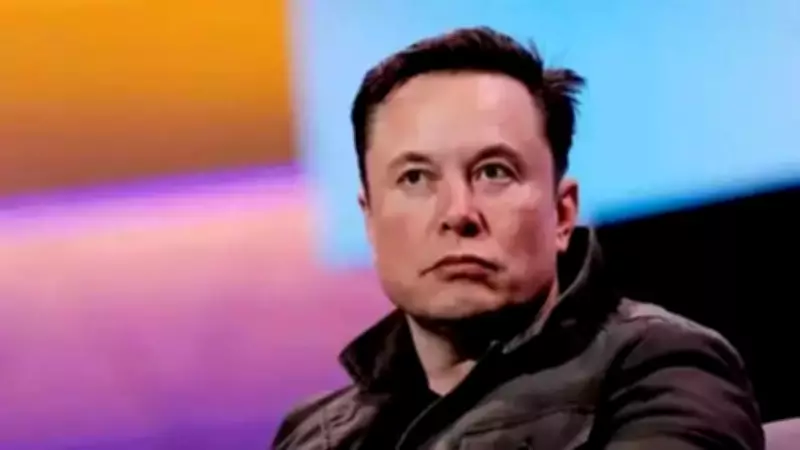
In a pivotal all-hands meeting held on Tuesday night, Elon Musk addressed employees of xAI just hours after co-founders Yuhuai (Tony) Wu and Jimmy Ba announced their departure from the company. The 45-minute presentation, which ranged from immediate product updates to futuristic lunar manufacturing concepts, came at a sensitive juncture for the artificial intelligence firm.
Leadership Exodus and Strategic Reorganization
The departures of Wu and Ba mark the fifth and sixth exits from xAI's original 12-person founding team, with five members having left within the past year alone. Rather than focusing extensively on these leadership changes, Musk utilized the platform to unveil a series of transformative promises for xAI's future trajectory. He framed the co-founder exits as part of a comprehensive organizational restructuring that has divided the company into four distinct product teams.
The newly formed teams include:

- Grok: Responsible for the company's flagship chatbot product
- Coding Division: Focused on AI-powered programming solutions
- Imagine: Developing advanced video generation technology
- Macrohard: A groundbreaking project described as a system capable of "doing anything on a computer that a computer is able to do"
Toby Pohlen, appointed to lead the Macrohard initiative, revealed to colleagues that the team's ambitious goal includes having "rocket engines fully designed by AI," showcasing the project's far-reaching technical aspirations.
Lunar Manufacturing and Interplanetary Expansion
The most headline-grabbing announcement centered on Musk's vision for establishing an AI satellite manufacturing facility on the Moon. He detailed plans to construct this lunar infrastructure, which would utilize electromagnetic catapults—commonly referred to as "mass drivers"—to launch AI-powered satellites directly from the Moon's surface into deep space.
Musk passionately explained to employees that the Moon's unique environmental conditions make it an ideal location for such operations. "You have to go to the moon," he emphasized, highlighting the celestial body's low gravity, absence of atmosphere, and consistent solar exposure as perfect factors for satellite manufacturing and deployment. He painted a vivid picture of satellites firing sequentially from the lunar surface, either beaming critical data back to Earth or performing computational tasks locally in space.
This lunar ambition forms part of a broader interplanetary strategy that Musk outlined during the meeting. He described a stepping-stone approach beginning with establishing "a self-sustaining city on the moon" through collaboration between xAI and SpaceX, followed by expansion to Mars, and eventually extending to other star systems. In a particularly speculative moment, Musk even floated the possibility of discovering "remnants of ancient alien civilizations" during these cosmic explorations.
Earth-Based Growth and Financial Milestones
Returning to more immediate terrestrial concerns, Musk shared significant updates about X's user metrics and revenue performance. He revealed that the platform currently boasts approximately 600 million monthly active users and has set an aggressive target of reaching "well over a billion" daily active users. To achieve this ambitious growth, the company is developing several new features including X Money—a comprehensive banking tool—and a standalone chat application.
Nikita Bier, X's head of product, contributed to the discussion by announcing that the platform has recently surpassed $1 billion in annual recurring revenue generated from subscriptions, marking a substantial financial milestone for the company.
Strategic Context and Public Disclosure
The timing of this all-hands meeting and its subsequent public release as a video on X appears strategically significant. This move likely responds to earlier reporting by The New York Times, which had published details from the meeting earlier that same evening. The public disclosure ensures Musk's narrative reaches audiences directly rather than through media intermediaries.

This development follows last week's completion of SpaceX's acquisition of xAI, a deal that values the combined entity at an impressive $1.25 trillion. Market observers anticipate an initial public offering for the merged company as early as June, adding another layer of strategic importance to Musk's announcements and the company's restructuring efforts.
As xAI navigates this period of leadership transition and organizational realignment, Musk's presentation establishes clear, ambitious directions both for terrestrial AI development and extraterrestrial expansion, positioning the company at the intersection of cutting-edge technology and visionary space exploration.