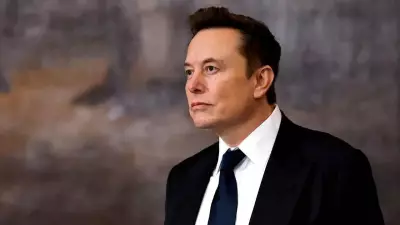
In a monumental corporate restructuring, tech visionary Elon Musk has officially merged his two pioneering ventures: aerospace leader SpaceX and artificial intelligence startup xAI. The newly unified organization now stands as one of the most valuable private enterprises in history, with an estimated valuation of approximately $1.25 trillion. This strategic consolidation brings Musk's dual ambitions for deep space exploration and cutting-edge artificial intelligence under a single corporate umbrella, signaling a new era of vertical integration in technological innovation.
The Strategic Vision: Space-Based AI and Multi-Planetary Expansion
Shortly after announcing the merger, Musk circulated an internal memo to SpaceX employees, outlining the profound strategic implications of this move. Titled "XAI JOINS SPACEX TO ACCELERATE HUMANITY'S FUTURE," the communication reveals that SpaceX has acquired xAI to create what Musk describes as "the most ambitious, vertically-integrated innovation engine on (and off) Earth." This engine combines artificial intelligence, rocket technology, space-based internet infrastructure, direct-to-mobile communications, and real-time information platforms.
Musk emphasized that this merger represents not merely the next chapter, but "the next book" in the mission of both companies. The ultimate goal is to scale operations to harness solar energy for understanding the universe and extending "the light of consciousness to the stars."

The Limitations of Terrestrial AI Infrastructure
The memo highlights critical limitations of current artificial intelligence development, which relies heavily on massive terrestrial data centers requiring enormous amounts of power and cooling systems. Musk argues that global electricity demand for AI cannot be sustainably met through Earth-based solutions without imposing significant hardship on communities and the environment, even in the near term.
"In the long term, space-based AI is obviously the only way to scale," Musk asserts. He provides a striking comparison: harnessing even a millionth of the Sun's energy would require over a million times more energy than our current civilization consumes. The logical solution, therefore, is to relocate these resource-intensive operations to space, where vast power and physical space are abundantly available.
Orbital Data Centers: The Path Forward
Musk envisions a future where satellites directly harness near-constant solar power with minimal operating or maintenance costs, fundamentally transforming humanity's ability to scale computational power. "It's always sunny in space!" he notes optimistically. The plan involves launching a constellation of approximately one million satellites that would function as orbital data centers.
This initiative represents a crucial first step toward achieving what scientists term a Kardashev Type II civilization—one capable of harnessing the full power of its host star. Such infrastructure would support AI-driven applications for billions of people while simultaneously ensuring humanity's multi-planetary future.
Starship: The Enabling Technology
The memo acknowledges that spaceflight history has never featured a vehicle capable of launching the megatons of mass required for space-based data centers, permanent lunar bases, or Martian cities. Even during 2025—projected to be the most prolific year for orbital launches—only about 3,000 tons of payload reached orbit, primarily consisting of Starlink satellites carried by SpaceX's Falcon rockets.
Musk reveals that the need to launch thousands of satellites originally drove recursive improvements in the Falcon program, achieving unprecedented flight rates that made space-based internet feasible. This year, the Starship vehicle will begin deploying the more powerful V3 Starlink satellites, with each launch adding over twenty times the capacity compared to current Falcon launches of V2 satellites.
Starship will also launch next-generation direct-to-mobile satellites designed to deliver comprehensive cellular coverage across the entire Earth. The sheer scale of satellites required for space-based data centers will push Starship to even greater capabilities, with Musk envisioning hourly launches carrying 200 tons per flight, ultimately delivering millions of tons to orbit annually.

The Mathematical and Economic Imperative
Musk presents compelling calculations: launching one million tons of satellites annually, with each ton generating 100 kW of computational power, would add 100 gigawatts of AI compute capacity each year without ongoing operational needs. The ultimate pathway could lead to launching 1 terawatt per year from Earth.
"My estimate is that within 2 to 3 years, the lowest cost way to generate AI compute will be in space," Musk predicts. This cost-efficiency advantage would enable innovative companies to train AI models and process data at unprecedented speeds and scales, accelerating breakthroughs in physics understanding and technological invention for humanity's benefit.
Beyond Earth: Lunar Manufacturing and Deep Space Deployment
While launching AI satellites from Earth remains the immediate focus, Starship's capabilities will extend to operations on other celestial bodies. Advancements like in-space propellant transfer will enable Starship to land substantial cargo on the Moon, facilitating permanent scientific and manufacturing presences.
Lunar factories could utilize local resources to manufacture satellites for deployment deeper into space. Using electromagnetic mass drivers combined with lunar manufacturing, Musk envisions placing 500 to 1,000 terawatts per year of AI satellites into deep space, significantly advancing humanity's position on the Kardashev scale and harnessing a meaningful percentage of the Sun's power.
The Broader Implications for Human Civilization
The capabilities unlocked through space-based data centers will fund and enable self-sustaining lunar bases, entire civilizations on Mars, and ultimately, expansion throughout the universe. Musk concludes his memo with gratitude to employees: "Thank you for everything you have done and will do for the light cone of consciousness. Ad Astra!"
This merger represents more than corporate consolidation—it embodies a radical vision for humanity's technological and existential future, blending artificial intelligence with space exploration in unprecedented ways that could redefine civilization's trajectory.