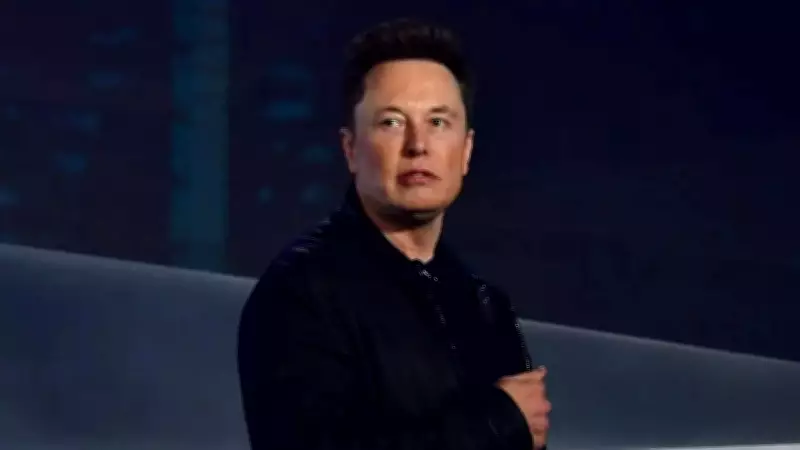
Elon Musk has issued a stark warning about the future of artificial intelligence, stating that scaling AI on Earth will soon encounter a massive 'hardware wall' due to a severe global electricity shortage. In a conversation with podcaster Dwarkesh Patel and John Collison, the Tesla and xAI founder revealed that building and expanding new AI data centers outside of China is nearly impossible.
Global Electricity Grids Stagnant
Musk explained that while the production of advanced AI chips is growing exponentially, the world's electrical grids remain stagnant. 'The availability of energy is the issue,' he said. 'If you look at electrical output outside of China... it's more or less flat. Very slight increase, but pretty much flat.' According to Musk, China is the only country rapidly increasing its electrical output to meet the demands of the AI boom.
He issued a blunt warning to Western tech firms: 'If you're putting data centers anywhere except China, where are you going to get your electricity? Especially as you scale... How are you going to turn the chips on? Magical power sources? Magical electricity fairies?'

Bureaucratic Hurdles on Earth
When asked why companies don't build massive green-energy projects, such as covering the Nevada desert with solar panels, Musk pointed to bureaucratic red tape. 'Try getting the permissions for that. It's harder to scale on land than it is in space. Space is really a regulatory play,' he said. He also noted that terrestrial solar power faces limitations like clouds, seasons, atmospheric energy loss, and the high cost of batteries for nighttime operation.
Space-Based AI Data Centers Predicted
Musk predicted that within the next 30 to 36 months, space will become the cheapest and most economically compelling place to run AI. He outlined several advantages of orbital data centers: increased solar efficiency due to no atmospheric interference, no need for backup batteries because of constant sunlight, and lighter, cheaper construction without heavy framing or protective glass.
According to Musk, Earth's atmosphere causes a 30% energy loss for solar panels, while space-based panels generate roughly five times more raw power. 'Space is really a regulatory play,' he reiterated, emphasizing that orbital facilities avoid the permitting delays and local opposition that plague terrestrial projects.
The TOI Tech Desk is a dedicated team of journalists committed to delivering the latest and most relevant news from the world of technology to readers of The Times of India. Their coverage spans gadget launches, reviews, trends, in-depth analysis, exclusive reports, and breaking stories impacting technology and the digital universe.