Moya: The World's First Fully Biomimetic Robot Makes Its Debut in Shanghai
Have you ever found yourself pausing a video, captivated by a robot that blinks, smiles, or walks with an eerily human grace? These machines are no longer just clunky assemblies of metal and wires; they are gradually integrating into our daily lives with a charm that mimics our own, sparking intense debates about the fine line between imitation and reality.
Introducing Moya: A Leap in Robotic Realism
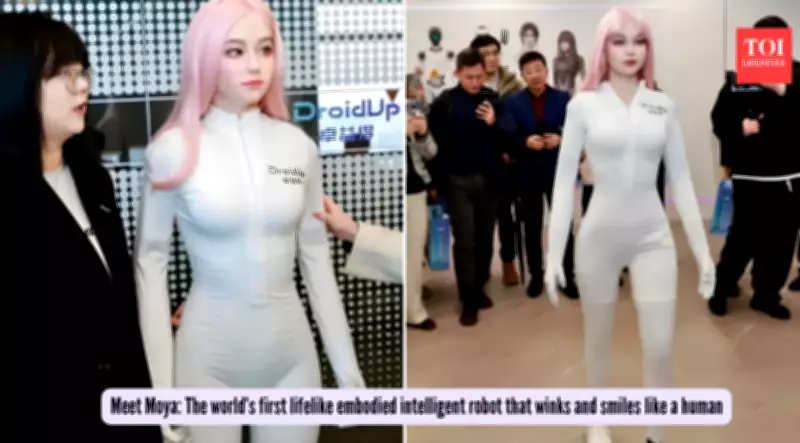
Recently, the debut of a remarkably lifelike robot in China has set social media abuzz. DroidUp, a robotics company, launched Moya in Shanghai, proudly declaring it the world's first fully biomimetic embodied intelligent robot. Standing at 1.65 meters tall and weighing 32 kilograms, Moya boasts proportions that closely resemble those of an adult human.
Videos shared by the South China Morning Post showcase Moya's abilities: it smiles warmly, nods in acknowledgment, maintains steady eye contact, and walks with an impressive 92% human-like posture accuracy. This level of realism is not just skin-deep; Moya is built on embodied AI, allowing it to perceive, reason, and act within real-world environments in real-time.

The Technology Behind the Smile
What makes Moya's expressions so convincing? The robot operates on the "Walker 3" chassis, an advanced upgrade from DroidUp's earlier Walker 2 model, which notably secured third place in Beijing's humanoid half-marathon. Moya features modular customization options for its appearance, lightweight lattice structures that mimic human muscles, enhanced cooling systems, and high endurance capabilities.
While specific technical details remain somewhat limited, the focus is clear: Moya prioritizes fluid, social movements over raw industrial speed. It even maintains a body temperature between 32 and 36 degrees Celsius to provide a realistic tactile experience and replicates subtle micro-expressions that enhance its lifelike presence.
Practical Applications in Daily Life
Moya enters the scene at a time when humanoid robots are being developed in various styles worldwide. Some designs opt for a cartoonish look to avoid the uncanny valley, while others remain purely mechanical for industrial applications. DroidUp, however, is pushing the boundaries with ultra-realistic designs, aiming to overcome the uncanny valley directly.
The company envisions Moya as particularly suitable for sectors requiring genuine human interaction, such as:
- Healthcare: Assisting in elder care with compassionate companionship.
- Education: Engaging with students in interactive learning environments.
- Commercial Spaces: Serving in roles that demand friendly, long-term engagement rather than mere task completion.
Unlike robots designed for heavy labor or simple home tasks, Moya targets cozy, extended conversations, emphasizing warmth and friendliness over sheer speed or strength.
Market Launch and Distinguishing Features
According to figures from the South China Morning Post video, Moya is expected to hit the market in late 2026, with a starting price of approximately ¥1.2 million. Final pricing and specifications are still pending, but the anticipation is already building.
Originating from Shanghai's renowned Zhangjiang Robot Valley, Moya stands out in a crowded robotics market by focusing on empathetic behavior tailored for elder care and companionship. Its spot-on human-like appearance could potentially revolutionize how service robots connect with people, offering a glimpse into a future where machines not only assist but also emotionally resonate with humans.