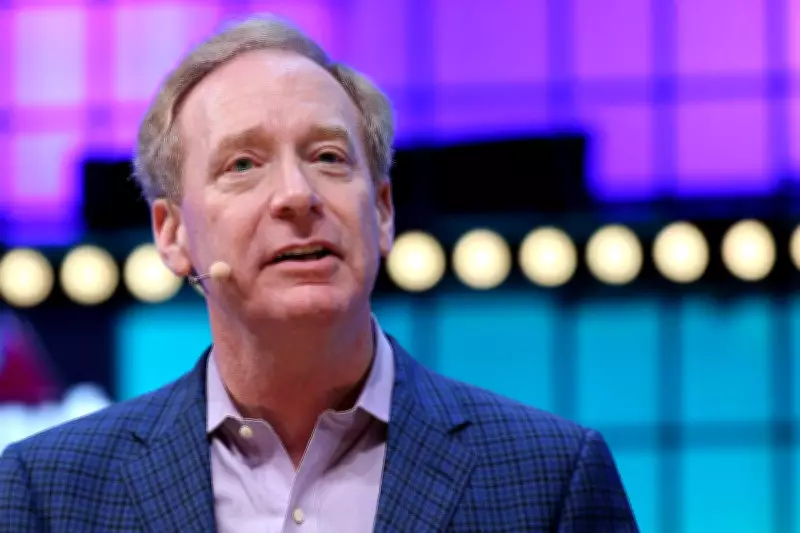
Microsoft's Brad Smith Emphasizes AI's Potential and Challenges for the Global South, Spotlighting India
In a significant address, Microsoft President Brad Smith outlined the vast opportunities and critical responsibilities that artificial intelligence presents for the Global South, with a sharp focus on India's strategic position. He stressed the urgent need for digital sovereignty and enhanced India–US collaboration through trade agreements to safeguard national interests while fostering cross-border innovation.
Addressing the AI Adoption Divide
Smith referenced Microsoft's AI Diffusion Report 2026, which reveals a growing disparity in AI adoption between the Global North and South. The report indicates adoption rates of about 25% in the Global North compared to approximately 14% in the Global South. India, while performing slightly better at over 15%, still aligns more closely with the Global South's figures.
"We should act with urgency because the greatest divide today is economic, partly created by unequal access to technology and electricity," Smith asserted. To combat this, Microsoft is committing $50 billion by the end of the decade to bring AI to the Global South, prioritizing investments in skilling initiatives and robust measurement systems.

India's Strategic Advantage in the AI Era
When asked about India's role in this $50 billion push, Smith highlighted that India is among the best-positioned countries globally, particularly within the Global South. "Human talent remains the most precious natural resource, and software development talent is especially critical. AI is not diminishing that; if anything, it makes developers even more important," he explained.
He noted that India boasts not only a large number of engineers but highly skilled ones, which is why it serves as Microsoft's second-largest employee base worldwide, with 24,000 employees. Smith urged the Indian government to capitalize on this opportunity by encouraging AI adoption and attracting foreign investment, all while protecting digital sovereignty.
Balancing Sovereignty and Collaboration
Addressing concerns about sovereign tech stacks, Smith acknowledged the tension between sovereignty and control by a few firms under US regulations. "We need balance. Advancing digital sovereignty is essential, and we are committed to it," he stated. He proposed that future India–US trade agreements should ensure reciprocity, keeping markets open while guaranteeing supply certainty.
"Few countries are better positioned to achieve this. India’s engineers must be able to build software for the US, just as American technology companies should bring innovation to India," Smith added. He envisioned a collaborative model where both nations work together to protect sovereignty while enabling innovation.
The Future of AI and Job Evolution
Discussing India's AI talent trajectory, Smith expressed confidence in the country's strengths, especially in software development. He acknowledged that AI will transform jobs by enhancing productivity, growing economies, and replacing some roles, but emphasized that this evolution can be positive with wise leadership.
"This is shaping up to be one of the defining economic stories of the next 25 years. Our North Star should use AI to create better jobs and brighter futures," he concluded, underscoring the responsibility of leaders in technology, business, and government to ensure AI serves people effectively.