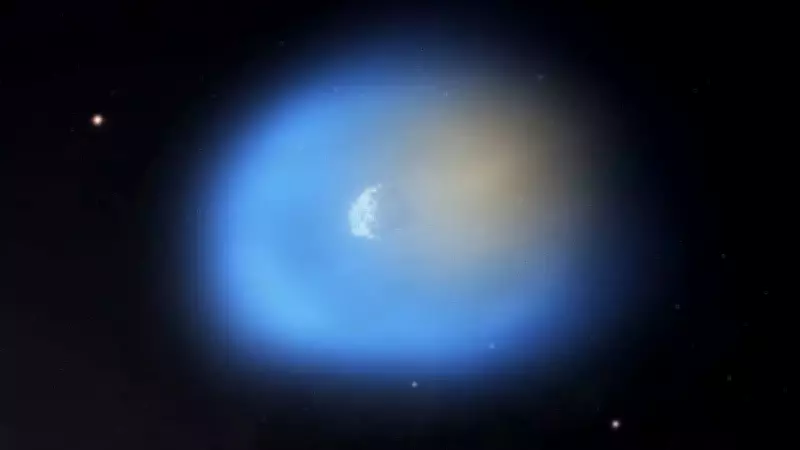
Astronomers Discover Methanol-Rich Interstellar Comet Passing Through Solar System
Astronomers have made a remarkable discovery while observing an unusual comet passing through our Solar System. The object, designated 3I/ATLAS, represents only the third confirmed interstellar visitor ever detected by scientists. What makes this celestial traveler particularly fascinating is its chemical composition, which appears to be exceptionally rich in methanol.
Unprecedented Chemical Signature Detected by ALMA Telescope
Using the powerful Atacama Large Millimetre/submillimeter Array (ALMA) located in Chile, researchers have measured methanol levels in the comet that far exceed normal expectations. The methanol-to-hydrogen cyanide ratio observed during two separate measurements reached approximately 70 and 120, numbers that are strikingly high compared to typical Solar System comets where methanol is usually far less dominant.
Nathan Roth, the lead researcher and professor at American University, described the discovery as "like taking a fingerprint from another solar system." He emphasized that this chemical fingerprint appears to be exceptionally rich, providing unprecedented insights into planetary formation processes beyond our own solar neighborhood.

Detailed Observations Reveal Unique Chemical Behavior
The ALMA Morita Array, also known as the Atacama Compact Array (ACA), tracked comet 3I/ATLAS over several days in late 2025. As sunlight warmed the comet's icy surface, it released gas and dust that created a glowing halo or coma around its nucleus. By analyzing this haze, scientists could precisely identify the chemical compounds present.
What researchers found particularly interesting was the distinct behavior of methanol compared to other molecules. While hydrogen cyanide appears to originate primarily from the nucleus, similar to typical Solar System comets, methanol seems to be released from both the nucleus and tiny icy grains floating within the coma itself.
These icy grains essentially function as miniature comets, releasing methanol when struck by sunlight. Although some Solar System comets exhibit similar behavior, observing this phenomenon in an interstellar object represents a completely new scientific finding.
Implications for Understanding Planetary Formation
The discovery of such a methanol-rich interstellar comet provides astronomers with a rare chemical window into distant planetary systems that humanity will likely never visit directly. Every interstellar visitor essentially serves as a snapshot of a faraway planetary system, carrying crucial clues about how planets and comets form across the galaxy.
Comet 3I/ATLAS follows two previous interstellar visitors that sparked significant scientific interest: 1I/'Oumuamua and 2I/Borisov. Each of these objects offers unique insights, but the methanol-rich composition of 3I/ATLAS presents particularly valuable data for refining models of comet chemistry.
The findings suggest that different star systems might produce dramatically different mixtures of ice and organic compounds. This could fundamentally change how scientists think about planet formation, potentially indicating that some planetary systems function more as "chemical cocktails" rather than the relatively orderly Solar System we inhabit.
Broader Scientific Context and Future Research
These observations build upon previous findings from the James Webb Space Telescope, which had already detected something unusual about 3I/ATLAS by finding carbon dioxide dominating the comet's coma at larger distances from the Sun. The methanol discovery adds another layer of mystery to this interstellar visitor.
The chemical conditions revealed by 3I/ATLAS's icy core and surrounding coma might provide important hints about how planets form in other solar systems. Experts believe this represents a rare opportunity to study alien planetary chemistry, something scientists have been anticipating for decades.
As the comet glowed while approaching the Sun, it emitted telltale signals that the sensitive ALMA instruments could detect and analyze. These observations not only expand our understanding of comet chemistry but also offer broader insights into the diversity of planetary formation processes throughout the universe.