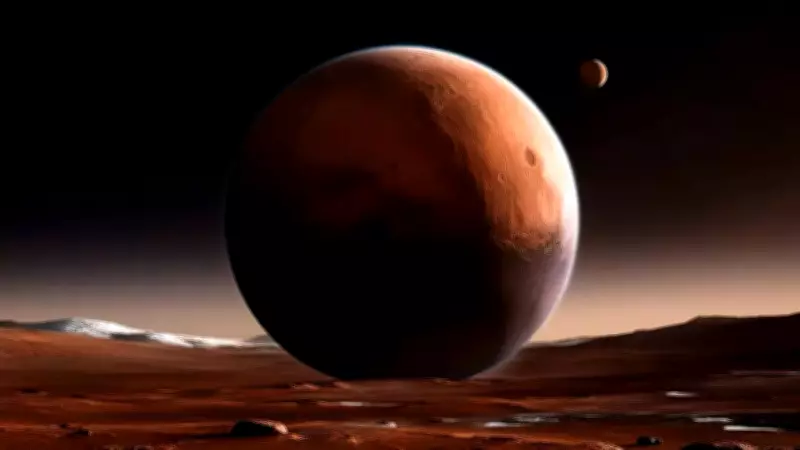
How Did Mars Lose Its Water? Rare Dust Storms May Hold the Key
For decades, scientists have puzzled over the fate of Mars's ancient water. Once a planet with vast oceans and rivers, it is now a dry, dusty world. A new study proposes a compelling answer: rare, global dust storms may have played a crucial role in driving water vapor into the upper atmosphere, where it escaped into space over billions of years.
The Mystery of Martian Water Disappearance
Evidence from orbiters and rovers confirms that Mars was once a wet planet, with liquid water flowing on its surface. However, today, only traces of water ice remain at the poles and in subsurface deposits. The question of how Mars transitioned from a potentially habitable world to its current arid state has been a major focus of planetary science.
Previous theories suggested that solar wind and the planet's weak magnetic field stripped away the atmosphere, allowing water to escape. While these factors contributed, the new research highlights the role of atmospheric dynamics, particularly during extreme dust events.

The Role of Planet-Wide Dust Storms
The study, based on data from NASA's MAVEN (Mars Atmosphere and Volatile Evolution) orbiter, indicates that rare, massive dust storms can significantly alter the Martian atmosphere. These storms, which can engulf the entire planet, heat the atmosphere and create strong upward winds.
This process lifts water vapor from the lower atmosphere to higher altitudes, where it is more vulnerable to escape. In the thin upper atmosphere, water molecules can break apart due to solar radiation, with hydrogen atoms drifting off into space—a key mechanism for permanent water loss.
Data from MAVEN Orbiter Reveals Patterns
MAVEN's observations during a major global dust storm in 2018 provided critical insights. The orbiter detected a sharp increase in water vapor in the upper atmosphere coinciding with the storm. This suggests that such events are not just surface phenomena but have profound effects on atmospheric composition and escape rates.
Researchers estimate that these rare storms could account for a significant portion of Mars's historical water loss. While smaller, more frequent dust storms also contribute, the global events are particularly efficient at transporting water to escape altitudes.
Implications for Understanding Planetary Evolution
This discovery has broader implications for studying other planets and exoplanets. It underscores how transient events, like dust storms, can have long-term impacts on a planet's climate and habitability. For Mars, it helps explain the timing and scale of water loss, aligning with geological evidence of a wet past.
Understanding these processes is also vital for future Mars missions, as it informs models of atmospheric behavior and resource availability. It may even shed light on the potential for past life on Mars, as water is a key ingredient for biology.
In summary, while Mars's weak gravity and lack of a magnetic field set the stage for atmospheric escape, rare dust storms appear to have accelerated the process, turning a once-watery world into the desert we see today. This research adds a dynamic, weather-driven component to the story of Martian evolution, highlighting the complex interplay between surface events and atmospheric fate.