The Trailblazing Journey of Lise Meitner in Nuclear Physics
In the early twentieth century, the field of nuclear physics was a dynamic, borderless endeavor, propelled by collaboration across institutes and private correspondence. Lise Meitner was a central figure in this intellectual movement for decades, beginning her career in Vienna, advancing it in Berlin, and later continuing her work in Stockholm. As a trained physicist, she carved out a distinguished career in radioactivity and atomic research during an era when women were rarely seen in senior academic positions.
Early Career and Breakthroughs in Radioactivity
Born in Vienna in 1878, Meitner achieved a significant milestone by becoming the second woman to earn a doctorate from the University of Vienna in 1906. She soon relocated to Berlin, where she attended lectures by the renowned Max Planck and initiated a long and fruitful collaboration with chemist Otto Hahn. In 1917, their joint efforts led to the identification of the element protactinium, a discovery that earned her recognition within German scientific circles.
By 1926, Meitner had broken another barrier, becoming the first woman in Germany to hold a full professorship in physics at the University of Berlin. Her research increasingly focused on the structure of the atom and the theoretical possibility that uranium could release substantial energy under specific conditions. At this stage, these ideas remained largely confined to laboratory discussions, far from public awareness.

Exile and the Discovery of Nuclear Fission
The political landscape in Germany shifted dramatically after 1933. Despite holding Austrian citizenship, Meitner's Jewish heritage placed her in grave danger under Nazi rule. In 1938, she was forced to flee Germany, crossing into the Netherlands before settling in Sweden. She left behind her position at the Kaiser Wilhelm Institute and most of her personal belongings.
From Stockholm, Meitner maintained contact with Otto Hahn. Later that year, Hahn and Fritz Strassmann reported perplexing experimental results from bombarding uranium with neutrons. During a visit from her nephew, physicist Otto Robert Frisch, Meitner played a crucial role in interpreting these findings. Together, they concluded that the uranium nucleus had split into two smaller parts, a process they named nuclear fission. Their groundbreaking explanation was published in the journal Nature in February 1939, revolutionizing modern science and influencing wartime policies.
The Nobel Prize Controversy and Ethical Stand
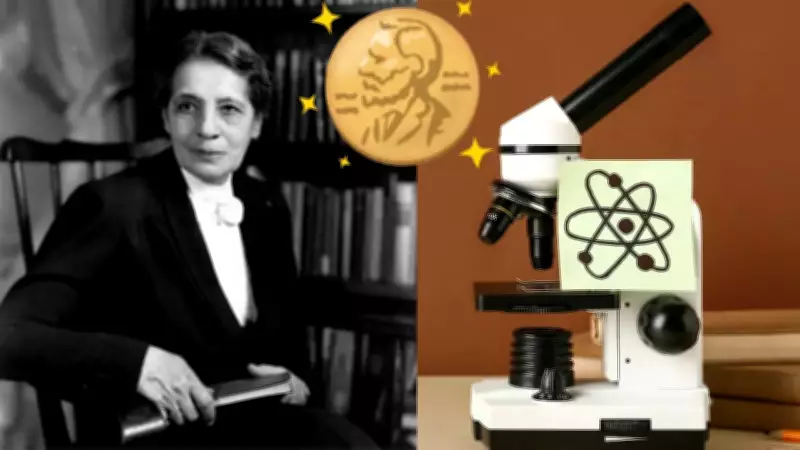
In 1944, the Nobel Prize in Chemistry was awarded solely to Otto Hahn for the discovery of nuclear fission, with Meitner notably excluded. Historians have since debated this decision, citing factors such as wartime separation, disciplinary boundaries between chemistry and physics, and potential gender bias. This omission remains a significant point of contention in the history of science.
Meitner also took a firm ethical stance by refusing to participate in the Manhattan Project at Los Alamos, declaring, “I will have nothing to do with a bomb!” After the war, she continued her scientific work in Sweden and later in Britain, receiving honors like the Max Planck Medal and the Enrico Fermi Award. Her legacy is immortalized in element 109, named meitnerium in her honor, though the Nobel Prize eluded her, a fact that continues to draw attention and reflection.
Enduring Legacy and Humanistic Values
Lise Meitner's epitaph, written by her nephew Otto Frisch, reads, “Lise Meitner: a physicist who never lost her humanity.” This phrase encapsulates not only her scientific contributions but also her moral integrity and compassionate approach to her work. Her story serves as a powerful reminder of the challenges faced by women in science and the complexities of recognition in academic achievements.
Through her pioneering research, ethical convictions, and unwavering dedication, Meitner has left an indelible mark on the field of nuclear physics, inspiring future generations to pursue knowledge with both intellect and humanity.