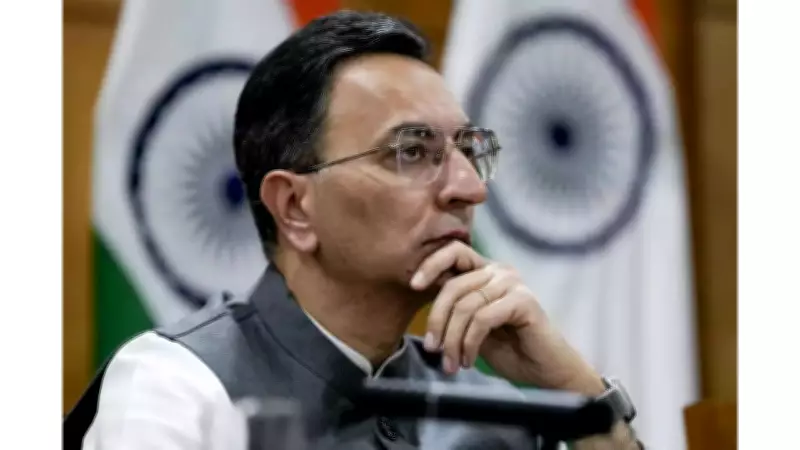
Union Minister Jitin Prasada Warns AI Cannot Replace Teachers, Highlights Risks in Education
Union Minister Jitin Prasada issued a strong warning on Monday, stating that artificial intelligence (AI) cannot replace teachers and that the potential risks of this technology in the educational sector must be carefully addressed. Speaking at the AI Impact Summit, the Minister of State for Electronics and Information Technology acknowledged AI's ability to enhance teaching and learning for both educators and students.
However, he cautioned that AI should not be viewed as a tool that diminishes curiosity and critical thinking. Prasada stressed that the integration of AI should extend beyond mere inclusion in school curricula to become part of the larger educational framework.
AI as a Tool, Not a Shortcut
Prasada elaborated on the role of AI in education, emphasizing that it should serve as an enabler rather than a replacement for human instructors. "We have to ensure that this is not merely a subject in a school curriculum. This is much more. We have to equip our young so that they contribute. It is about capacity building," he said. He added that young people need to understand computational thinking and its practical applications to fully leverage AI's benefits.

The minister warned against students using AI as a shortcut, which could undermine their learning process. "It's only a tool to better their lives and do something faster... As far as education goes, we can't have people using AI and somebody doing their homework, especially young people. It's not a shortcut," Prasada explained. He noted that relying on AI in this manner would be counterproductive in the long run, and teachers should instead use it to enhance their teaching methods.
Government Initiatives and Data Advantage
Prasada highlighted the government's efforts to support AI development by making data available to researchers, innovators, and the domestic industry. "We are ensuring that these data sets are available, which are non-personal, which are safe. And that is the real edge that India has. We have the data which no one else in the world has to that level that India has, and for AI, as everybody knows, the fuel is data," he stated. This initiative aims to foster the creation of AI models and solutions tailored to India's unique needs.
Risks of AI in Democracies
The minister also brought attention to broader societal risks associated with AI, particularly the spread of false information and deepfakes. He pointed out that a lack of digital literacy leaves individuals vulnerable to cyberattacks and misinformation, which could threaten democratic systems. "If you don't get into digital literacy, then you have the vulnerability of falling to cyber threats. Cybersecurity is such a big issue, and AI deepfakes misinformation. And a country like India, which is truly democratic, and elections happening year-round, at the central, state, and municipal levels. But if there's kind of misinformation using AI, it has the power to derail democracies," Prasada explained.
He emphasized that AI-generated fake news has the potential to influence voters based on false information, leading to counterproductive outcomes. Prasada called for collective action to address these challenges, noting that while the government will implement policies to protect citizens, everyone must contribute to safeguarding the future.
Conclusion
In summary, Union Minister Jitin Prasada's remarks underscore the dual nature of AI in education and society. While it offers significant benefits as a supportive tool, it must not replace human elements like teaching and critical thinking. The government is taking steps to harness India's data advantage for AI development, but urgent attention is needed to mitigate risks such as deepfakes and misinformation, especially in the context of democratic processes. Prasada's call for enhanced digital literacy and collaborative efforts highlights the ongoing need to balance innovation with responsibility in the AI era.