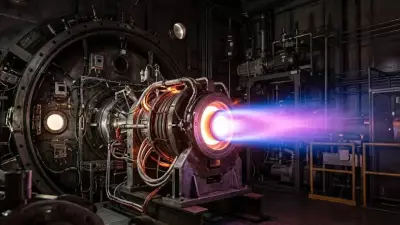
The Indian Space Research Organisation (ISRO) and the Society for Applied Microwave Electronics Engineering and Research (SAMEER) have joined forces to develop indigenous deep space technology. The collaboration, announced on May 13, 2026, aims to design and manufacture next-generation high-power amplifier (HPA) systems. These amplifiers are critical for transmitting tele-command signals to satellites during deep space missions.
Strategic Partnership for Self-Reliance
Under the agreement, ISRO's Telemetry, Tracking and Command Network (ISTRAC) will work closely with SAMEER to develop the HPAs. This initiative is part of India's broader push for self-reliance in space technology, reducing dependence on foreign suppliers for critical components. The HPAs will be used in deep space communication networks, enabling reliable transmission of commands to spacecraft exploring distant celestial bodies.
Technical Specifications and Applications
The new HPA systems are expected to operate at higher power levels and frequencies than current models, ensuring robust communication over vast distances. They will support future missions to the Moon, Mars, and beyond, including the proposed Chandrayaan-4 and Mangalyaan-2 missions. The indigenous development will also lower costs and enable faster upgrades.

Benefits for Indian Space Ecosystem
This partnership will strengthen India's space infrastructure and foster innovation in microwave electronics. SAMEER's expertise in high-power microwave systems complements ISRO's experience in space communications. The project is expected to create new opportunities for research and development, as well as skilled employment in the space sector.
ISRO Chairman Dr. S. Somanath emphasized the importance of such collaborations for achieving technological sovereignty. SAMEER Director Dr. K. P. Ray highlighted the organization's commitment to supporting India's space ambitions through cutting-edge research. The timeline for the project includes prototype development within two years and full-scale production by 2029.