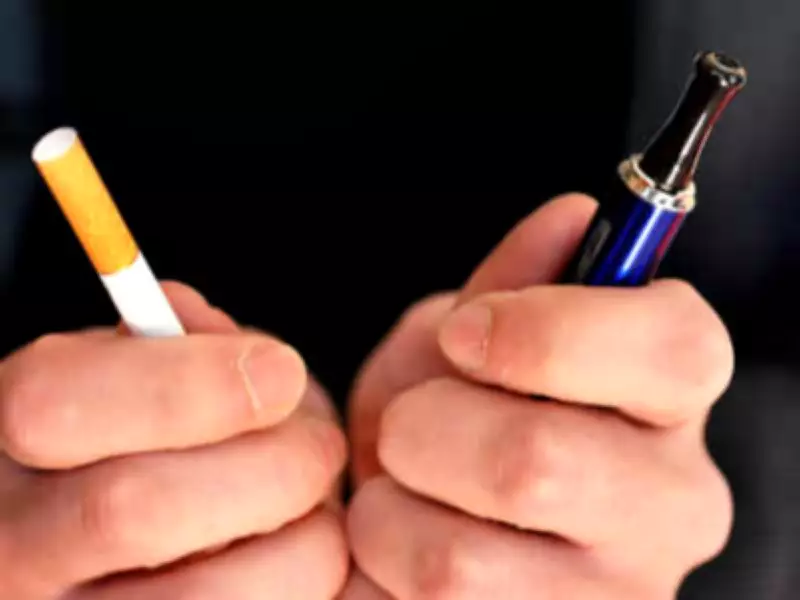
The recent controversy surrounding Rajasthan Royals captain Riyan Parag allegedly vaping inside a dressing room during an IPL match has brought renewed attention to the illegal yet growing use of e-cigarettes and hookah in urban areas, particularly in Bhubaneswar and Cuttack, despite a ban that has been in effect since 2019.
Public health experts and anti-tobacco activists assert that this incident has exposed a larger ground-level problem: easy availability through informal channels, weak enforcement, and low public awareness, especially among young people who often perceive vaping as a safer alternative to traditional smoking.
State Officials Reiterate Ban
State drug controller Mamina Patnaik reiterated that the sale, storage, distribution, and use of e-cigarettes are completely prohibited across Odisha. 'There has been a ban on e-cigarettes since 2019. Odisha was among the first states, along with Punjab, to enforce this prohibition,' she stated. However, she acknowledged that individuals often bring such products from other states or purchase them online for personal use, making detection difficult. 'Shops and bars are not allowed to sell or permit the use of these products. We will examine whether usage has increased and will launch an enforcement drive if necessary,' Patnaik added.

Health Risks Highlighted
Medical professionals warn that vaping and hookah use pose significant health risks, contrary to popular belief. 'E-cigarettes deliver nicotine, which is highly addictive and harmful, especially for adolescents whose brains are still developing,' said Anupama Mishra, a public health expert. She cited studies linking e-cigarette use to lung injuries and cardiovascular issues, emphasizing that the perception of vaping as safe is misleading.
Enforcement Challenges
Police officers acknowledged that while action has been taken in the past, enforcement remains challenging. 'Cases are booked when specific information is received. In December 2025, such raids were carried out across bars and cafes. Detection is difficult because possession is often individual and mobile,' a senior officer explained. Anti-tobacco activists argue that enforcement has failed to keep pace with evolving supply methods. 'Unlike traditional tobacco, e-cigarettes are compact, discreet, and often sold through social media or informal courier networks,' said Md Imran Ali, a longtime anti-tobacco activist.
Ali noted that occasional raids are insufficient. He also pointed to hookah lounges that allegedly operate covertly or rebrand themselves as cafes to evade enforcement checks. 'Youth-centric spaces remain vulnerable. Without strict inspections, the ban exists only on paper,' he added.
Call for Stronger Action
Experts emphasize that the IPL controversy should serve as a wake-up call. 'When high-profile personalities are seen vaping, it normalizes the behavior,' Mishra said. She stressed the need for strong messaging from authorities, schools, and parents that vaping is neither good nor legal. The incident underscores the urgency of addressing the gap between policy and practice to curb the rising trend of e-cigarette use among youth.