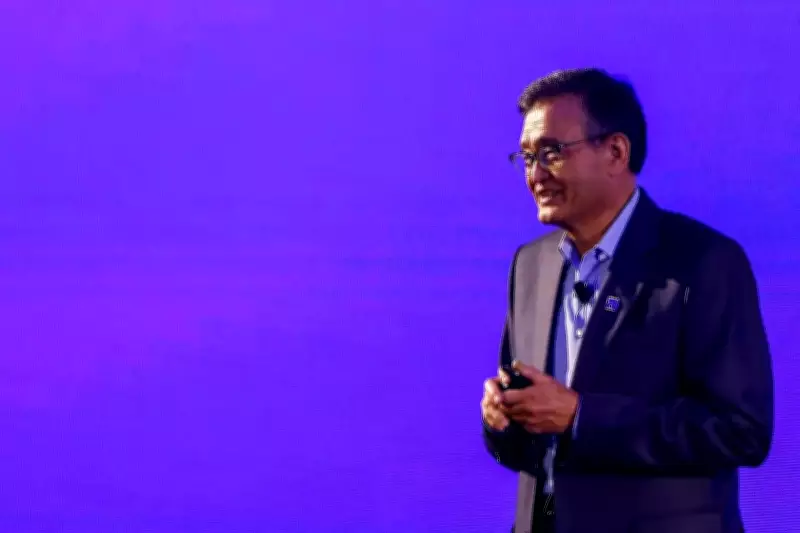
Intel CEO Faces Unprecedented Demand as AI Hardware Hits Physical Limits
Intel CEO Lip-Bu Tan is confronting an extraordinary challenge that highlights the explosive growth of artificial intelligence. His phone has become a constant source of desperate pleas from fellow executives begging for semiconductor chips. "Almost every CEO calls me saying, 'Lip-Bu, can I have more? I'm your friend, I'm your customer, your most important customer,'" Tan revealed during Intel's Second Annual AI Summit.
The Desperate Calls That Reveal AI's Hardware Bottleneck
These persistent calls demonstrate something remarkable about the current AI revolution. The artificial intelligence boom is no longer constrained by software limitations, innovative algorithms, or creative ideas. Instead, it has collided with a formidable physical barrier: the hardware infrastructure required to power these advanced systems simply doesn't exist in sufficient quantities to meet skyrocketing demand.
Tan assumed leadership at Intel just eleven months ago after serving two years on the company's board. Despite receiving advice from numerous friends warning him against taking the position, he recognized Intel as an "iconic company" that America critically needed. Now he finds himself managing demand that far exceeds Intel's current production capabilities.

Memory Crisis Emerges as Greater Threat Than Processor Shortage
The most pressing issue isn't actually processor availability, according to Tan's assessment. The real crisis centers on memory components. The Intel CEO has consulted with two of the three major memory manufacturers, and both delivered the same sobering message: no significant relief from the memory shortage is expected until 2028.
Artificial intelligence chips from industry leaders like Nvidia and AMD consume enormous quantities of high-bandwidth memory. This unprecedented demand is depleting available supplies so rapidly that even traditional technology sectors including PC manufacturers and smartphone companies are now scrambling to secure components.
"If anything is going to slow down progress, it's going to be memory," Tan warned attendees. He shared a conversation with one friend who noted that Moore's Law, which historically predicted computing power doubling every three to four years, now appears to be accelerating to every three to four months. The computational requirements for advanced AI systems are expanding at a pace that supply chains cannot possibly match.
Thermal Management Challenges Force Performance Limitations
Beyond supply constraints, thermal management presents another significant obstacle. High-performance chips frequently cannot operate at their maximum capacity because existing cooling solutions cannot dissipate heat efficiently enough. "Sometimes you have to reduce the gigahertz because of thermal issues and power management challenges," Tan explained.
Traditional air cooling methods have become inadequate for cutting-edge AI hardware. The semiconductor industry now requires advanced thermal solutions including liquid cooling systems, micro cooling technologies, and immersion cooling approaches to maintain optimal performance.
Intel's Manufacturing Recovery Shows Promising Progress
Meanwhile, Intel's foundry business is demonstrating encouraging momentum under Tan's leadership. The company has improved production yields on its 18A manufacturing process from what Tan described as "quite poor" to achieving consistent monthly gains of 7-8%. Several potential customers have begun approaching Intel about manufacturing partnerships.
Tan expressed optimism about Intel's manufacturing resurgence, anticipating that by the second half of this year, the company will secure volume commitments that will validate its technological comeback in semiconductor fabrication.