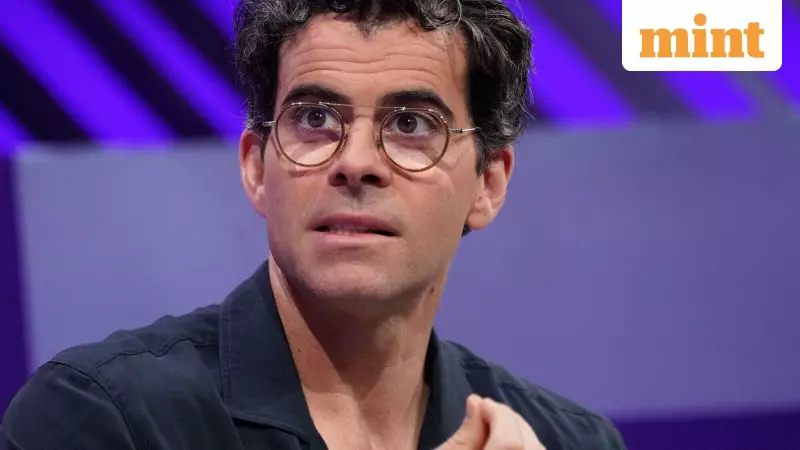
In a stark year-end assessment, Instagram's top executive Adam Mosseri has raised a red flag about the profound impact of artificial intelligence on the platform's future. He cautioned that the explosive growth of AI-created images and videos is poised to fundamentally alter how users perceive and trust content, pushing authenticity to the very centre of Instagram's long-term strategy.
The Unstoppable Rise of Synthetic Media
In a detailed carousel post shared on December 31, the Meta executive reflected on a year dominated by AI-powered creativity. Tools like Google’s Nano Banana and OpenAI’s Sora app drove online trends throughout 2025, a shift Instagram itself embraced with tools like its Edits app. However, Mosseri believes this rapid advancement presents a serious, long-term challenge.
"The key risk Instagram faces is that, as the world changes more quickly, the platform fails to keep up," Mosseri wrote in his 20-slide post. Looking ahead to 2026, he identified a major shift: "authenticity is becoming infinitely reproducible." He suggested this technological wave could be the most transformative change he has witnessed, even surpassing previous shifts that reshaped user interaction.

From Implicit Trust to Default Skepticism
Mosseri acknowledged a foundational erosion of trust. "For most of my life, I could safely assume photographs or videos were largely accurate captures of moments that happened. This is clearly no longer the case, and it is going to take us years to adapt," he stated. He predicts a societal move from assuming content is real by default to starting with scepticism.
While detection of AI content might be feasible now, he warned it will become exponentially harder. The long-term solution, he expects, lies in cryptographic signatures at the point of capture. This would allow platforms to verify genuine images and videos rather than playing a losing game of spotting sophisticated fakes after they are posted.
The End of the Polished Feed?
Mosseri also challenged the classic view of Instagram as a gallery of curated perfection. He noted that highly polished personal posts have largely migrated from the public feed to private messages. Today, most personal sharing happens via DMs and is characterised by a "raw aesthetic"—blurry photos, shaky videos, and unposed candid shots.
"Flattering imagery is no longer valuable," Mosseri declared, calling it "cheap to produce and boring to consume." He argued the focus is shifting from technical perfection to unique individuality. The new benchmark is moving from "can you create?" to "can you make something that only you could create?"
Instagram's Strategic Response for an AI Era
To stay relevant, Mosseri outlined clear priorities for Instagram's evolution. The platform must build robust reactive tools to handle the influx of synthetic media. A core part of the strategy involves clear labelling for AI-generated content and systems to verify authentic material.
"We need to... Label AI-generated content and verify authentic content. Surface credibility signals about who's posting. Continue to improve ranking for originality," he detailed. This multi-pronged approach aims to rebuild user trust by highlighting reliable sources and promoting original work, ensuring Instagram adapts at the pace required by an AI-saturated digital landscape.