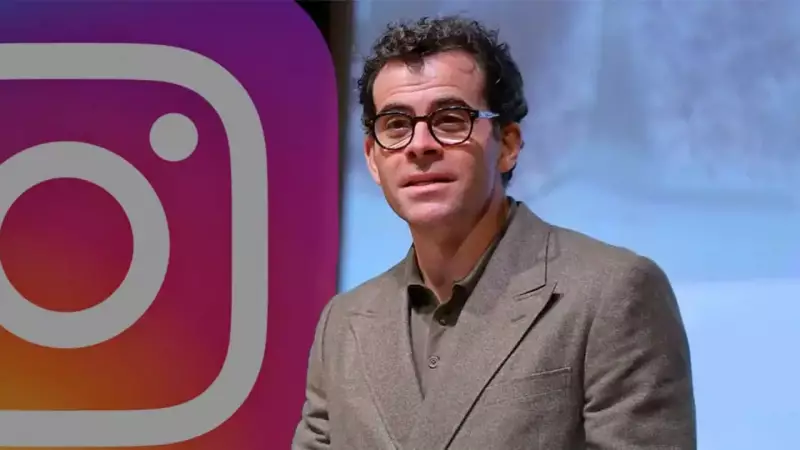
In a stark New Year's admission, Instagram's top executive, Adam Mosseri, has issued a serious warning: the social media giant risks falling behind as artificial intelligence makes authentic content "infinitely reproducible." He predicts that synthetic, AI-created photos and videos will soon dominate the platform used by billions.
The Core Challenge: AI Blurs Reality
Mosseri laid out the platform's critical challenge in a detailed post. "The key risk Instagram faces is that, as the world changes more quickly, the platform fails to keep up," he wrote. The central threat is the rapid advancement of AI, which can now generate imagery indistinguishable from real, captured moments.
He explained that the very pillars of creator influence—authenticity, genuine connection, and an unfakeable voice—are now accessible to anyone with modern AI tools. "Everything that made creators matter... is now suddenly accessible to anyone with the right tools," Mosseri stated, adding that feeds are increasingly filling with "synthetic everything."

Meta's Proposed Shift: Fingerprinting Real Media
In a significant revelation, Mosseri suggested that Meta's approach of trying to detect AI-generated content is likely to fail as technology improves. Instead of chasing fakes, he proposed a radical alternative: cryptographically signing authentic images at the point of capture.
"It will be more practical to fingerprint real media than fake media," he argued. This is a notable admission from a company that has invested tens of billions in AI development, conceding it cannot reliably distinguish AI imagery on its own platforms. This comes as Meta's own AI content labels have proven unreliable.
The Rise of Raw: Imperfection as Proof
Mosseri also declared an end to Instagram's long-standing bias toward polished, professional imagery. In an AI-saturated world, he suggested that perfection is no longer the goal; imperfection is becoming the new signal of authenticity.
"Savvy creators are leaning into unproduced, unflattering images," he observed. "Rawness isn't just aesthetic preference anymore—it's proof." This shift indicates that users and creators are adapting, using a less curated aesthetic to signal that their content is genuinely human.
While outlining necessary changes—including better creative tools, AI content labeling, and ranking original content higher—Mosseri offered few concrete implementation details for the platform's massive user base of over 3 billion people. The call to action now partially shifts to camera manufacturers to help build a new system for verifying reality in the digital age.