India Charts Ambitious Global AI Course Inspired by UPI Success Story
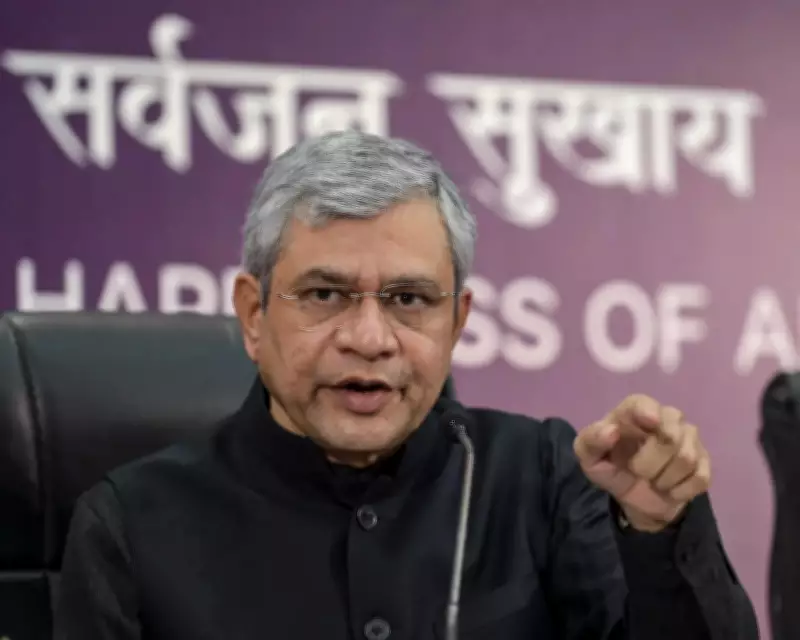
In a significant policy announcement, the Indian government has articulated a bold vision for artificial intelligence that draws direct inspiration from one of the nation's most celebrated digital achievements - the Unified Payments Interface (UPI). The central concept, as detailed by officials, involves presenting the international community with what Electronics and IT Minister Ashwini Vaishnaw described as a "bouquet of trusted AI solutions."
A Shared Digital Backbone for Global AI Development
This initiative aims to establish a reliable, shared digital infrastructure that nations and corporations worldwide can utilize and build upon. The fundamental principle is to avoid dependency on proprietary platforms controlled by a handful of dominant technology firms and eliminate the need for paying substantial royalties. Minister Vaishnaw, speaking on Tuesday, emphasized India's intention to influence the global development and governance of artificial intelligence by striking a careful equilibrium between fostering innovation and ensuring accountability.
"We will be creating a bouquet of solutions, which have been tested on security and all possible parameters, and then we will present the same to the world for use and to build on," Vaishnaw stated, outlining the government's strategic direction.

India's Techno-Legal Approach to AI Governance
The minister clarified that India plans to pursue its own distinctive "techno-legal" framework for AI governance, rather than replicating the European Union's regulation-intensive model or adopting the United States' predominantly market-driven approach. This strategy leverages India's proven expertise in developing frugal, cost-effective engineering solutions that operate effectively at massive scale and can be shared as global public goods.
Drawing a clear parallel with the UPI model, Vaishnaw highlighted that "Just as UPI was offered globally, India intends to share its AI capabilities in a similar spirit." He further assured that "We are not asking for any royalty or licence fee. We have given it as a common core," noting that multiple countries have already expressed interest in adopting digital frameworks similar to those developed by India.
Defining Sovereign AI in the Global Context
The minister provided crucial clarification on the concept of sovereign AI, explaining that it does not imply isolationism or severing international collaboration. "Sovereign AI means having our own models, infrastructure, and ability to take solutions to a large number of people without remaining dependent on anybody else's approval," Vaishnaw elaborated. This vision positions India as an autonomous yet collaborative player in the global AI ecosystem.
This strategic push emerges against a backdrop of worldwide apprehension regarding artificial intelligence, encompassing concerns about:
- Potential job displacement and workforce disruption
- Volatility within technology markets
- Concentration of power and monopolistic tendencies among major tech corporations
Vaishnaw observed that "A good consensus is emerging among global leaders that AI should be used for good and all harmful impacts should be contained."
Addressing Workforce Transition and Infrastructure Scaling
To mitigate workforce concerns associated with AI adoption, the government is implementing a three-pronged strategy operating simultaneously:
- Reskilling and upskilling the existing workforce to adapt to new technological paradigms
- Creating new talent pipelines through specialized training programs
- Updating educational curricula at various levels to incorporate AI-relevant skills
"All three things are happening in parallel," the minister confirmed, underscoring the comprehensive nature of the human capital development plan.

Concurrently, India is dramatically expanding its artificial intelligence infrastructure capacity. Ambitious plans are underway to augment the nation's common compute facility with an additional 20,000 Graphics Processing Units (GPUs) over the coming six months. This substantial enhancement is designed to provide robust support for startups, academic researchers, and students engaged in AI development and innovation.
This comprehensive announcement positions India not merely as a participant in the global AI conversation, but as a proactive architect offering tangible, tested solutions modeled after its proven digital public infrastructure success. The UPI-inspired approach represents a distinctive contribution to how artificial intelligence might be developed, governed, and shared internationally, emphasizing accessibility, security, and collaborative progress without proprietary constraints.