In the skies of the modern battlefield, air superiority is no longer just about speed and firepower. Stealth, artificial intelligence, and advanced networking are increasingly changing the dynamics of future air warfare. India is undertaking one of the most ambitious military programmes in its history. From the Tejas Mk2 to next-generation fighter aircraft, India is developing a whole range of aircraft to replace its ageing fleet of older-generation fighters.
Global Context
Major powers around the world are developing sixth-generation aircraft to counter future aerial threats. The United States has formally launched the F-47 under its Next Generation Air Dominance (NGAD) programme, making it the first publicly acknowledged sixth-generation fighter project among major powers. Over the next two decades, a range of new fighter aircraft is expected to enter service with the Indian Air Force and Indian Navy.
1. HAL Tejas Mk2 (Medium Weight Fighter)
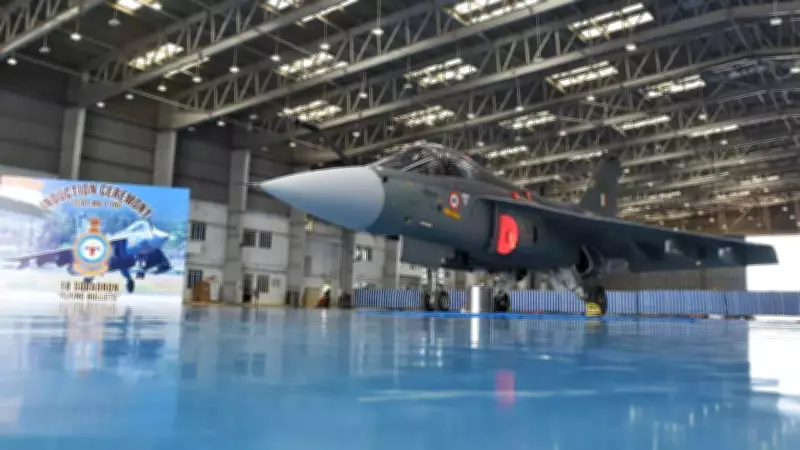
The Tejas Mk2 is being developed by the Aeronautical Development Agency (ADA) and Hindustan Aeronautics Limited (HAL). It is a further upgrade of the current Mk1A version of the Tejas. The aircraft is designed to replace the Jaguar, Mirage 2000, and MiG-29 fleets. It will use the GE F414-INS6 engine for propulsion, producing 98 kilonewtons of thrust. The aircraft will weigh around 17.5 tonnes with a payload capacity of 6.5 tonnes. Key features include canards, an indigenous Uttam AESA radar, and an infrared search and track (IRST) system. It will carry a wide range of indigenous weapon systems, including Astra air-to-air missiles, the Rudram anti-radiation missile, guided bombs, and future missiles such as BrahMos-NG. The aircraft will be used in air superiority, deep strike, and Suppression of Enemy Air Defences (SEAD) missions.

2. Advanced Medium Combat Aircraft (AMCA)
The AMCA is India's flagship stealth fighter programme to build a fifth-generation combat aircraft. This twin-engine aircraft will feature an internal weapons bay, radar-absorbing materials, sensor fusion, and electronic warfare systems. In its Mk1 variant, it will use GE F414 engines, while a more powerful indigenous engine is planned for the Mk2 version. The aircraft is expected to carry 1,500 kg of payload in its weapons bay while retaining low observability. External hardpoints can be used where maintaining stealth is less important. The AMCA will be used in air dominance missions, long-range precision strikes, and network-centric warfare.
3. Twin Engine Deck-Based Fighter (TEDBF)
The TEDBF is being specially developed for the Indian Navy to replace its fleet of MiG-29Ks. The aircraft will feature folding wings, reinforced landing gear, and advanced electronic warfare systems to perform future naval air operations. It will be powered by two GE F414 engines and will have a maximum take-off weight of around 26 tonnes. The TEDBF is being designed to operate from Indian STOBAR carriers, INS Vikrant and INS Vikramaditya. It will perform fleet air defence, maritime strikes, combat air patrols, and carrier-based power projection missions.
4. Future Sixth-Generation Fighter
India is also beginning to look beyond AMCA towards a sixth-generation fighter. In March 2026, the Ministry of Defence informed the Parliamentary Standing Committee that India is exploring the possibility of joining one of Europe’s sixth-generation fighter programmes. Europe currently has two major sixth-generation initiatives: the Future Combat Air System (FCAS), led by France, Germany, and Spain, and the Global Combat Air Programme (GCAP), involving the United Kingdom, Japan, and Italy. These projects aim to develop aircraft capable of operating alongside autonomous drones, employing artificial intelligence, and highly networked combat operations. Sixth-generation fighters are expected to provide greater fuel efficiency, longer range, higher thrust, and sustained supercruise using adaptive-cycle engine technology.

The aircraft currently under development will shape India's combat aviation capabilities through the 2030s. India is steadily building the foundations of its future air power. These programmes are not merely intended to replace ageing fighter fleets but represent a broader effort to develop indigenous expertise in advanced avionics, stealth technology, and aircraft design. With the emergence of sixth-generation fighter programmes, artificial intelligence, autonomous drones, and next-generation networking are beginning to redefine combat. India is already exploring pathways to participate in this future through potential international collaborations.