India's AI Infrastructure Investment Set to Surpass $200 Billion Mark
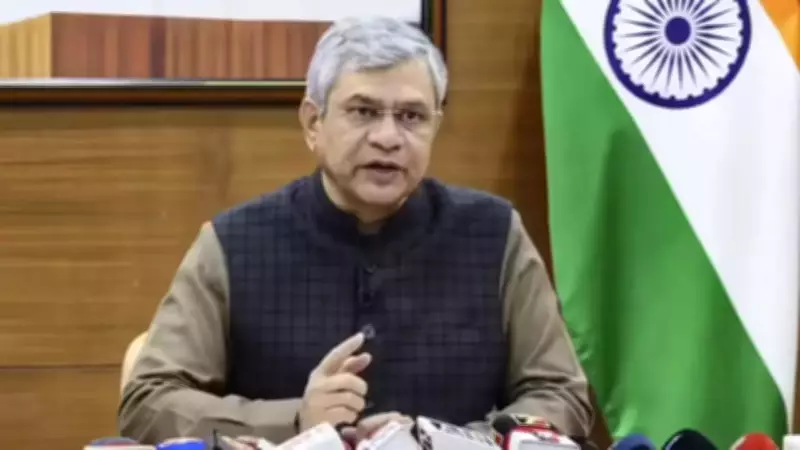
In a significant announcement ahead of the upcoming AI Impact Summit, Union Minister for Information Technology Ashwini Vaishnaw declared that investments in the artificial intelligence infrastructure layer are projected to exceed $200 billion. The minister confirmed that commitments of approximately $90 billion have already been secured, marking a substantial financial push into this transformative technology sector.
Comprehensive Strategy Across All AI Stack Layers
Addressing the ET NOW Global Business Summit, Minister Vaishnaw emphasized India's strategic approach to developing all five layers of the AI technology stack. "We are working on all five layers of the AI stack. Conventionally, our strength has been providing IT services. Now, we have to convert this into providing AI-based services," he stated. The minister highlighted how the IT industry has proactively invested in creating new tools and reskilling their workforce to transition toward AI service provision.
Sovereign AI Models to Challenge Global Leaders
Vaishnaw revealed that India will host one of the world's largest AI Impact Summits next week, following similar events in the United Kingdom, South Korea, and France. The summit will feature participation from more than 20 Heads of State and governments. A key highlight will be the launch of India's bouquet of sovereign AI models, which the minister claims outperform established platforms like OpenAI, Gemini Pro, and DeepSeek on multiple parameters. "On so many parameters, the models are better than Open AI, Gemini Pro and Deep Seek, giving us confidence that India can develop models on very frugal resources," Vaishnaw asserted.

Semiconductor Progress and Electronics Export Potential
The minister provided detailed insights into the third layer of the AI stack, noting remarkable progress in semiconductor development. Startups and research teams are creating cutting-edge solutions in this "chip layer" that are expected to yield significant results in the coming years. Vaishnaw also projected that electronic goods will soon rank among India's top two exported commodities, citing strong European demand during Free Trade Agreement negotiations. "India will become a trusted partner in the semiconductor and electronics value chain," he affirmed.
Bullet Train Projects and Railway Modernization
Sharing updates on transportation infrastructure, Vaishnaw announced that the first section of India's inaugural bullet train project between Mumbai and Ahmedabad will commence operations in 2027. He further revealed that the proposed Bengaluru-Chennai corridor could reduce travel time between the two major cities to just 73 minutes, dramatically enhancing connectivity and economic integration. The minister credited Indian engineers and industry for achieving practical self-sufficiency in high-speed train technology, enabling Prime Minister Narendra Modi to announce seven new bullet train corridors that will transform national transportation.
Railway Reforms Focused on Passenger Experience
On broader railway improvements, Vaishnaw outlined an ambitious "52 reforms in 52 weeks" initiative scheduled for 2026, with two new reforms to be announced weekly. Seven reforms have already been implemented, with the remainder in progress. These changes specifically target enhanced travel experiences for daily passengers from low- and middle-income families, whom the minister identified as railways' most important customers. Safety improvements have been substantial, with railway accidents reduced by approximately 90%, though further reductions remain a priority.

Positioning India at the Forefront of Global AI Revolution
Minister Vaishnaw concluded by emphasizing that artificial intelligence represents a technological shift that will outpace all previous industrial revolutions. India's coordinated strategy across talent development, model creation, semiconductor advancement, and practical applications aims to position the nation at the forefront of the global AI transformation. The comprehensive approach spanning technology infrastructure, transportation modernization, and industry adaptation reflects India's determination to leverage AI for national development and global leadership.