India's IT Minister Advocates Fair AI Compensation for News Publishers
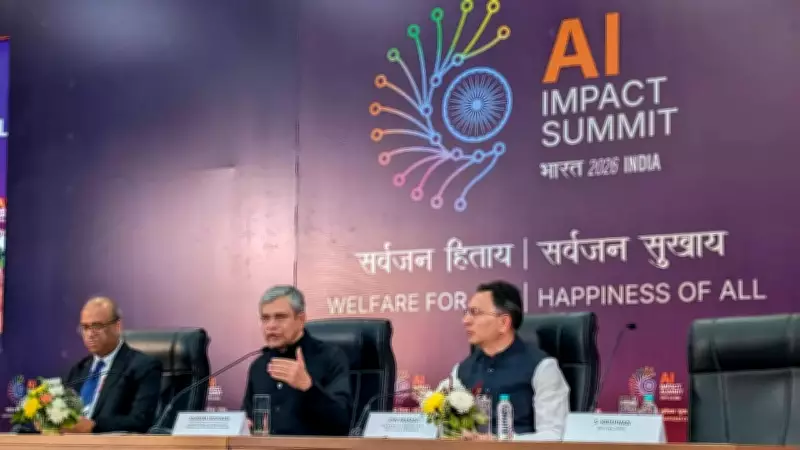
IT Minister Ashwini Vaishnaw declared on Tuesday, February 17, that the Indian government firmly believes news publishers deserve fair remuneration when artificial intelligence companies utilize their content to train AI models. He emphasized that public policy should be oriented towards establishing revenue-sharing mechanisms to support content creators.
Government Stance on Copyright and AI Training
While addressing reporters at the India AI Summit 2026, Minister Vaishnaw highlighted the complexity of copyright issues in the AI era. "Copyrights is also part of it. This is very complex. As most of the AI models are trained on media which is available in public domain. We believe that content creators, specially news creators, they must get a fair remuneration for the content they are creating," he stated.
The minister further elaborated that this belief is a sincere government position, and public policy should reflect this orientation. "That is something that we sincerely believe as a government, and I think the public policy should also be oriented towards that. We are talking to the big platforms they have, more-or-less, shown inclination towards the process by which fair remuneration to content creators, especially the news creators who are the part of the conventional media where the content is used by digital platforms," Vaishnaw added.

Global Context and Industry Dialogue
These remarks come at a critical juncture globally. Major publishers in the United States and Europe have initiated lawsuits against AI companies for using copyrighted articles without proper authorization. Concurrently, some AI firms like OpenAI have entered into agreements with specific media houses to legally access their archives.
Countries such as Australia and Canada have already enacted legislation mandating platforms to negotiate with news publishers. Minister Vaishnaw reinforced India's commitment to this cause, stating, "We believe that there has to be a fair distribution of revenues which comes out of the big efforts that the conventional media teams create. We believe in that and we are constantly in a dialogue with the big platforms on that."
DNPA's Position on AI and Media
On the first day of the IndiaAI Impact Summit 2026, the Digital News Publishers Association organized a panel discussion titled "AI and Media: Opportunities, Responsible Pathways, and the Road Ahead." During this session, DNPA representatives asserted that journalistic content should not be treated as free input for AI models and requires protection and payment.
Mohit Jain, COO and Executive Director of Bennett Coleman & Company Limited, articulated this viewpoint clearly. "Journalism is not a free-floating internet input but intellectual property created through investment, editorial oversight and accountability. When AI begins to commoditise information, trust becomes scarce—and that scarcity creates value," he explained.
Concerns Over AI Summaries Impacting News Business
A significant concern raised during the discussion was the detrimental effect of AI summaries on the news industry. Tools like AI overviews in Google Search and responses from AI chatbots provide quick answers, which often deter users from visiting original news websites. This diversion leads to reduced traffic and weakened revenue models for publishers.
Robert Whitehead of the International News Media Association highlighted this issue, stating, "AI-driven summaries in search environments are already diverting traffic away from publisher websites in several markets, weakening revenue models that sustain credible reporting. If journalism funds the accuracy of AI systems, there must be fair recognition and remuneration for that value."
The collective call from both government and industry leaders underscores a growing consensus on the need for equitable compensation structures as AI technology continues to evolve and integrate with media content.